Inhoudsopgave
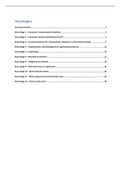
Literatuuroverzicht .........................................................................................................................................2
Hoorcollege 1 – Introductie Communicatie & Identiteit...................................................................................4
Hoorcollege 2 – Introductie Sociale identiteitstheorie (SIT) .............................................................................5
Hoorcollege 3 – Vervolg introductie SIT; Communicatie, identiteit en informatieverwerking ..........................7
Hoorcollege 4 – Imago(schade); rechtvaardigheid en organisatieverandering ...............................................10
Hoorcollege 5 – Leiderschap..........................................................................................................................14
Hoorcollege 6 – Moraliteit & identiteit ..........................................................................................................17
Hoorcollege 8 – Taalgebruik & identiteit .......................................................................................................22
Hoorcollege 9 – Diversiteit & bias in organisaties ..........................................................................................25
Hoorcollege 10 – Diversiteitsinterventies ......................................................................................................30
Hoorcollege 11 – Wetenschapscommunicatie & fake news ...........................................................................36
Hoorcollege 12 – Pesten op het werk ............................................................................................................38
,Literatuuroverzicht
HC 1 & 2 – Introductie sociale identiteitstheorie
Haslam, S.A. & N. Ellemers (2005). Social identity in industrial psychology: concepts, controversies and
contributions. International Review of Industrial and Organizational Psychology, Volume 20, p. 39-117.
Hiervan is pagina 41-54 tentamenstof!
Ashforth, B.A., & Kreiner, G.E. 1999. "How Can You Do It?": Dirty Work and the Challenge of Constructing a
Positive Identity. Academy of Management Review, 24(3), 413-434.
Conroy, S., Henle, C.A, Shore, L., & Stelma, S. (2017). Where there is light, there is dark: A review of the
detrimental outcomes of high organizational identification. Journal of Organizational Behavior, 38, 184–
203; DOI: 10.1002/job.2164
HC 3 – Vervolg introductie SIT; communicatie, identiteit & informatieverwerking
Tost,L.P., Gino, F., & Larrick, R,P. (2012). Power, competitiveness, and advice taking: Why the powerful don’t
listen. Organizational Behavior and Human Decision Processes, 117(1), 53-65.
Esposo, S. R., Hornsey, M. J., & Spoor, J. R. (2013). Shooting the messenger: Outsiders critical of your group are
rejected regardless of argument quality. British Journal of Social Psychology, 52(2), 386-395.
Petriglieri, J. L. (2011). Under threat: responses to and the consequences of threats to individual identities.
Academy of Management Review, 36(4), 641–662.
HC 4 – Image(schade); rechtvaardigheid & organisatieontwikkeling
Smidts, A., Pruyn A.T.H., van Riel, C.B.M. (2001). The impact of employee communication and perceived
external prestige on organizational identification. Academy of Management Journal, 44(5), 1051-1062.
Dutton, J.E, & J.M. Dukerich (1991). Keeping an Eye on the Mirror: Image and Identity in Organizational
Adaptation. Academy of Management Journal, 34, 3, 517-554.
Gopinath, C., & Becker, T. E. (2000). Communication, procedural justice, and employee attitudes: Relationships
under conditions of divestiture. Journal of Management, 26, 63-83.
HC 5 – Leiderschap
Haslam S.A., & Platow, M.J. (2001). The link between leadership and followership: How affirming social identity
translates vision into action. Personality and Social Psychology Bulletin, 27(11), 1469-1479.
Ellemers, N., van den Heuvel, H., de Gilder, D., et al. (2004). The underrepresentation of women in science:
Differential commitment or the queen bee syndrome? British Journal of Social Psychology, 43(3), 315–
338.
Bruckmüller, S., Ryan, M. K., Rink, F., & Haslam, S. A. (2014). Beyond the glass ceiling: The glass cliff and its
lessons for organizational policy. Social Issues and Policy Review, 8(1), 202-232.
HC 6 – Moraliteit & identiteit
Pagliaro, S., Brambilla, M., Sacchi, S., D’Angelo, M., & Ellemers, N. (2013). Initial impressions determine
behaviours: Morality predicts the willingness to help newcomers. Journal of Business Ethics, 117, 37–44.
Ellemers, N; & van Nunspeet, F. (2020) Neuroscience and the social origins of moral behavior: how neural
underpinnings of social categorization and conformity affect everyday moral and immoral behavior.
Current Directions in Psychological Science, 1-8.
2
,Ellemers, N., Kingma, L., van de Burgt, J., & Barreto, M. (2011). Corporate social responsibility as a source of
organizational morality, employee commitment and satisfaction. Journal of Organizational Moral
Psychology, 1(2), 97-124.
HC 8 – Taalgebruik & identiteit
Wigboldus, D. H. J., & Douglas, K. (2007). Language, stereotypes and intergroup relations. In K. Fiedler (Ed.),
Social Communication (pp. 79- 106). New York: Psychology Press.
Roberson, Q. M., & Stevens, C. K. (2006). Making sense of diversity in the workplace: Organizational justice and
language abstraction in employees' accounts of diversity-related incidents. Journal of Applied
Psychology, 91(2), 379-391.
HC 9 – Diversiteit & identiteit
Heilman, M. E. (2012). Gender stereotypes and workplace bias. Research in organizational Behavior, 32, 113-
135.
Stout, J.G. & Dasgupta, N. (2011). When he doesn’t mean you: Gender- exclusive language as ostracism.
Personality and Social Psychology Bulletin, 36, 757-769.
Van der Vegt, G.S. & Bunderson, J.S. (2005). Learning and performance in multidisciplinary teams: the
importance of collective team identification. Academy of Management Journal, 48, 532-547.
HC 10 – Diversiteitsinterventies
Ely, R. J., & Thomas, D. A. (2001). Cultural diversity at work: The effects of diversity perspectives on work group
processes and outcomes. Administrative Science Quarterly, 46, 229–273.
Dobbin, F., & Kalev, A. (2016). Why diversity programs fail. Harvard Business Review, 94, 14-22.
Gündemir, S., Homan, A.C., Usova, A., & Galinsky, A.D. (2017). Multicultural meritocracy: The synergistic
benefits of valuing diversity and merit. Journal of Experimental Social Psychology, 73, 34-41.
HC 11 – Wetenschapscommunicatie & fake news
Rutjens, B. T., van der Linden, S., & van der Lee, R. (2021). Science skepticism in times of COVID-19. Group
Processes & Intergroup Relations, 24(2), 276–283.
Rutjens, B. T., & van der Lee, R. (2020). Spiritual skepticism? Heterogeneous science skepticism in the
Netherlands. Public Understanding of Science, 29(3), 335–352.
Hornsey, M. J. (2020). Why Facts Are Not Enough: Understanding and Managing the Motivated Rejection of
Science. Current Directions in Psychological Science, 29(6), 583–591.
HC 12 – Pesten op het werk
Bartlett, J. E., & Bartlett, M. E. (2011). Workplace bullying: An integrative literature review. Advances in
Developing Human Resources, 13(1), 69-84.
Howard, M. C., Cogswell, J. E., & Smith, M. B. (2020). The antecedents and outcomes of workplace ostracism: A
meta-analysis. Journal of Applied Psychology, 105(6), 577–596.
3
, Hoorcollege 1 – Introductie Communicatie & Identiteit
Communicatie is het uitwisselen van informatie.
à de uitwisseling van symbolische informatie, die plaatsvindt
tussen mensen die zich bewust zijn van elkaars aanwezigheid
onmiddellijk of gemedieerd. Deze informatie wordt deels
bewust, deels onbewust gegeven, ontvangen en
geïnterpreteerd.
Organisationele communicatie = the process by which
individuals stimulate by means of verbal or nonverbal messages
in the context of a formal organization (Richmond & McCrosey,
2009)
Mogelijke inspanningen zender:
• Boodschap goed coderen.
- Jargongebruik
- KISS-principe (Keep It Short & Simple)
• Goede medium kiezen.
• Controleren of boodschap is aangekomen.
• Willen leren; feedback vragen (expertise).
• Ruis reduceren (directe communicatie; gelegenheid voor vragen;
juiste communicatie structuur kiezen).
à Vooral gericht op de manier waarop individuen informatie
verwerken.
- Nogal psychologisch; uiterst cognitief: hersenprocessen.
- ‘Cognitieve miser’; stereotypen en besluitvorming.
- Beïnvloeding van gedrag.
Cognitie, ook wel kenvermogen = de mentale activiteit en het
proces van kennisverwerving door waarneming en het verwerken
van de daarmee opgedane informatie van denken.
Proces van informatieverwerking:
4
Literatuuroverzicht .........................................................................................................................................2
Hoorcollege 1 – Introductie Communicatie & Identiteit...................................................................................4
Hoorcollege 2 – Introductie Sociale identiteitstheorie (SIT) .............................................................................5
Hoorcollege 3 – Vervolg introductie SIT; Communicatie, identiteit en informatieverwerking ..........................7
Hoorcollege 4 – Imago(schade); rechtvaardigheid en organisatieverandering ...............................................10
Hoorcollege 5 – Leiderschap..........................................................................................................................14
Hoorcollege 6 – Moraliteit & identiteit ..........................................................................................................17
Hoorcollege 8 – Taalgebruik & identiteit .......................................................................................................22
Hoorcollege 9 – Diversiteit & bias in organisaties ..........................................................................................25
Hoorcollege 10 – Diversiteitsinterventies ......................................................................................................30
Hoorcollege 11 – Wetenschapscommunicatie & fake news ...........................................................................36
Hoorcollege 12 – Pesten op het werk ............................................................................................................38
,Literatuuroverzicht
HC 1 & 2 – Introductie sociale identiteitstheorie
Haslam, S.A. & N. Ellemers (2005). Social identity in industrial psychology: concepts, controversies and
contributions. International Review of Industrial and Organizational Psychology, Volume 20, p. 39-117.
Hiervan is pagina 41-54 tentamenstof!
Ashforth, B.A., & Kreiner, G.E. 1999. "How Can You Do It?": Dirty Work and the Challenge of Constructing a
Positive Identity. Academy of Management Review, 24(3), 413-434.
Conroy, S., Henle, C.A, Shore, L., & Stelma, S. (2017). Where there is light, there is dark: A review of the
detrimental outcomes of high organizational identification. Journal of Organizational Behavior, 38, 184–
203; DOI: 10.1002/job.2164
HC 3 – Vervolg introductie SIT; communicatie, identiteit & informatieverwerking
Tost,L.P., Gino, F., & Larrick, R,P. (2012). Power, competitiveness, and advice taking: Why the powerful don’t
listen. Organizational Behavior and Human Decision Processes, 117(1), 53-65.
Esposo, S. R., Hornsey, M. J., & Spoor, J. R. (2013). Shooting the messenger: Outsiders critical of your group are
rejected regardless of argument quality. British Journal of Social Psychology, 52(2), 386-395.
Petriglieri, J. L. (2011). Under threat: responses to and the consequences of threats to individual identities.
Academy of Management Review, 36(4), 641–662.
HC 4 – Image(schade); rechtvaardigheid & organisatieontwikkeling
Smidts, A., Pruyn A.T.H., van Riel, C.B.M. (2001). The impact of employee communication and perceived
external prestige on organizational identification. Academy of Management Journal, 44(5), 1051-1062.
Dutton, J.E, & J.M. Dukerich (1991). Keeping an Eye on the Mirror: Image and Identity in Organizational
Adaptation. Academy of Management Journal, 34, 3, 517-554.
Gopinath, C., & Becker, T. E. (2000). Communication, procedural justice, and employee attitudes: Relationships
under conditions of divestiture. Journal of Management, 26, 63-83.
HC 5 – Leiderschap
Haslam S.A., & Platow, M.J. (2001). The link between leadership and followership: How affirming social identity
translates vision into action. Personality and Social Psychology Bulletin, 27(11), 1469-1479.
Ellemers, N., van den Heuvel, H., de Gilder, D., et al. (2004). The underrepresentation of women in science:
Differential commitment or the queen bee syndrome? British Journal of Social Psychology, 43(3), 315–
338.
Bruckmüller, S., Ryan, M. K., Rink, F., & Haslam, S. A. (2014). Beyond the glass ceiling: The glass cliff and its
lessons for organizational policy. Social Issues and Policy Review, 8(1), 202-232.
HC 6 – Moraliteit & identiteit
Pagliaro, S., Brambilla, M., Sacchi, S., D’Angelo, M., & Ellemers, N. (2013). Initial impressions determine
behaviours: Morality predicts the willingness to help newcomers. Journal of Business Ethics, 117, 37–44.
Ellemers, N; & van Nunspeet, F. (2020) Neuroscience and the social origins of moral behavior: how neural
underpinnings of social categorization and conformity affect everyday moral and immoral behavior.
Current Directions in Psychological Science, 1-8.
2
,Ellemers, N., Kingma, L., van de Burgt, J., & Barreto, M. (2011). Corporate social responsibility as a source of
organizational morality, employee commitment and satisfaction. Journal of Organizational Moral
Psychology, 1(2), 97-124.
HC 8 – Taalgebruik & identiteit
Wigboldus, D. H. J., & Douglas, K. (2007). Language, stereotypes and intergroup relations. In K. Fiedler (Ed.),
Social Communication (pp. 79- 106). New York: Psychology Press.
Roberson, Q. M., & Stevens, C. K. (2006). Making sense of diversity in the workplace: Organizational justice and
language abstraction in employees' accounts of diversity-related incidents. Journal of Applied
Psychology, 91(2), 379-391.
HC 9 – Diversiteit & identiteit
Heilman, M. E. (2012). Gender stereotypes and workplace bias. Research in organizational Behavior, 32, 113-
135.
Stout, J.G. & Dasgupta, N. (2011). When he doesn’t mean you: Gender- exclusive language as ostracism.
Personality and Social Psychology Bulletin, 36, 757-769.
Van der Vegt, G.S. & Bunderson, J.S. (2005). Learning and performance in multidisciplinary teams: the
importance of collective team identification. Academy of Management Journal, 48, 532-547.
HC 10 – Diversiteitsinterventies
Ely, R. J., & Thomas, D. A. (2001). Cultural diversity at work: The effects of diversity perspectives on work group
processes and outcomes. Administrative Science Quarterly, 46, 229–273.
Dobbin, F., & Kalev, A. (2016). Why diversity programs fail. Harvard Business Review, 94, 14-22.
Gündemir, S., Homan, A.C., Usova, A., & Galinsky, A.D. (2017). Multicultural meritocracy: The synergistic
benefits of valuing diversity and merit. Journal of Experimental Social Psychology, 73, 34-41.
HC 11 – Wetenschapscommunicatie & fake news
Rutjens, B. T., van der Linden, S., & van der Lee, R. (2021). Science skepticism in times of COVID-19. Group
Processes & Intergroup Relations, 24(2), 276–283.
Rutjens, B. T., & van der Lee, R. (2020). Spiritual skepticism? Heterogeneous science skepticism in the
Netherlands. Public Understanding of Science, 29(3), 335–352.
Hornsey, M. J. (2020). Why Facts Are Not Enough: Understanding and Managing the Motivated Rejection of
Science. Current Directions in Psychological Science, 29(6), 583–591.
HC 12 – Pesten op het werk
Bartlett, J. E., & Bartlett, M. E. (2011). Workplace bullying: An integrative literature review. Advances in
Developing Human Resources, 13(1), 69-84.
Howard, M. C., Cogswell, J. E., & Smith, M. B. (2020). The antecedents and outcomes of workplace ostracism: A
meta-analysis. Journal of Applied Psychology, 105(6), 577–596.
3
, Hoorcollege 1 – Introductie Communicatie & Identiteit
Communicatie is het uitwisselen van informatie.
à de uitwisseling van symbolische informatie, die plaatsvindt
tussen mensen die zich bewust zijn van elkaars aanwezigheid
onmiddellijk of gemedieerd. Deze informatie wordt deels
bewust, deels onbewust gegeven, ontvangen en
geïnterpreteerd.
Organisationele communicatie = the process by which
individuals stimulate by means of verbal or nonverbal messages
in the context of a formal organization (Richmond & McCrosey,
2009)
Mogelijke inspanningen zender:
• Boodschap goed coderen.
- Jargongebruik
- KISS-principe (Keep It Short & Simple)
• Goede medium kiezen.
• Controleren of boodschap is aangekomen.
• Willen leren; feedback vragen (expertise).
• Ruis reduceren (directe communicatie; gelegenheid voor vragen;
juiste communicatie structuur kiezen).
à Vooral gericht op de manier waarop individuen informatie
verwerken.
- Nogal psychologisch; uiterst cognitief: hersenprocessen.
- ‘Cognitieve miser’; stereotypen en besluitvorming.
- Beïnvloeding van gedrag.
Cognitie, ook wel kenvermogen = de mentale activiteit en het
proces van kennisverwerving door waarneming en het verwerken
van de daarmee opgedane informatie van denken.
Proces van informatieverwerking:
4