Enzymes
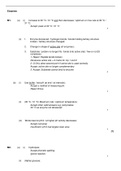
M1. (a) (i) Increase to 30 °C / 31 °C and then decreases / optimum or max rate at 30 °C /
31 °C;
Accept: peak at 30 °C / 31 °C
1
(ii) 1. Enzyme denatured / hydrogen bonds / bonds holding tertiary structure
broken / tertiary structure changed;
2. Change in shape of active site (of enzymes);
3. Substrate / protein no longer fits / binds (into active site) / few or no ES
complexes;
1. Reject: Peptide bonds broken
Denatures active site = 2 marks for mp 1 and 2
2. Q Only allow second point if active site is used correctly
Accept: active site no longer complementary
3. Accept: Substrate cannot bind to enzyme
3
(b) (i) Use buffer / test pH (at end / at intervals);
Accept a method of measuring pH.
Reject litmus.
1
(ii) (30 °C / 31 °C) Maximum rate / optimum temperature;
Accept other valid answers e.g. temp below
30 °C as enzyme not denatured.
1
(iii) Works best at pH 6 / at higher pH activity decreases;
Accept converse
Insufficient: pH 6 had largest clear area
1
[7]
M2. (a) (i) Hydrolysis;
Accept phonetic spelling.
Ignore reaction.
1
(ii) (Alpha) glucose;
, Accept α glucose.
Reject β glucose / beta glucose
1
(b) (i) Add Benedict’s (reagent) and heat / warm;
Red / orange / yellow / green (colour);
Reject Add HCl
Accept brown, reject other colours
2
(ii) 2 products / 2 sugars produced;
Look for idea of two
Accept named monosaccharides produced.
“More” insufficient for mark
Neutral if incorrect products named
Neutral “lactose is a polysaccharide”
Neutral “lactose is not a reducing sugar”
Neutral: Reference to surface area.
1
(c) 1. Galactose is a similar shape / structure to lactose / both complementary;
Q Reject: Same shape / structure
2. (Inhibitor / Galactose) fits into / enters / binds with active site (of enzyme);
Accept blocks active site
3. Prevents / less substrate fitting into / binding with (active site) / fewer or no E-
S complexes;
Look for principles:
1. Shape
2. Binding to active site
3. Consequence
2 max
[7]
M3.(a) 1. (before reaction) active site not complementary to/does
not fit substrate;
2. Shape of active site changes as substrate binds/as
enzyme-substrate complex forms;
Note. Points 1 and 2 may be made in one statement and
‘complementary’ introduced at any point.
Points 1&2 – active site mentioned once applies for both points
Point 2 – Ignore references to how shape change is caused
3. Stressing/distorting/bending bonds (in substrate leading to reaction);
2 max
M1. (a) (i) Increase to 30 °C / 31 °C and then decreases / optimum or max rate at 30 °C /
31 °C;
Accept: peak at 30 °C / 31 °C
1
(ii) 1. Enzyme denatured / hydrogen bonds / bonds holding tertiary structure
broken / tertiary structure changed;
2. Change in shape of active site (of enzymes);
3. Substrate / protein no longer fits / binds (into active site) / few or no ES
complexes;
1. Reject: Peptide bonds broken
Denatures active site = 2 marks for mp 1 and 2
2. Q Only allow second point if active site is used correctly
Accept: active site no longer complementary
3. Accept: Substrate cannot bind to enzyme
3
(b) (i) Use buffer / test pH (at end / at intervals);
Accept a method of measuring pH.
Reject litmus.
1
(ii) (30 °C / 31 °C) Maximum rate / optimum temperature;
Accept other valid answers e.g. temp below
30 °C as enzyme not denatured.
1
(iii) Works best at pH 6 / at higher pH activity decreases;
Accept converse
Insufficient: pH 6 had largest clear area
1
[7]
M2. (a) (i) Hydrolysis;
Accept phonetic spelling.
Ignore reaction.
1
(ii) (Alpha) glucose;
, Accept α glucose.
Reject β glucose / beta glucose
1
(b) (i) Add Benedict’s (reagent) and heat / warm;
Red / orange / yellow / green (colour);
Reject Add HCl
Accept brown, reject other colours
2
(ii) 2 products / 2 sugars produced;
Look for idea of two
Accept named monosaccharides produced.
“More” insufficient for mark
Neutral if incorrect products named
Neutral “lactose is a polysaccharide”
Neutral “lactose is not a reducing sugar”
Neutral: Reference to surface area.
1
(c) 1. Galactose is a similar shape / structure to lactose / both complementary;
Q Reject: Same shape / structure
2. (Inhibitor / Galactose) fits into / enters / binds with active site (of enzyme);
Accept blocks active site
3. Prevents / less substrate fitting into / binding with (active site) / fewer or no E-
S complexes;
Look for principles:
1. Shape
2. Binding to active site
3. Consequence
2 max
[7]
M3.(a) 1. (before reaction) active site not complementary to/does
not fit substrate;
2. Shape of active site changes as substrate binds/as
enzyme-substrate complex forms;
Note. Points 1 and 2 may be made in one statement and
‘complementary’ introduced at any point.
Points 1&2 – active site mentioned once applies for both points
Point 2 – Ignore references to how shape change is caused
3. Stressing/distorting/bending bonds (in substrate leading to reaction);
2 max