Energy transfers in and between organisms
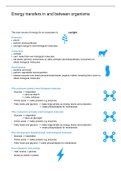
The main source of energy for an ecosystem is sunlight
Producers:
• plants
• perform photosynthesis
• use light energy to build biological molecules
Consumers:
• animals
• can’t make their own biological molecules
• eat plants (primary consumers) or other animals (secondary/tertiary consumers) to
obtain biological molecules
Decomposers:
• bacteria and fungi
• perform saprobiotic decomposition
• release enzyme onto dead plants/animals/waste (organic matter) breaking them down to
obtain biological molecules
Why producers (plants) need biological molecules
- Glucose -> respiration
-> store as starch
-> make cellulose
- Amino acids -> make proteins e.g enzymes
- Fatty Acids and glycerol -> make triglycerides as energy stores and protection
-> make phospholipids for membranes
Why consumers (animals) need biological molecules
- Glucose -> respiration
-> store as glycogen
- Amino acids -> make proteins e.g enzymes
- Fatty Acids and glycerol -> make triglycerides as energy stores and protection
-> make phospholipids for membranes
Why decomposers (bacteria/fungi) need biological molecules
- Glucose -> respiration
- Amino acids -> make proteins e.g enzymes
- Fatty Acids and glycerol -> make phospholipids for membranes
How organisms carry energy
- main source = glucose
- stored as starch in plants
,- stored as glycogen in animals
- others: lipids/fats/triglycerides/proteins
, 1.2 Saprobionts, Detritivores and Factors Affecting Rate of
Decomposition
Determining Dry Biomass
- put biomass on mass balance
- dry the biomass -> low temp. incubator or oven
- remeasure the mass
- repeat drying + measuring until the mass remains constant
Biological Molecules in the dry mass of an animal:
- proteins (CHON)
- carbohydrates (CHON)
- nucleic acids e.g ATP, amino acids (CHONP)
- lipids (CHO)
Detritivores = animals that feed on dead, organic material
e.g flies, dung beetles, worms
- All multi-cellular
Saprobionts = organisms that digest their food externally (by secreting enzymes) then absorb the
nutrients
e.g bacteria, fungi, moulds
- Mostly uni-cellular, few multi-cellular
Organic = carbon based
Inorganic = no carbon
What happens to nutrients after being digested?
- into soil to be absorbed by producers (plants)
- cycle restarts
Mycorrhizae = the association between roots and fungi; often a branching network providing
essential nutrients for the growth of the fungi and acting as an extended root system for the plants
Mutualistic Symbiotic Relationship = a close ecological relationship between
individuals of 2 species in which both species benefit
The main source of energy for an ecosystem is sunlight
Producers:
• plants
• perform photosynthesis
• use light energy to build biological molecules
Consumers:
• animals
• can’t make their own biological molecules
• eat plants (primary consumers) or other animals (secondary/tertiary consumers) to
obtain biological molecules
Decomposers:
• bacteria and fungi
• perform saprobiotic decomposition
• release enzyme onto dead plants/animals/waste (organic matter) breaking them down to
obtain biological molecules
Why producers (plants) need biological molecules
- Glucose -> respiration
-> store as starch
-> make cellulose
- Amino acids -> make proteins e.g enzymes
- Fatty Acids and glycerol -> make triglycerides as energy stores and protection
-> make phospholipids for membranes
Why consumers (animals) need biological molecules
- Glucose -> respiration
-> store as glycogen
- Amino acids -> make proteins e.g enzymes
- Fatty Acids and glycerol -> make triglycerides as energy stores and protection
-> make phospholipids for membranes
Why decomposers (bacteria/fungi) need biological molecules
- Glucose -> respiration
- Amino acids -> make proteins e.g enzymes
- Fatty Acids and glycerol -> make phospholipids for membranes
How organisms carry energy
- main source = glucose
- stored as starch in plants
,- stored as glycogen in animals
- others: lipids/fats/triglycerides/proteins
, 1.2 Saprobionts, Detritivores and Factors Affecting Rate of
Decomposition
Determining Dry Biomass
- put biomass on mass balance
- dry the biomass -> low temp. incubator or oven
- remeasure the mass
- repeat drying + measuring until the mass remains constant
Biological Molecules in the dry mass of an animal:
- proteins (CHON)
- carbohydrates (CHON)
- nucleic acids e.g ATP, amino acids (CHONP)
- lipids (CHO)
Detritivores = animals that feed on dead, organic material
e.g flies, dung beetles, worms
- All multi-cellular
Saprobionts = organisms that digest their food externally (by secreting enzymes) then absorb the
nutrients
e.g bacteria, fungi, moulds
- Mostly uni-cellular, few multi-cellular
Organic = carbon based
Inorganic = no carbon
What happens to nutrients after being digested?
- into soil to be absorbed by producers (plants)
- cycle restarts
Mycorrhizae = the association between roots and fungi; often a branching network providing
essential nutrients for the growth of the fungi and acting as an extended root system for the plants
Mutualistic Symbiotic Relationship = a close ecological relationship between
individuals of 2 species in which both species benefit