Skeletal System
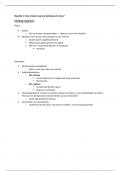
5 functions of the skeletal system;
1. Support - the Skelton supports the body and keeps you upright eg: vertebrae
2. Protection - helps to protect the delicate parts of the body eg: ribs protect heart and lungs
3. Movement - the skeleton provides joints and tendons to enable us to move
4. Blood production - blood cells produced in the blood marrow. Red blood cells transport oxygen
and white blood cells ght against infection in the body
5. Mineral storage - important minerals are stored in the body eg: Ca+
cranium
Bones can be classi ed into 5 main types;
clavicle mandible
• Flat bones
these bones are for protection. They have a large surface scapula
area spongy bone between hard bone ribs
numerus
Cranium and rib cage sternum vertebrae
• Long bone
long bone containing yellow bone marrow. Act as levers and carpals adios
contain red bone marrow to form red blood cells pelvis
metacarpals
Femur, bula, tibia, metacarpals and phalanges etc.
• Short Bone femur
phalanges
Compact in nature and equal length and width. Designed for patella
strength and weight bearing
Tarsals and carpals tibia
• Irregular
two functions are support and shape. Protect and internal metatarsals phages
organs, vertebrae protects spinal cord
Sacrum and vertebrae
• Sesamoid
ease joint movement and reduce friction and compression. Embedded tendon force to decrease stress
Patella
Cartilage-
Smooth tissue that covers the surface of articulating bones to absorb shock and allow friction feee
movement
Tendons-
The brous connective tissue that attaches muscle to bone
Ligaments-
A tough band of brous, slightly elastic connective tissue that attached bone to bone
5 functions of the skeletal system;
1. Support - the Skelton supports the body and keeps you upright eg: vertebrae
2. Protection - helps to protect the delicate parts of the body eg: ribs protect heart and lungs
3. Movement - the skeleton provides joints and tendons to enable us to move
4. Blood production - blood cells produced in the blood marrow. Red blood cells transport oxygen
and white blood cells ght against infection in the body
5. Mineral storage - important minerals are stored in the body eg: Ca+
cranium
Bones can be classi ed into 5 main types;
clavicle mandible
• Flat bones
these bones are for protection. They have a large surface scapula
area spongy bone between hard bone ribs
numerus
Cranium and rib cage sternum vertebrae
• Long bone
long bone containing yellow bone marrow. Act as levers and carpals adios
contain red bone marrow to form red blood cells pelvis
metacarpals
Femur, bula, tibia, metacarpals and phalanges etc.
• Short Bone femur
phalanges
Compact in nature and equal length and width. Designed for patella
strength and weight bearing
Tarsals and carpals tibia
• Irregular
two functions are support and shape. Protect and internal metatarsals phages
organs, vertebrae protects spinal cord
Sacrum and vertebrae
• Sesamoid
ease joint movement and reduce friction and compression. Embedded tendon force to decrease stress
Patella
Cartilage-
Smooth tissue that covers the surface of articulating bones to absorb shock and allow friction feee
movement
Tendons-
The brous connective tissue that attaches muscle to bone
Ligaments-
A tough band of brous, slightly elastic connective tissue that attached bone to bone