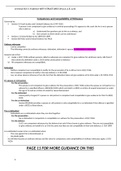
Criminal SGS 5: Evidence WITH STRUCTURES ON p.6, p.8, p.10
Competence and Compellability of Witnesses
Governed by:
Section 53 Youth Justice and Criminal Evidence Act 1999 YCJEA
A person is not competent to give evidence in criminal proceedings if it appears to the court the he is not a person
who is able to:
a) Understand the questions put to him as a witness; and
b) Give answers to them which can be understood
Section 1 Criminal Evidence Act 1898 CEA 1898
Section 80 Police and Criminal Evidence Act PACE
Ordinary witnesses
- Can be compelled
- The following cannot be ordinary witnesses: defendant, defendant’s spouse or defendant co defendant
General rule is that
a) Under s.53(1) YCJEA ordinary persons called as witnesses are competent to give evidence for whichever party calls them if
they satisfy the definition under s.53(3) (either prosecution or defence)
b) All competent witnesses are compellable.
Defendant
- Neither competent nor compellable to testify for the prosecution if he is still on trial s.53(4) YCJEA
- He is however competent to testify in his own defence s.1 CEA 1898.
- Jury can draw adverse inferences from the fact that the defendant does not give evidence at his trial under s.35 CJPOA 1994
D’s spouse or civil partner
For the prosecution
The spouse is not competent to give evidence for the prosecution s.53(1) YJCEA unless the spouse or civil partner is a
witness for a specified offence s.80(2A)(b) PACE which are listed in s.80(3) as victims of sexual harassment or under
the age of 16 and are victims of assault or sexual harassment
For the defendant
Unless jointly charged, D’s spouse or civil partner is competent and compellable to give evidence for that D s.80(2)
PACE
For the co-defendant
Section 80(2A)(b) provides a spouse or civil partner is only compellable for a co defendant if the offence is specified
under s.80(3) as listed above.
The co-defendant
- Defendants are co-defendants when they are tried together.
For the prosecution
No co-defendant is competent or compellable as a witness for the prosecution s.53(4) YCJEA
For the defence
Co-D’s are competent witnesses for the defence but only if they choose to give evidence. They are not compellable
to give evidence on behalf of a co-D in the same way they are not compellable in their own defence s.1 CEA 1898
A co-defendant ceases to be a co-defendant when:
- The case against him is discontinued; or
- He pleads guilty
He will then become an ordinary witness and the rules for competence and compellability of ordinary witnesses apply s.53(3)
YJCEA
PAGE 11 FOR MORE GUIDANCE ON THIS
1
, Criminal SGS 5: Evidence WITH STRUCTURES ON p.6, p.8, p.10
Admissibility of Evidence
Definition of evidence:
- Information that goes towards proving or disproving facts, it is necessary to prove both the actus reus and mens rea of the
offence.
Admisisbility of evidence
- Generally, evidence must be relevant as to proof or disproof of the case (DPP v Kilbourne)
- The weight of evidence is a matter for the jury or the magistrates.
Excluding evidence:
- If an exclusionary rule applies, the evidence will be inadmissible. The rule relates to:
1. Confessions s.76 PACE; and
2. A general discretion to exclude prosecution evidence under s.78 PACE.
Confessions
Defined as:
s.82(1) PACE- “any statement wholly or partly adverse to the person who made it, whether made to a person in authority or
not and whether made in words or otherwise”
Admissibility of confessions
- So long as the confession is relevant to any matter in issue s.76(1) PACE.
Excluding confession from evidence
- S.76(2) provides two limbs when confessions can be excluded (only need one, not both)
1. Oppression; or
2. Unreliability
- If raised, it is for the prosecution to prove beyond reasonable doubt that the confession was not obtained due to oppression or
things said or done which render the confession unreliable.
- Judge has no discretion to allow the confession if the prosecution cannot discharge the burden of proof and prove otherwise
Oppression (s.76(2)(a)):
- Defined in s.76(8) as including ‘torture, inhuman or degrading treatment and the use or threat of violence’
- This must be deliberate misconduct and will be tested subjectively
- There must be a causal link as the oppression must cause the confession- ie but for the oppression there might not have been
a confession.
- Need impropriety of the police.
- Burden on the prosecution to prove it was not obtained that way
- If D proves this or if prosecution fails to disprove it, the court must not admit it into evidence.
Unreliability (s.76(2)(b)):
- If the confession was obtained as a consequence of things said or done which are likely to render the confession unreliable,
then it will not be admissible.
- Things said or done refers to things said or done by the police and would include inducements to confess such as offer bail etc
- Do not need impropriety of the police as breaches of PACE can amount to things said and done thus rendering the confession
as inadmissible.
- There must be a causal link between the breach of PACE and the unreliability of the confession.
- A confession cannot be excluded under s.76(2)(b) if the breach does not cause the confession to be unreliable.
2
Competence and Compellability of Witnesses
Governed by:
Section 53 Youth Justice and Criminal Evidence Act 1999 YCJEA
A person is not competent to give evidence in criminal proceedings if it appears to the court the he is not a person
who is able to:
a) Understand the questions put to him as a witness; and
b) Give answers to them which can be understood
Section 1 Criminal Evidence Act 1898 CEA 1898
Section 80 Police and Criminal Evidence Act PACE
Ordinary witnesses
- Can be compelled
- The following cannot be ordinary witnesses: defendant, defendant’s spouse or defendant co defendant
General rule is that
a) Under s.53(1) YCJEA ordinary persons called as witnesses are competent to give evidence for whichever party calls them if
they satisfy the definition under s.53(3) (either prosecution or defence)
b) All competent witnesses are compellable.
Defendant
- Neither competent nor compellable to testify for the prosecution if he is still on trial s.53(4) YCJEA
- He is however competent to testify in his own defence s.1 CEA 1898.
- Jury can draw adverse inferences from the fact that the defendant does not give evidence at his trial under s.35 CJPOA 1994
D’s spouse or civil partner
For the prosecution
The spouse is not competent to give evidence for the prosecution s.53(1) YJCEA unless the spouse or civil partner is a
witness for a specified offence s.80(2A)(b) PACE which are listed in s.80(3) as victims of sexual harassment or under
the age of 16 and are victims of assault or sexual harassment
For the defendant
Unless jointly charged, D’s spouse or civil partner is competent and compellable to give evidence for that D s.80(2)
PACE
For the co-defendant
Section 80(2A)(b) provides a spouse or civil partner is only compellable for a co defendant if the offence is specified
under s.80(3) as listed above.
The co-defendant
- Defendants are co-defendants when they are tried together.
For the prosecution
No co-defendant is competent or compellable as a witness for the prosecution s.53(4) YCJEA
For the defence
Co-D’s are competent witnesses for the defence but only if they choose to give evidence. They are not compellable
to give evidence on behalf of a co-D in the same way they are not compellable in their own defence s.1 CEA 1898
A co-defendant ceases to be a co-defendant when:
- The case against him is discontinued; or
- He pleads guilty
He will then become an ordinary witness and the rules for competence and compellability of ordinary witnesses apply s.53(3)
YJCEA
PAGE 11 FOR MORE GUIDANCE ON THIS
1
, Criminal SGS 5: Evidence WITH STRUCTURES ON p.6, p.8, p.10
Admissibility of Evidence
Definition of evidence:
- Information that goes towards proving or disproving facts, it is necessary to prove both the actus reus and mens rea of the
offence.
Admisisbility of evidence
- Generally, evidence must be relevant as to proof or disproof of the case (DPP v Kilbourne)
- The weight of evidence is a matter for the jury or the magistrates.
Excluding evidence:
- If an exclusionary rule applies, the evidence will be inadmissible. The rule relates to:
1. Confessions s.76 PACE; and
2. A general discretion to exclude prosecution evidence under s.78 PACE.
Confessions
Defined as:
s.82(1) PACE- “any statement wholly or partly adverse to the person who made it, whether made to a person in authority or
not and whether made in words or otherwise”
Admissibility of confessions
- So long as the confession is relevant to any matter in issue s.76(1) PACE.
Excluding confession from evidence
- S.76(2) provides two limbs when confessions can be excluded (only need one, not both)
1. Oppression; or
2. Unreliability
- If raised, it is for the prosecution to prove beyond reasonable doubt that the confession was not obtained due to oppression or
things said or done which render the confession unreliable.
- Judge has no discretion to allow the confession if the prosecution cannot discharge the burden of proof and prove otherwise
Oppression (s.76(2)(a)):
- Defined in s.76(8) as including ‘torture, inhuman or degrading treatment and the use or threat of violence’
- This must be deliberate misconduct and will be tested subjectively
- There must be a causal link as the oppression must cause the confession- ie but for the oppression there might not have been
a confession.
- Need impropriety of the police.
- Burden on the prosecution to prove it was not obtained that way
- If D proves this or if prosecution fails to disprove it, the court must not admit it into evidence.
Unreliability (s.76(2)(b)):
- If the confession was obtained as a consequence of things said or done which are likely to render the confession unreliable,
then it will not be admissible.
- Things said or done refers to things said or done by the police and would include inducements to confess such as offer bail etc
- Do not need impropriety of the police as breaches of PACE can amount to things said and done thus rendering the confession
as inadmissible.
- There must be a causal link between the breach of PACE and the unreliability of the confession.
- A confession cannot be excluded under s.76(2)(b) if the breach does not cause the confession to be unreliable.
2