Piece 1
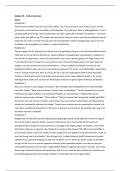
The digital revolution has drastically transformed what History can and will be in the future.
It redefined the authors, audiences, and records essential to the discipline.
The digital revolution broadened the number of people who could write academic History.
With the rise of the internet, online resources transformed the academic landscape. Online
bibliographies listed literature and online collections provided access to books, articles and primary
documents immediately. Before the digital revolution, it took time to get access to these materials.
The materials would travel from library to library. Academics within institutions such as universities
could afford to spend time negotiating with libraries for materials. However, the immediacy of online
resources opened academic literature to a wider group. Anyone with internet access could study
academic historical literature. Many free books existed on resources like Google Books or the
Bibliography of British and Irish History. Subscription or paid websites like JSTOR provided access to
these more specialist resources. Those in higher education, institutions or willing to pay for
resources could carry out more detailed research. So, people in education or from the comfort of
their own homes on their laptops could carry out historical research that was before impossible.
This change probably had more benefits than disadvantages. The digital revolution widened
access to knowledge and instilled greater wisdom in the public. More people could produce and
research academic History. This could have dispelled misinformation at a local level and widened the
field of historical debate. For example, during the 1960s when African-American students entered
American universities, African-American history exploded as a new research field. People newly
granted access to historical literature through the digital revolution might have also asked new
historical questions and provided new perspectives. Conversely, the digital revolution endangered
the academic nature of history. There was no way of monitoring how people interpreted the history
they read online and related this back to their peers. Blogs and Youtube videos made by pseudo-
academics threatened History as grounded in truth; notoriously unregulated, they might have given
misleading information and might not support proper academic standards. Leading historians have
tried to combat this, probably most successfully with Raphael Samuel’s History Workshops. The
digital revolution giving easier access to academic historical literature was probably overall good. It
made historical research for academics quicker and easier with detailed catalogs. It also provided
academic fuel for curious people’s minds who might not before have had access to historical
literature. So, the academic élite and the rest of society could research History as a result of the
digital revolution.
The digital revolution changed the consumption and production of History. With the rise of
the media came the rise of Public History. Television, radio shows, and Youtube videos expanded
Public History’s audience from simply those who visited local museums. This is probably good for
public education. This inspired the public to become involved in history projects, to become more
open-minded about their heritage and towards other groups in society. Easier access to Public
History engaged people in debate and popularised History. Public History expelled myths in the
public memory that politicians could have manipulated. However, the digital revolution was not
good for History as a discipline and has many drawbacks about its effects on the public. The digital
revolution did not increase public wisdom. It did not increase people’s abilities to engage
constructively and analyze material. It encouraged passive education and over-simplification. Public
History continually had friction between the need for historical accuracy and the need to make
content accessible and interesting. For example, television shows like Horrible Histories exaggerated
historical truths and simplified material in favor of generating audience interest. In this sense, Public
The digital revolution has drastically transformed what History can and will be in the future.
It redefined the authors, audiences, and records essential to the discipline.
The digital revolution broadened the number of people who could write academic History.
With the rise of the internet, online resources transformed the academic landscape. Online
bibliographies listed literature and online collections provided access to books, articles and primary
documents immediately. Before the digital revolution, it took time to get access to these materials.
The materials would travel from library to library. Academics within institutions such as universities
could afford to spend time negotiating with libraries for materials. However, the immediacy of online
resources opened academic literature to a wider group. Anyone with internet access could study
academic historical literature. Many free books existed on resources like Google Books or the
Bibliography of British and Irish History. Subscription or paid websites like JSTOR provided access to
these more specialist resources. Those in higher education, institutions or willing to pay for
resources could carry out more detailed research. So, people in education or from the comfort of
their own homes on their laptops could carry out historical research that was before impossible.
This change probably had more benefits than disadvantages. The digital revolution widened
access to knowledge and instilled greater wisdom in the public. More people could produce and
research academic History. This could have dispelled misinformation at a local level and widened the
field of historical debate. For example, during the 1960s when African-American students entered
American universities, African-American history exploded as a new research field. People newly
granted access to historical literature through the digital revolution might have also asked new
historical questions and provided new perspectives. Conversely, the digital revolution endangered
the academic nature of history. There was no way of monitoring how people interpreted the history
they read online and related this back to their peers. Blogs and Youtube videos made by pseudo-
academics threatened History as grounded in truth; notoriously unregulated, they might have given
misleading information and might not support proper academic standards. Leading historians have
tried to combat this, probably most successfully with Raphael Samuel’s History Workshops. The
digital revolution giving easier access to academic historical literature was probably overall good. It
made historical research for academics quicker and easier with detailed catalogs. It also provided
academic fuel for curious people’s minds who might not before have had access to historical
literature. So, the academic élite and the rest of society could research History as a result of the
digital revolution.
The digital revolution changed the consumption and production of History. With the rise of
the media came the rise of Public History. Television, radio shows, and Youtube videos expanded
Public History’s audience from simply those who visited local museums. This is probably good for
public education. This inspired the public to become involved in history projects, to become more
open-minded about their heritage and towards other groups in society. Easier access to Public
History engaged people in debate and popularised History. Public History expelled myths in the
public memory that politicians could have manipulated. However, the digital revolution was not
good for History as a discipline and has many drawbacks about its effects on the public. The digital
revolution did not increase public wisdom. It did not increase people’s abilities to engage
constructively and analyze material. It encouraged passive education and over-simplification. Public
History continually had friction between the need for historical accuracy and the need to make
content accessible and interesting. For example, television shows like Horrible Histories exaggerated
historical truths and simplified material in favor of generating audience interest. In this sense, Public