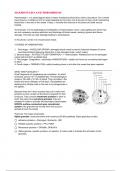
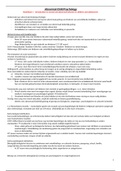
L1 – Introduction to Cyberpsychology
Major Research and application implications
implications - Does face-to-face and online applications differ
- Do theories and concepts differ
- Research measures and collection of data
Key differences between face-to-face and online
- Asynchronous communication
- Anonymity
- Elimination of geographic constraints
- Recordability
Areas of interest
- Risk and benefits for the youth
- Problematic online behaviour
- Methods of relational maintenance
*Key aspect in research
- Note when specific items or sites came up when research papers are
released
- E.g. Wifi VS Lan; E.g. Facebook VS Snapchat
- Also devices or platforms used
Importance • Kraut et al (1998)
of noting o Longitudinal study looking at effect of using internet for
year of communication
publishing o Associated with:
o higher depression, loneliness, and stress
o Reduction in social circle
o Reduction in communication with family members
- *Shows nothing in recent times perhaps due to frequent communication
with unknown others online instead of friends and family in earlier years
• Kraut et al (2001)
o Follow up study
o Results:
o Increase in local and wider social circle
o Increase in FTF interaction with friends & family
o Decrease in depression & loneliness (but only for
extraverts)
- *Accounted for changes in technology
- May affect implications
Murthy & Bowman (2015)
Do tweets differ in linguistic styles depending on device?
• Mobile Tweets contain more egocentric content
• Mobile Tweets contain more negative language
, Key items to note
• When was the research carried out?
• What population did they use?
• How many people had access to the internet when research carried out?
• What devices were available at that point and with that population?
• Which devices did they consider in the research?
Reading
Main aspects of Main areas of concern
Cyberpsychology - Social interaction with technology
- Development of technology in application to requirements and desires
- Behavioural and psychological impact of technology
- Impression management of online persona
- Linguistic development online (Emoticons)
- Applied Cyberpsychology (E.g. Distance work)
- Economic activity online
- Gaming and its impacts (E.g. entertainment & Internet gaming
disorder)
- Cybercrime
Examples of behavioural and psychological impact of technology
- Flow state – A distorted sense of time when using technology,
particularly when gaming (Csikszentmihalyi, 1990)
- Hyperpersonal model – Increased closeness with others through
online communication (Walther, 1996, 2007)
- Impression management – Based on online persona with anonymity
and self-disclosure (Joinson et al., 2007, 2010)
,L2 – Self and Identity Online
Impression Key aspects
managemen - Important that others see our ‘best’
t - To accentuate or supress different information
- Vary degree of self-disclosure and self-presentation influenced by
motivations to manage impressions
- To obtain rewards (E.g. personal, material, occupational, social)
Online Impression management
- *With unique set of characteristics on specific platforms
Greater Ability to explore different parts of personality Different
anonymity applications lead to different levels
- E.g. Zoom – Low anonymity
- E.g. Chatrooms – High anonymity
- Lead to differed presentations
Reduction in Ability to reduce valence of physical appearance
visual cues - Result in reduced perception of visual aspect
- Reduce judgement on physical aspects
Controllability Editability and time
- Ability to edit and change expressions
- Allows time to think and change expressions
Finding similar Anonymity allows similar people to connect
others - Belonging to groups of people
- Allow for impression management to people with
the same interests
Self- Walther’s Hyperpersonal Model of Computer-Mediated Communication
presentation - *Four aspects of Computer-Mediated Communication creates
and models environment that benefits self-presentation
Editability Ability to edit photos and texts
- E.g. Editing, filters…
Asynchronous Ability to perfect content sent
Physical Normal cues unseen on the internet
Proximity - Reduces need to manage body language
- E.g. Eye contact, posture…
- Reduce negative judgement otherwise in person
Reallocation of The removal of physical aspects
cognitive - Extra cognitive resources put into content and to
resources perfect aspects to present online
‘True self’ Study (Bargh et al., 2002)
- To examine if individuals are more likely to share the ‘true self’ online
- Actual self – The version that is very carefully crafted for face-to-face
interactions
- True self – Who an individual truly is but hold back on some aspects
, Flow Study 1
Method 46 Ps Online or FTF group
Stage 1
- Write down words that describe actual self and true self
Stage 2
- Filler task
Stage 3
- Interaction stage – Online chat room VS FTF chat
Stage 4
- Reaction time task on words from stage 1 (Yes/no
describe the self)
- Series of words – P words + experimenter words
- *Faster responses indicate higher accessibility
- Implies which version of self is more easily accessed
Results
Implication – Online world more inclined to portray true self
Limitations Possibility of priming effect
- Since Ps told about the interaction before the task
- Start to manage versions of the self to portray
- *May reflect cognitive abilities more?
Flow Study 2
Design Same as study 1
- Did not actually interact with others (No stage 3)
- Yet TOLD that they would
Results No interaction between type of self and mode of communication
- Suggests the actual interaction as affecting which ‘self’
is more accessible
- Not the thought of an interaction
Flow Study 3
Method Examined the perceptions of P’s chat partners
- Through matching words of the partners and the
participants themselves in stage 1
Major Research and application implications
implications - Does face-to-face and online applications differ
- Do theories and concepts differ
- Research measures and collection of data
Key differences between face-to-face and online
- Asynchronous communication
- Anonymity
- Elimination of geographic constraints
- Recordability
Areas of interest
- Risk and benefits for the youth
- Problematic online behaviour
- Methods of relational maintenance
*Key aspect in research
- Note when specific items or sites came up when research papers are
released
- E.g. Wifi VS Lan; E.g. Facebook VS Snapchat
- Also devices or platforms used
Importance • Kraut et al (1998)
of noting o Longitudinal study looking at effect of using internet for
year of communication
publishing o Associated with:
o higher depression, loneliness, and stress
o Reduction in social circle
o Reduction in communication with family members
- *Shows nothing in recent times perhaps due to frequent communication
with unknown others online instead of friends and family in earlier years
• Kraut et al (2001)
o Follow up study
o Results:
o Increase in local and wider social circle
o Increase in FTF interaction with friends & family
o Decrease in depression & loneliness (but only for
extraverts)
- *Accounted for changes in technology
- May affect implications
Murthy & Bowman (2015)
Do tweets differ in linguistic styles depending on device?
• Mobile Tweets contain more egocentric content
• Mobile Tweets contain more negative language
, Key items to note
• When was the research carried out?
• What population did they use?
• How many people had access to the internet when research carried out?
• What devices were available at that point and with that population?
• Which devices did they consider in the research?
Reading
Main aspects of Main areas of concern
Cyberpsychology - Social interaction with technology
- Development of technology in application to requirements and desires
- Behavioural and psychological impact of technology
- Impression management of online persona
- Linguistic development online (Emoticons)
- Applied Cyberpsychology (E.g. Distance work)
- Economic activity online
- Gaming and its impacts (E.g. entertainment & Internet gaming
disorder)
- Cybercrime
Examples of behavioural and psychological impact of technology
- Flow state – A distorted sense of time when using technology,
particularly when gaming (Csikszentmihalyi, 1990)
- Hyperpersonal model – Increased closeness with others through
online communication (Walther, 1996, 2007)
- Impression management – Based on online persona with anonymity
and self-disclosure (Joinson et al., 2007, 2010)
,L2 – Self and Identity Online
Impression Key aspects
managemen - Important that others see our ‘best’
t - To accentuate or supress different information
- Vary degree of self-disclosure and self-presentation influenced by
motivations to manage impressions
- To obtain rewards (E.g. personal, material, occupational, social)
Online Impression management
- *With unique set of characteristics on specific platforms
Greater Ability to explore different parts of personality Different
anonymity applications lead to different levels
- E.g. Zoom – Low anonymity
- E.g. Chatrooms – High anonymity
- Lead to differed presentations
Reduction in Ability to reduce valence of physical appearance
visual cues - Result in reduced perception of visual aspect
- Reduce judgement on physical aspects
Controllability Editability and time
- Ability to edit and change expressions
- Allows time to think and change expressions
Finding similar Anonymity allows similar people to connect
others - Belonging to groups of people
- Allow for impression management to people with
the same interests
Self- Walther’s Hyperpersonal Model of Computer-Mediated Communication
presentation - *Four aspects of Computer-Mediated Communication creates
and models environment that benefits self-presentation
Editability Ability to edit photos and texts
- E.g. Editing, filters…
Asynchronous Ability to perfect content sent
Physical Normal cues unseen on the internet
Proximity - Reduces need to manage body language
- E.g. Eye contact, posture…
- Reduce negative judgement otherwise in person
Reallocation of The removal of physical aspects
cognitive - Extra cognitive resources put into content and to
resources perfect aspects to present online
‘True self’ Study (Bargh et al., 2002)
- To examine if individuals are more likely to share the ‘true self’ online
- Actual self – The version that is very carefully crafted for face-to-face
interactions
- True self – Who an individual truly is but hold back on some aspects
, Flow Study 1
Method 46 Ps Online or FTF group
Stage 1
- Write down words that describe actual self and true self
Stage 2
- Filler task
Stage 3
- Interaction stage – Online chat room VS FTF chat
Stage 4
- Reaction time task on words from stage 1 (Yes/no
describe the self)
- Series of words – P words + experimenter words
- *Faster responses indicate higher accessibility
- Implies which version of self is more easily accessed
Results
Implication – Online world more inclined to portray true self
Limitations Possibility of priming effect
- Since Ps told about the interaction before the task
- Start to manage versions of the self to portray
- *May reflect cognitive abilities more?
Flow Study 2
Design Same as study 1
- Did not actually interact with others (No stage 3)
- Yet TOLD that they would
Results No interaction between type of self and mode of communication
- Suggests the actual interaction as affecting which ‘self’
is more accessible
- Not the thought of an interaction
Flow Study 3
Method Examined the perceptions of P’s chat partners
- Through matching words of the partners and the
participants themselves in stage 1