📮
L4 - Chromosomal
Rearrangements ll:
Translocation, Aneuploidy and
Polyploidy
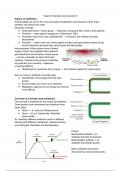
Chromosomal Translocations
Translocation is when a section of one chromosome breaks off and joins to a
non-homologous chromosome.
In non-reciprocal translocations, part of one chromosome will break off and join
to another chromosome.
In reciprocal translocations, two non-homologous chromosome swap genetic
material.
In balanced reciprocal translocations, NO genetic material at all is lost.
Heterozygous individuals with these kind of translocations often show no
phenotype but they will have reduced fertility (semi-sterile) as only 50% of their
gametes are balanced.
And what I mean by balanced is they contain a complete complement of genetic
material.
This is because when a reciprocal translocation is present, the four
chromosomes, so the two recombinant and the two normal chromosomes, come
L4 - Chromosomal Rearrangements ll: Translocation, Aneuploidy and Polyploidy 1
, together as a four-chromosome structure known as a quadrivalent.
Two of these chromosomes will then pass into the gamete.
There are four possibilities. The gamete could contain the two normal
chromosomes, so one red and one blue, or it could contain both of the
recombinant chromosomes. Either of these is fine. These are balanced gametes.
Unbalanced reciprocal translocation can lead to
chromosome loss
However, the other possibility is that the gametes will contain one normal, so
either the red or the blue, as well as one of the recombinant chromosomes. And
if this happens, the gametes are unbalanced.
For example, if the red chromosome ends up in the same gamete as the
recombinant chromosome with A to D and S to U, then it will lack any copies of
the genomic regions, P, Q and R, but will have two copies of regions A through
D. And zygotes produced from these types of gametes will typically miscarry.
Unbalanced reciprocal translocations lead to loss of genetic material.
The most common type of these are Robertsonian translocations which occur
between two acrocentric chromosomes.
In humans, these are chromosomes 13, 14, 15, 21 and 22.
Now, as you’ll remember, acrocentric chromosomes have very short P arms, and
these consist mainly of satellite DNA with few, if any, genes.
Now, breakage of the short arm of the two acrocentric chromosomes near to the
centromere will result in the formation of a large metacentric chromosome which
will consist of both long arms and a small chromosome which consists of the two
short arms, which is usually lost from the cell.
When an individual carries a Robertsonian translocation, they will therefore have
45 chromosomes.
In the example we’re looking at here, the long arm of the green chromosome has
fused to the long arm of the yellow chromosome. Now, since the short arms
contain only satellite DNA in the main part, there’s not usually a phenotype
associated with a Robertsonian translocation. (NO phenotype)
L4 - Chromosomal Rearrangements ll: Translocation, Aneuploidy and Polyploidy 2
L4 - Chromosomal
Rearrangements ll:
Translocation, Aneuploidy and
Polyploidy
Chromosomal Translocations
Translocation is when a section of one chromosome breaks off and joins to a
non-homologous chromosome.
In non-reciprocal translocations, part of one chromosome will break off and join
to another chromosome.
In reciprocal translocations, two non-homologous chromosome swap genetic
material.
In balanced reciprocal translocations, NO genetic material at all is lost.
Heterozygous individuals with these kind of translocations often show no
phenotype but they will have reduced fertility (semi-sterile) as only 50% of their
gametes are balanced.
And what I mean by balanced is they contain a complete complement of genetic
material.
This is because when a reciprocal translocation is present, the four
chromosomes, so the two recombinant and the two normal chromosomes, come
L4 - Chromosomal Rearrangements ll: Translocation, Aneuploidy and Polyploidy 1
, together as a four-chromosome structure known as a quadrivalent.
Two of these chromosomes will then pass into the gamete.
There are four possibilities. The gamete could contain the two normal
chromosomes, so one red and one blue, or it could contain both of the
recombinant chromosomes. Either of these is fine. These are balanced gametes.
Unbalanced reciprocal translocation can lead to
chromosome loss
However, the other possibility is that the gametes will contain one normal, so
either the red or the blue, as well as one of the recombinant chromosomes. And
if this happens, the gametes are unbalanced.
For example, if the red chromosome ends up in the same gamete as the
recombinant chromosome with A to D and S to U, then it will lack any copies of
the genomic regions, P, Q and R, but will have two copies of regions A through
D. And zygotes produced from these types of gametes will typically miscarry.
Unbalanced reciprocal translocations lead to loss of genetic material.
The most common type of these are Robertsonian translocations which occur
between two acrocentric chromosomes.
In humans, these are chromosomes 13, 14, 15, 21 and 22.
Now, as you’ll remember, acrocentric chromosomes have very short P arms, and
these consist mainly of satellite DNA with few, if any, genes.
Now, breakage of the short arm of the two acrocentric chromosomes near to the
centromere will result in the formation of a large metacentric chromosome which
will consist of both long arms and a small chromosome which consists of the two
short arms, which is usually lost from the cell.
When an individual carries a Robertsonian translocation, they will therefore have
45 chromosomes.
In the example we’re looking at here, the long arm of the green chromosome has
fused to the long arm of the yellow chromosome. Now, since the short arms
contain only satellite DNA in the main part, there’s not usually a phenotype
associated with a Robertsonian translocation. (NO phenotype)
L4 - Chromosomal Rearrangements ll: Translocation, Aneuploidy and Polyploidy 2