Introduction to C. elegans
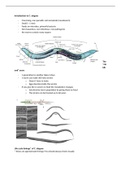
- Free-living, non-parasitic soil nematode (roundworm)
- Small (~ 1 mm)
- Feeds on microbes, primarily bacteria
- Non-hazardous, non-infectious, non-pathogenic
- the worms contain many organs
The
“chi
ldh
ood” years
- 1 generation to another takes 4 days
- 1 worm can make 300 new worms
o Doesn’t have to mate
o Eggs develop inside the worms
- If you give the L1 worm no food the metabolism changes
o Synchronise worm population by giving them no food
o The strains can be freezed up to 60 years
Life cycle timings* of C. elegans
* these are approximate timings! You should always check visually
, Plates for worms
- Worms live on NGM - Nematode Growth Medium
- NGM is prepared in a 500ml bottle and autoclaved → store till needed
o Agar, bactopeptone, NaCl, dH2O
- Melt in the microwave, then add the last chemicals when bottle is cool to touch
o MgSO4
o CaCl2
o phosphate buffer
o cholesterol
- Pour plates and ensure you have a stock ready!
Food for worms
- E.coli OP50 is a Uracil-deficient strain of bacteria
o Food for the worms
o Grow good on NGM agar
- Huge contamination can affect your worm development and experimental results so we use
OP50-1 which is streptomycin resistant
- E. coli OP50-1 liquid cultures are prepared for you and stored at 4°C
- Seed 35mm NGM plates with ~150µl bacterial culture, but not to the edges of the plate
- Leave the plates at room temperature for 1-2 days
Picking C. elegans
- Pick L4 worms to a fresh plate
o These worms have still eggs inside them thats why we want L4
- You should do this regularly to ensure there is always a supply of food
- Try keeping a stock of plates at all temperatures
- How do you move worms?
o With a worm pick or by chunking
C. elegans developmental stages
- Free-living, non-parasitic soil nematode (roundworm)
- Small (~ 1 mm)
- Feeds on microbes, primarily bacteria
- Non-hazardous, non-infectious, non-pathogenic
- the worms contain many organs
The
“chi
ldh
ood” years
- 1 generation to another takes 4 days
- 1 worm can make 300 new worms
o Doesn’t have to mate
o Eggs develop inside the worms
- If you give the L1 worm no food the metabolism changes
o Synchronise worm population by giving them no food
o The strains can be freezed up to 60 years
Life cycle timings* of C. elegans
* these are approximate timings! You should always check visually
, Plates for worms
- Worms live on NGM - Nematode Growth Medium
- NGM is prepared in a 500ml bottle and autoclaved → store till needed
o Agar, bactopeptone, NaCl, dH2O
- Melt in the microwave, then add the last chemicals when bottle is cool to touch
o MgSO4
o CaCl2
o phosphate buffer
o cholesterol
- Pour plates and ensure you have a stock ready!
Food for worms
- E.coli OP50 is a Uracil-deficient strain of bacteria
o Food for the worms
o Grow good on NGM agar
- Huge contamination can affect your worm development and experimental results so we use
OP50-1 which is streptomycin resistant
- E. coli OP50-1 liquid cultures are prepared for you and stored at 4°C
- Seed 35mm NGM plates with ~150µl bacterial culture, but not to the edges of the plate
- Leave the plates at room temperature for 1-2 days
Picking C. elegans
- Pick L4 worms to a fresh plate
o These worms have still eggs inside them thats why we want L4
- You should do this regularly to ensure there is always a supply of food
- Try keeping a stock of plates at all temperatures
- How do you move worms?
o With a worm pick or by chunking
C. elegans developmental stages