International Management (6013B0536Y)
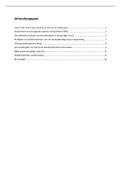
Summary of all articles covered in the course for the final exam.
Manage the Suppliers That Could Harm Your Brand – Short & Toffel (2021) Week 2 2
Rethinking Marketing – Rust, Moorman & Bhalla (2010) Week 3 3
Developing Your Global Know-How – Russwurm et al. (2011) Week 5 5
The most important leadership competencies, according to leaders around the world – Giles (2016) Week 5 9
Sustainability lessons from the front lines – Bhattacharya & Polman (2017) Week 6 11
Why social responsibility produces more resilient organizations – Kaplan (2020) Week 6 12
Why Are Companies Sitting on So Much Cash? – Hankins & Petersen (2020) Week 7 13
, Manage the Suppliers That Could Harm Your Brand – Short & Toffel (2021)
• Companies have long faced reputational risks from harmful and abusive working conditions in their supply chains.
• One strategy that many companies adopt to avert such problems: Impose codes of conduct that stipulate minimally
acceptable working conditions in suppliers’ factories.
• Numerous firms also periodically audit their suppliers to assess compliance.
• We conducted a series of studies using code-of-conduct audits of thousands of factories around the world.
o This uncovered five factors that predict which suppliers are likely to improve conditions over time and
suggests seven steps purchasing companies can take to ensure that they do.
§ These insights can guide managers who are seeking to decide which potential suppliers to avoid,
which existing supplier relationships to continue investing in, and which ones to walk away from.
Which Suppliers Are Likely to Improve?
• Countries and cities vary in terms of production costs, labour availability, general working conditions, and propensity
for strikes and other disruptions.
o Our research indicates that such locational differences can reinforce or undermine efforts to encourage
suppliers to improve their working conditions.
o We found greater improvement among suppliers in countries with more nongovernmental organisations per
capita and more media freedom than in other countries.
§ Both factors heighten the probability that harmful working conditions will be exposed.
• 1) Certified compliance with management system standards.
o Factories adhering to management system standards such as ISO 9001 (process quality) and ISO 14001
(environmental Gallery Stock management) tended to be better than uncertified suppliers at improving
working conditions.
o Suppliers opt in to such standards and hire third parties to attest that they comply.
§ The standards require suppliers to conduct internal audits and institute procedures to promote
continuous improvement.
• 2) Adoption of lean management.
o The lean system is a set of practices that include standardizing procedures, team based problem-solving and
quality control, continuous improvement to eliminate waste, and production planning to minimize peaks and
troughs in the use of labour and equipment.
o Lean management requires training workers to identify quality problems and managers to schedule
workloads more efficiently to avoid excessive overtime.
o Adoption of lean management improved compliance with labour standards relating to wages and hours.
o After a factory adopted the lean system, managers became more reluctant to mistreat workers and exhibited
greater concern that people might defect to a competitor.
o Applying lean management can increase workers’ skills and boost management’s efforts to motivate and
retain workers through better employment terms.
• 3) Unions.
o Following an audit, unionized suppliers improved working conditions more than nonunionized suppliers did.
o Although unions in developing countries can’t always increase workers’ political power, they promote
dialogue between managers and workers in ways that can be helpful.
o They can enable workers to make management aware of hazards and to share proposals for mitigating them.
o They can also help management communicate with workers about health and safety standards and reinforce
adherence to desired procedures.
• 4) Avoidance of piece-rate compensation.
o Factories that pay workers by the units they produce tend to exhibit less improvement in working conditions
than factories with other compensation systems.
o Piece-rate pay incentivizes workers to focus on short-term production goals, potentially discouraging
practices that would boost compliance with labour standards but might reduce productivity—e.g., wearing
protective equipment, participating in safety and emergency preparedness training, using machine guards.
• 5) Serving once-tarnished buyers.
o There were greater improvements in working conditions among suppliers serving brands that had
experienced negative publicity related to other suppliers’ labour practices.
o This happens because such buyers are particularly worried about facing similar criticism in the future, which
would demonstrate that they hadn’t learned their lesson.
o Consequently, they are more likely to be cautious when selecting new suppliers and to step up efforts to
scrutinize them, encourage and support improvements, and walk away when bad conditions persist.
How Can Monitoring Improve Working Conditions?
• Companies can boost the odds of improvement by using monitoring methods.
• 1) Use highly trained auditors.
Summary of all articles covered in the course for the final exam.
Manage the Suppliers That Could Harm Your Brand – Short & Toffel (2021) Week 2 2
Rethinking Marketing – Rust, Moorman & Bhalla (2010) Week 3 3
Developing Your Global Know-How – Russwurm et al. (2011) Week 5 5
The most important leadership competencies, according to leaders around the world – Giles (2016) Week 5 9
Sustainability lessons from the front lines – Bhattacharya & Polman (2017) Week 6 11
Why social responsibility produces more resilient organizations – Kaplan (2020) Week 6 12
Why Are Companies Sitting on So Much Cash? – Hankins & Petersen (2020) Week 7 13
, Manage the Suppliers That Could Harm Your Brand – Short & Toffel (2021)
• Companies have long faced reputational risks from harmful and abusive working conditions in their supply chains.
• One strategy that many companies adopt to avert such problems: Impose codes of conduct that stipulate minimally
acceptable working conditions in suppliers’ factories.
• Numerous firms also periodically audit their suppliers to assess compliance.
• We conducted a series of studies using code-of-conduct audits of thousands of factories around the world.
o This uncovered five factors that predict which suppliers are likely to improve conditions over time and
suggests seven steps purchasing companies can take to ensure that they do.
§ These insights can guide managers who are seeking to decide which potential suppliers to avoid,
which existing supplier relationships to continue investing in, and which ones to walk away from.
Which Suppliers Are Likely to Improve?
• Countries and cities vary in terms of production costs, labour availability, general working conditions, and propensity
for strikes and other disruptions.
o Our research indicates that such locational differences can reinforce or undermine efforts to encourage
suppliers to improve their working conditions.
o We found greater improvement among suppliers in countries with more nongovernmental organisations per
capita and more media freedom than in other countries.
§ Both factors heighten the probability that harmful working conditions will be exposed.
• 1) Certified compliance with management system standards.
o Factories adhering to management system standards such as ISO 9001 (process quality) and ISO 14001
(environmental Gallery Stock management) tended to be better than uncertified suppliers at improving
working conditions.
o Suppliers opt in to such standards and hire third parties to attest that they comply.
§ The standards require suppliers to conduct internal audits and institute procedures to promote
continuous improvement.
• 2) Adoption of lean management.
o The lean system is a set of practices that include standardizing procedures, team based problem-solving and
quality control, continuous improvement to eliminate waste, and production planning to minimize peaks and
troughs in the use of labour and equipment.
o Lean management requires training workers to identify quality problems and managers to schedule
workloads more efficiently to avoid excessive overtime.
o Adoption of lean management improved compliance with labour standards relating to wages and hours.
o After a factory adopted the lean system, managers became more reluctant to mistreat workers and exhibited
greater concern that people might defect to a competitor.
o Applying lean management can increase workers’ skills and boost management’s efforts to motivate and
retain workers through better employment terms.
• 3) Unions.
o Following an audit, unionized suppliers improved working conditions more than nonunionized suppliers did.
o Although unions in developing countries can’t always increase workers’ political power, they promote
dialogue between managers and workers in ways that can be helpful.
o They can enable workers to make management aware of hazards and to share proposals for mitigating them.
o They can also help management communicate with workers about health and safety standards and reinforce
adherence to desired procedures.
• 4) Avoidance of piece-rate compensation.
o Factories that pay workers by the units they produce tend to exhibit less improvement in working conditions
than factories with other compensation systems.
o Piece-rate pay incentivizes workers to focus on short-term production goals, potentially discouraging
practices that would boost compliance with labour standards but might reduce productivity—e.g., wearing
protective equipment, participating in safety and emergency preparedness training, using machine guards.
• 5) Serving once-tarnished buyers.
o There were greater improvements in working conditions among suppliers serving brands that had
experienced negative publicity related to other suppliers’ labour practices.
o This happens because such buyers are particularly worried about facing similar criticism in the future, which
would demonstrate that they hadn’t learned their lesson.
o Consequently, they are more likely to be cautious when selecting new suppliers and to step up efforts to
scrutinize them, encourage and support improvements, and walk away when bad conditions persist.
How Can Monitoring Improve Working Conditions?
• Companies can boost the odds of improvement by using monitoring methods.
• 1) Use highly trained auditors.