English: International Communication
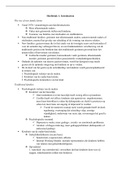
Summary of the key terms
1. Key terms
English as a Native Language
- English is the dominant and first language of people
English as a Second Language
- As an official language for intra-national communication in government, the judiciary etc.
- Taught in countries where English is the dominant language
- For example: Teaching English in Australia
English as a Foreign Language
- To communicate with English native speakers as a non-native speaker
- Non-native speakers want to follow the natives' rule, belong to the English community, and
follow the grammatical and cultural rules.
- Adopting the language.
English as a Lingua Franca
- An additionally acquired language system which serves as a means of communication for
speakers of different first languages’ (Jenkins, 2011: 2) It is adapted to the need of
international communication.
- Any use of English among speakers of different first languages for whom English is the
communicative medium of choice, and often the only option. (Seidlhofer)
- ELF is ‘a ‘contact language’ between persons who share neither a common native
tongue nor a common (national) culture, and for whom English is the chosen foreign
language of communication’ (Firth 1996: 240).
- The result of ELF = ‘It is no longer the English as we have known it, and have used it as a
foreign language’ (Graddol, 2006: 11)
- Reconceptualizing the notion of ‘English’ as a use rather than a (fixed) form:
‘there have been calls for the systematic study of the nature of ELF–what it looks and
sounds like and how people actually use it and make it work [–and a consideration of
the implications for the teaching and learning of the language]’ (Seidlhofer, 2005:
340)
, - ‘ELF ... is different in kind, functionally and not formally defined; it is not a variety of English
but a variable way of using it : English that functions as a Lingua Franca’ (Seidlhofer, 2011:
77)
Link language
- A semi-technical term for a language that allows communication between groups with no
other common language: for example, HINDI in India, SWAHILI in East Africa. It may or may
not be seen as neutral in relation to other languages used in a particular place. English
serves as a link language in most of Africa and Asia: ‘English is needed as a link language
between the Indian states, and between the union government and the states’
- ELF is used as a link language
Imitation
- Imitating the pre-existing rules of Standard English in a conversation
Standard English
- Standard (‘English’) English [dialect] --> from the mid-14th century.
- Standard (‘English’) English accent known as RP [=Received Pronunciation] --> from the
mid 19th century.
- It is not a language, style, register or accent. It is a dialect.
- A sub-variety of English.
- Has no particular accent (Scottish Standard English, American Standard English...)
- Is Standard English a social dialect (attached to social status?)
- In Britain, Standard English is spoken by 12-15% of the population,
concentrated at the top of the social scale.
- ‘The further down the social scale one goes, the more non-standard forms
one finds’ (Trudgill, 1999: 124).
Summary of the key terms
1. Key terms
English as a Native Language
- English is the dominant and first language of people
English as a Second Language
- As an official language for intra-national communication in government, the judiciary etc.
- Taught in countries where English is the dominant language
- For example: Teaching English in Australia
English as a Foreign Language
- To communicate with English native speakers as a non-native speaker
- Non-native speakers want to follow the natives' rule, belong to the English community, and
follow the grammatical and cultural rules.
- Adopting the language.
English as a Lingua Franca
- An additionally acquired language system which serves as a means of communication for
speakers of different first languages’ (Jenkins, 2011: 2) It is adapted to the need of
international communication.
- Any use of English among speakers of different first languages for whom English is the
communicative medium of choice, and often the only option. (Seidlhofer)
- ELF is ‘a ‘contact language’ between persons who share neither a common native
tongue nor a common (national) culture, and for whom English is the chosen foreign
language of communication’ (Firth 1996: 240).
- The result of ELF = ‘It is no longer the English as we have known it, and have used it as a
foreign language’ (Graddol, 2006: 11)
- Reconceptualizing the notion of ‘English’ as a use rather than a (fixed) form:
‘there have been calls for the systematic study of the nature of ELF–what it looks and
sounds like and how people actually use it and make it work [–and a consideration of
the implications for the teaching and learning of the language]’ (Seidlhofer, 2005:
340)
, - ‘ELF ... is different in kind, functionally and not formally defined; it is not a variety of English
but a variable way of using it : English that functions as a Lingua Franca’ (Seidlhofer, 2011:
77)
Link language
- A semi-technical term for a language that allows communication between groups with no
other common language: for example, HINDI in India, SWAHILI in East Africa. It may or may
not be seen as neutral in relation to other languages used in a particular place. English
serves as a link language in most of Africa and Asia: ‘English is needed as a link language
between the Indian states, and between the union government and the states’
- ELF is used as a link language
Imitation
- Imitating the pre-existing rules of Standard English in a conversation
Standard English
- Standard (‘English’) English [dialect] --> from the mid-14th century.
- Standard (‘English’) English accent known as RP [=Received Pronunciation] --> from the
mid 19th century.
- It is not a language, style, register or accent. It is a dialect.
- A sub-variety of English.
- Has no particular accent (Scottish Standard English, American Standard English...)
- Is Standard English a social dialect (attached to social status?)
- In Britain, Standard English is spoken by 12-15% of the population,
concentrated at the top of the social scale.
- ‘The further down the social scale one goes, the more non-standard forms
one finds’ (Trudgill, 1999: 124).