Midterm 1- BIOL235
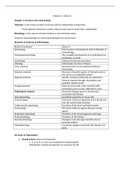
Chapter 1- An Intro to the Human Body
Anatomy= is the science of body structures and the relationships among them
- First studied by dissection (careful cutting of body parts to study their relationships.
Physiology= is the science of body functions or how the body works
Anatomy and physiology are interrelated through form and function
Branches of Anatomy and Physiology
Branch of anatomy Study of
Embryology First 8 weeks of development after fertilization of
a human egg
Developmental biology The complete development of an individual from
fertilization to death
Cell biology Cellular structure and functions
Histology Microscopic structure of tissues
Gross anatomy Structures that can be examined without a
microscope
Systemic anatomy Structure of specific regions of the body such as
the nervous or respiratory system
Regional anatomy Specific markings of the body to understand
internal anatomy through visualization and
palpation (gentle touch)
Imaging anatomy Body structures that an be visualized with
techniques such as x-rays, MRI and CT scans
Pathological anatomy Structural changes (gross to microscopic)
associated with disease
Neurophysiology Functional properties of nerve cells
Endocrinology Hormones (chemical regulators in the blood) and
how thy control body functions
Cardiovascular physiology Functions of the heart and blood vessels.
Immunology The body’s defenses against disease-causing
agents
Respiratory physiology Functions of the air passageways and lungs
Renal physiology Functions of the kidneys
Exercise physiology Changes in cell and organ functions due to
muscular activity
Pathophysiology Functional changes associated with disease and
aging
Six levels of Organization
1) Chemical level- atoms and molecules
- C, H, O, N, P, Ca, and S are essential for maintaining life
- DNA genetic material and glucose are necessary for life
,2) Cellular level- molecules combine to form cells
- Basic structural and functional units of an organism that are composed of chemicals
3) Tissue level- tissues are groups of cells and the materials surrounding them that work together
to preform a particular function
- Four types
a. Epithelial tissue- covers body surface, form glands, lines organs
b. Connective tissue- connects, supports and protects organs and delivers blood to
tissues
c. Muscular tissue- contracts to generate heat and move body parts
d. Nervous tissue- carries information
4) Organ level- tissues join together, organs are structure that are composed of two or more
different types of tissue, have recognizable shapes and specific functions
5) System level- a system consists of related organs with a common function
6) Organismal level- any living individual, all parts of the human body functioning together
,
,
Chapter 1- An Intro to the Human Body
Anatomy= is the science of body structures and the relationships among them
- First studied by dissection (careful cutting of body parts to study their relationships.
Physiology= is the science of body functions or how the body works
Anatomy and physiology are interrelated through form and function
Branches of Anatomy and Physiology
Branch of anatomy Study of
Embryology First 8 weeks of development after fertilization of
a human egg
Developmental biology The complete development of an individual from
fertilization to death
Cell biology Cellular structure and functions
Histology Microscopic structure of tissues
Gross anatomy Structures that can be examined without a
microscope
Systemic anatomy Structure of specific regions of the body such as
the nervous or respiratory system
Regional anatomy Specific markings of the body to understand
internal anatomy through visualization and
palpation (gentle touch)
Imaging anatomy Body structures that an be visualized with
techniques such as x-rays, MRI and CT scans
Pathological anatomy Structural changes (gross to microscopic)
associated with disease
Neurophysiology Functional properties of nerve cells
Endocrinology Hormones (chemical regulators in the blood) and
how thy control body functions
Cardiovascular physiology Functions of the heart and blood vessels.
Immunology The body’s defenses against disease-causing
agents
Respiratory physiology Functions of the air passageways and lungs
Renal physiology Functions of the kidneys
Exercise physiology Changes in cell and organ functions due to
muscular activity
Pathophysiology Functional changes associated with disease and
aging
Six levels of Organization
1) Chemical level- atoms and molecules
- C, H, O, N, P, Ca, and S are essential for maintaining life
- DNA genetic material and glucose are necessary for life
,2) Cellular level- molecules combine to form cells
- Basic structural and functional units of an organism that are composed of chemicals
3) Tissue level- tissues are groups of cells and the materials surrounding them that work together
to preform a particular function
- Four types
a. Epithelial tissue- covers body surface, form glands, lines organs
b. Connective tissue- connects, supports and protects organs and delivers blood to
tissues
c. Muscular tissue- contracts to generate heat and move body parts
d. Nervous tissue- carries information
4) Organ level- tissues join together, organs are structure that are composed of two or more
different types of tissue, have recognizable shapes and specific functions
5) System level- a system consists of related organs with a common function
6) Organismal level- any living individual, all parts of the human body functioning together
,
,