

Mintzberg – the manager’s job: folklore and fact
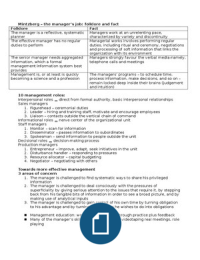
Folklore Fact
The manager is a reflective, systematic Managers work at an unrelenting pace,
planner characterized by variety and discontinuity
The effective manager has no regular Managerial works involves performing regular
duties to perform duties, including ritual and ceremony, negotiations
and processing of soft information that links the
organization with its environment
The senior manager needs aggregated Managers strongly favour the verbal media-namely,
information, which a formal telephone calls and meetings
management information system best
provides
Management is, or at least is quickly The managers’ programs – to schedule time,
becoming a science and a profession process information, make decisions, and so on –
remain locked deep inside their brains (judgement
and intuition)
10 management roles:
Interpersonal roles direct from formal authority, basic interpersonal relationships
Sales managers
1. Figurehead – ceremonial duties
2. Leader – hiring and training staff, motivate and encourage employees
3. Liaison – contacts outside the vertical chain of command
Informational roles nerve center of the organizational unit
Staff managers
1. Monitor – scan for information
2. Disseminator – passes information to subordinates
3. Spokesman – send information to people outside the unit
Decisional roles decision-making process
Production managers
1. Entrepreneur – improve, adapt, seek initiatives in the unit
2. Disturbance handler – responding to pressures
3. Resource allocator – capital budgeting
4. Negotiator – negotiating with others
Towards more effective management
3 areas of concern
1. The manager is challenged to find systematic ways to share his privileged
information
2. The manager is challenged to deal consciously with the pressures of
superficiality by giving serious attention to the issues that require it, by stepping
back from his tangible bits of information in order to see a broad picture, and by
making use of analytical inputs
3. The manager is challenged to gain control of his own time by turning obligation
to his advantage and by turning those things he wishes to do into obligations
Management education: we are taught a skills through practice plus feedback
Many of the manager’s skills can be practiced videotaping real meetings, role
playing
Folklore Fact
The manager is a reflective, systematic Managers work at an unrelenting pace,
planner characterized by variety and discontinuity
The effective manager has no regular Managerial works involves performing regular
duties to perform duties, including ritual and ceremony, negotiations
and processing of soft information that links the
organization with its environment
The senior manager needs aggregated Managers strongly favour the verbal media-namely,
information, which a formal telephone calls and meetings
management information system best
provides
Management is, or at least is quickly The managers’ programs – to schedule time,
becoming a science and a profession process information, make decisions, and so on –
remain locked deep inside their brains (judgement
and intuition)
10 management roles:
Interpersonal roles direct from formal authority, basic interpersonal relationships
Sales managers
1. Figurehead – ceremonial duties
2. Leader – hiring and training staff, motivate and encourage employees
3. Liaison – contacts outside the vertical chain of command
Informational roles nerve center of the organizational unit
Staff managers
1. Monitor – scan for information
2. Disseminator – passes information to subordinates
3. Spokesman – send information to people outside the unit
Decisional roles decision-making process
Production managers
1. Entrepreneur – improve, adapt, seek initiatives in the unit
2. Disturbance handler – responding to pressures
3. Resource allocator – capital budgeting
4. Negotiator – negotiating with others
Towards more effective management
3 areas of concern
1. The manager is challenged to find systematic ways to share his privileged
information
2. The manager is challenged to deal consciously with the pressures of
superficiality by giving serious attention to the issues that require it, by stepping
back from his tangible bits of information in order to see a broad picture, and by
making use of analytical inputs
3. The manager is challenged to gain control of his own time by turning obligation
to his advantage and by turning those things he wishes to do into obligations
Management education: we are taught a skills through practice plus feedback
Many of the manager’s skills can be practiced videotaping real meetings, role
playing



