Learning objective 1: When does the ICJ have jurisdiction?
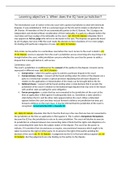
The international court of Justice is the only court with a general jurisdiction to deal with interstate
disputes. It was established in 1945 as a principal organ of the UN and its statute is attached to the
UN Charter. All members of the UN are automatically parties to the ICJ Statute. The 15 judges are
independent and elected without consideration of their nationality. If a party to a dispute before the
court does not have a judge of its nationality on the court, (art. 31(3) ICJ Statute) stipulates that it
may appoint an Ad hoc judge who will sit on the bench in the case. The disputes are generally heard
by all 15 judges, but since 1982 the court made the decision to form chambers of 3 or more judges
for dealing with particular categories of cases (art. 26(1) ICJ Statute)
Only states can be parties to a contentious case before the court. Access to the court is dealt in art.
35 ICJ Statute. Access is separate from the court’s jurisdiction access concerning who may bring or be
brought before the court, while jurisdiction concerns whether the court has the power to settle a
dispute that is brought before it, with access.
Contentious cases
The court’s jurisdiction is conditioned on the consent of the parties to the dispute. Consent can be
expressed in different ways (art. 36 ICJ Statute):
1. Compromise = where the parties agree to submit a particular dispute to the court
2. Compromissory clause = consent will be found existing when the states of the dispute are a
party to a treaty that contains a special provision stipulating that all future disputes in
relation to the application or interpretation of the treaty can be brought before the ICJ.
3. Optional clause = consent will be found existing when a state declares that it accepts the
jurisdiction of the court in relation to international legal disputes that may arise in the future
with another state accepting the same obligation.
4. Forum prorogatum = a state that has not consented to the jurisdiction of the court at the
time an application is filed against it subsequently does so. Sometimes a state submits a
claim before the ICJ, and the other state appears before the court. When a defendant
appears before the court and does not put forward a defence on jurisdiction but does put
forward a defence on the main issue, it may be inferred that the jurisdiction of the court is
recognized. (armed activities DRC v. Rwanda 18)
Art. 36(6) ICJ Statute stipulates that the ICJ has the final say in the case that one has not consented to
the jurisdiction at the time an application is filed against it. This is called a Kompetenz-Kompetenz,
because the ICJ has the jurisdiction to rule on its own jurisdiction. The court will decline to exercise
its jurisdiction in a dispute between two consenting states if finds that the rights and obligations of a
non-consenting third state form the subject matter of the dispute. The court has the power to
indicate, if it considers that circumstances so require, any provisional measures which ought to be
taken to preserve the right of either party. Its to preserve the right of the parties pending the
decision of the court (art. 41 ICJ Statute). A judgement by the ICJ is final and without appeal (art. 60
ICJ Statute). But the judgements are only binding on the parties to the dispute.
The international court of Justice is the only court with a general jurisdiction to deal with interstate
disputes. It was established in 1945 as a principal organ of the UN and its statute is attached to the
UN Charter. All members of the UN are automatically parties to the ICJ Statute. The 15 judges are
independent and elected without consideration of their nationality. If a party to a dispute before the
court does not have a judge of its nationality on the court, (art. 31(3) ICJ Statute) stipulates that it
may appoint an Ad hoc judge who will sit on the bench in the case. The disputes are generally heard
by all 15 judges, but since 1982 the court made the decision to form chambers of 3 or more judges
for dealing with particular categories of cases (art. 26(1) ICJ Statute)
Only states can be parties to a contentious case before the court. Access to the court is dealt in art.
35 ICJ Statute. Access is separate from the court’s jurisdiction access concerning who may bring or be
brought before the court, while jurisdiction concerns whether the court has the power to settle a
dispute that is brought before it, with access.
Contentious cases
The court’s jurisdiction is conditioned on the consent of the parties to the dispute. Consent can be
expressed in different ways (art. 36 ICJ Statute):
1. Compromise = where the parties agree to submit a particular dispute to the court
2. Compromissory clause = consent will be found existing when the states of the dispute are a
party to a treaty that contains a special provision stipulating that all future disputes in
relation to the application or interpretation of the treaty can be brought before the ICJ.
3. Optional clause = consent will be found existing when a state declares that it accepts the
jurisdiction of the court in relation to international legal disputes that may arise in the future
with another state accepting the same obligation.
4. Forum prorogatum = a state that has not consented to the jurisdiction of the court at the
time an application is filed against it subsequently does so. Sometimes a state submits a
claim before the ICJ, and the other state appears before the court. When a defendant
appears before the court and does not put forward a defence on jurisdiction but does put
forward a defence on the main issue, it may be inferred that the jurisdiction of the court is
recognized. (armed activities DRC v. Rwanda 18)
Art. 36(6) ICJ Statute stipulates that the ICJ has the final say in the case that one has not consented to
the jurisdiction at the time an application is filed against it. This is called a Kompetenz-Kompetenz,
because the ICJ has the jurisdiction to rule on its own jurisdiction. The court will decline to exercise
its jurisdiction in a dispute between two consenting states if finds that the rights and obligations of a
non-consenting third state form the subject matter of the dispute. The court has the power to
indicate, if it considers that circumstances so require, any provisional measures which ought to be
taken to preserve the right of either party. Its to preserve the right of the parties pending the
decision of the court (art. 41 ICJ Statute). A judgement by the ICJ is final and without appeal (art. 60
ICJ Statute). But the judgements are only binding on the parties to the dispute.