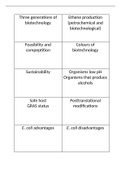
Three generations of Ethene production
biotechnology (petrochemical and
biotechnological)
Feasibility and Colours of
compeptition biotechnology
Sustainability Organisms low pH
Organisms that produce
alcohols
Safe host Posttranslational
GRAS status modifications
E. coli advantages E. coli disadvantages
, Petrochemical: crude oil (using oil biorefinery). 1. Traditional: production of foods (beer,
There is a world shortage of crude oil. cheese, brad, soy sauce)
Biotechnological: uses sugars/biomass. One 2. Industrial: microorganisms discovered,
glucose produces 2 ethanol and 2 ethene. There production of for example
is the food vs fuel debate, so another carbon acetone/butanol and antibiotics
source has to be found (also shortage of 3. Modern: gene technology
substrate).
Red: medical/healthcare Feasibility: based on market, politics and
Green: agricultural/food competition
Blue: marine Competition:
White: biobased technology, replacing Availability substrate (price)
petrochemical production, industrial Relation between price and volume
Purity of the product/concentration in
water
Production of carbon dioxide
Low pH: fungi Profit (must be worthwhile, well reward long
Alcohols: yeast term), people (no social problems/conflicts) and
planet (must be environmentally good, must not
destroy the planet)
Folding (SS bridges by disulfide Safe host: no virulence factors and no toxins
oxidoreductases, chaperone proteins, (preferred: long term usage before)
secretion) GRAS status: generally recognised as safe (for
Peptide chain adjustment foods). The tolerated amount of microorganisms
Sugar residues (pharmaceutical)
Forms inclusion bodies Same inactive proteins as humans
Some strains produce toxins Can form inclusion bodies’
Forms a lot of proteins K12 does not produce toxins
Can incorrectly fold human proteins
biotechnology (petrochemical and
biotechnological)
Feasibility and Colours of
compeptition biotechnology
Sustainability Organisms low pH
Organisms that produce
alcohols
Safe host Posttranslational
GRAS status modifications
E. coli advantages E. coli disadvantages
, Petrochemical: crude oil (using oil biorefinery). 1. Traditional: production of foods (beer,
There is a world shortage of crude oil. cheese, brad, soy sauce)
Biotechnological: uses sugars/biomass. One 2. Industrial: microorganisms discovered,
glucose produces 2 ethanol and 2 ethene. There production of for example
is the food vs fuel debate, so another carbon acetone/butanol and antibiotics
source has to be found (also shortage of 3. Modern: gene technology
substrate).
Red: medical/healthcare Feasibility: based on market, politics and
Green: agricultural/food competition
Blue: marine Competition:
White: biobased technology, replacing Availability substrate (price)
petrochemical production, industrial Relation between price and volume
Purity of the product/concentration in
water
Production of carbon dioxide
Low pH: fungi Profit (must be worthwhile, well reward long
Alcohols: yeast term), people (no social problems/conflicts) and
planet (must be environmentally good, must not
destroy the planet)
Folding (SS bridges by disulfide Safe host: no virulence factors and no toxins
oxidoreductases, chaperone proteins, (preferred: long term usage before)
secretion) GRAS status: generally recognised as safe (for
Peptide chain adjustment foods). The tolerated amount of microorganisms
Sugar residues (pharmaceutical)
Forms inclusion bodies Same inactive proteins as humans
Some strains produce toxins Can form inclusion bodies’
Forms a lot of proteins K12 does not produce toxins
Can incorrectly fold human proteins