RANSLEY FERNANDES ADMIN NO. 40202
EFFECT OF ACTIVITY AND HARMFUL SUBSTANCES ON RESPIRATION
LEARNING AIM B: To explore the effect of activity on respiration and factors affecting the
respiratory pathways
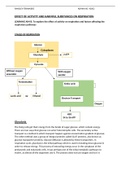
STAGES OF RESPIRATION
Glucose
Cytoplasm
Glycolysis 2 ATP
Pyruvate
Without oxygen With oxygen
anaerobic aerobic
Fermentation
Krebs cycle
CO2
Mitochondria
Lactic acid Or Ethanol
Electron Transport
Oxygen
H2O
34 to 36 ATP
Glycolysis
The living cells get their energy from the bonds of sugar glucose, which contain energy.
There are two ways that glucose can enter heterotrophic cells. The secondary active
transport is a method in which transport happen against concentration gradient of glucose.
The other method uses a group of integral proteins called GLUT proteins, also known as
glucose transporter proteins. Glucose diffusion is allowed by these transporters. In
respiration cycle, glycolysis is the initial pathway which is used in breaking down glucose in
order to release energy. This process of extracting energy occur in the cytoplasm of the
prokaryotic and eukaryotic cells. It was perhaps one of the initial metabolic pathways to
evolve, as almost all the organisms use it. The process does not use oxygen and so it is
,RANSLEY FERNANDES ADMIN NO. 40202
anaerobic. Glycolysis is the primary metabolic pathway of cellular respiration to produce
energy in the form of ATP (adenosine triphosphate). In two main phases, the 6-carbon ring
of glucose is divided into two 3-carbon sugars of pyruvate via a sequence of enzymatic
reactions.
In the first phase (energy-requiring phase) of glycolysis needs energy. The glucose molecule
is rearranged and the two phosphate groups are joined to it in this energy-requiring process.
The phosphate group produces fructose-1,6-biphosphate, a modified version of sugar that is
unstable therefore allows to split in half and yield two phosphate-bearing three-carbon
sugars. Two ATP molecules are used up because the phosphates used in these steps comes
from ATP. The 3-carbon sugars made when the unstable sugar broken down are different
from one another; except glyceraldehyde-3-phosphate, other sugars will not be able to
proceed into the next step. But, the unfavourable DHAP sugar (Dihydroxyacetone
phosphate) can be readily converted into the beneficial one so that both complete the
pathway eventually.
Whereas the second step (energy-releasing phase) completes the pyruvate conversion and
provides the cell with ATP and NADH in order to use it for energy. During the energy-
releasing process, each 3-carbon sugar is transformed into pyruvate, another 3-carbon
molecule via several reactions. In these series of reactions, 2 ATP and a NADH are formed.
As this energy releasing phase happens twice, once for each of the two 3-carbon sugars, it
forms 4 ATP and 2 NADH in total. The reactions in glycolysis are catalysed by its own
enzymes. The most essential enzyme which helps in regulating the glycolysis is
phosphofructokinase; this enzyme is important because it catalyses the formation of
unstable, 2 phosphate sugars, fructose-1,6-biphosphate. This enzyme can speed up or slow
down glycolysis pathway in response to the energy requirements of the cell.
First phase (energy requiring phase) of glycolysis
https://s3-us-west-
2.amazonaws.com/
courses-images/wp-
content/uploads/sites/
1842/2017/05/26154558/
figure-07-02-01.jpeg
Glucose-6-phosphate is made when a phosphate group from ATP is transferred to
glucose. In comparison to glucose, the glucose-6-phosphate is more reactive and the
presence of phosphate blocks glucose inside the cell because the glucose with
phosphate is unable to easily pass through the cell membrane.
In step 2, the glucose-6-phosphate is converted into fructose-6-phosphate, which is
an isomer of glucose-6-phosphate.
Fructose-1,6-bisphosphate is formed when a phosphate group from ATP is
transferred to fructose-6-phosphate. The enzyme called phosphofructokinase
, RANSLEY FERNANDES ADMIN NO. 40202
catalyses this process; this enzyme is regulated to either speed up or slow down the
pathway of glycolysis.
The fructose-1, 6-biphosphate divides to create two 3-carbon sugars, which are:
DHAP (dihydroxyacetone phosphate) and glyceraldehyde-3-phosphate. The sugars
are isomers of one another, however only glyceraldehyde-3-phosphate can carry on
with the following step of glycolysis.
In the 5th step of glycolysis, glyceraldehyde-3-phosphate is formed from DHAP. The
two molecules are in equilibrium, but as glyceraldehyde-3-phosphate is used up, the
equilibrium is firmly “pulled” downward. As a consequence, all of the DHAP is
converted eventually.
Second phase (energy releasing phase) of glycolysis
https://s3-us-west-
2.amazonaws.com/
courses-images/wp-
content/uploads/sites/
1842/2017/05/26154600/
figure-07-02-02.jpeg
In the step 6 of glycolysis, 2 half reactions happen at the same time; the half
reactions that take place are:
1. Glyceraldehyde-3-phosphate, which is the 3-carbon sugar created in first phase
of glycolysis, gets oxidised in the second phase.
2. The NAD+ gets reduced to NADH and H+. The reaction is exergonic, so it releases
energy which is then used to phosphorylate the molecule, making 1,3-
bisphosphoglycerate.
In the step 7 of glycolysis, the 1,3-biphosphoglycerate gives one phosphate group to
ADP, that forms ATP and it turns into 3-phosphoglycerate during the process.
The 3-phosphoglycerate is transformed into its isomer 2-phosphoglycerate.
In 9th step, the 2-phosphoglycerate loses a water molecule and now it becomes
phosphoenolpyruvate (PEP). This is an unstable molecule so it will lose its phosphate
group during the last step of glycolysis.
In the final step of glycolysis, PEP gives the phosphate group to ADP, which forms
one more molecule of ATP. As PEP lose the phosphate group, it is transformed to
pyruvate, the end product of glycolysis.
At the end of glycolysis process, there are 2 ATP, 2 NADH, and 2 pyruvate molecule are
present. If there is presence of oxygen, the pyruvate can be oxidised to carbon dioxide in
cellular respiration, which can form many molecules of ATP.
EFFECT OF ACTIVITY AND HARMFUL SUBSTANCES ON RESPIRATION
LEARNING AIM B: To explore the effect of activity on respiration and factors affecting the
respiratory pathways
STAGES OF RESPIRATION
Glucose
Cytoplasm
Glycolysis 2 ATP
Pyruvate
Without oxygen With oxygen
anaerobic aerobic
Fermentation
Krebs cycle
CO2
Mitochondria
Lactic acid Or Ethanol
Electron Transport
Oxygen
H2O
34 to 36 ATP
Glycolysis
The living cells get their energy from the bonds of sugar glucose, which contain energy.
There are two ways that glucose can enter heterotrophic cells. The secondary active
transport is a method in which transport happen against concentration gradient of glucose.
The other method uses a group of integral proteins called GLUT proteins, also known as
glucose transporter proteins. Glucose diffusion is allowed by these transporters. In
respiration cycle, glycolysis is the initial pathway which is used in breaking down glucose in
order to release energy. This process of extracting energy occur in the cytoplasm of the
prokaryotic and eukaryotic cells. It was perhaps one of the initial metabolic pathways to
evolve, as almost all the organisms use it. The process does not use oxygen and so it is
,RANSLEY FERNANDES ADMIN NO. 40202
anaerobic. Glycolysis is the primary metabolic pathway of cellular respiration to produce
energy in the form of ATP (adenosine triphosphate). In two main phases, the 6-carbon ring
of glucose is divided into two 3-carbon sugars of pyruvate via a sequence of enzymatic
reactions.
In the first phase (energy-requiring phase) of glycolysis needs energy. The glucose molecule
is rearranged and the two phosphate groups are joined to it in this energy-requiring process.
The phosphate group produces fructose-1,6-biphosphate, a modified version of sugar that is
unstable therefore allows to split in half and yield two phosphate-bearing three-carbon
sugars. Two ATP molecules are used up because the phosphates used in these steps comes
from ATP. The 3-carbon sugars made when the unstable sugar broken down are different
from one another; except glyceraldehyde-3-phosphate, other sugars will not be able to
proceed into the next step. But, the unfavourable DHAP sugar (Dihydroxyacetone
phosphate) can be readily converted into the beneficial one so that both complete the
pathway eventually.
Whereas the second step (energy-releasing phase) completes the pyruvate conversion and
provides the cell with ATP and NADH in order to use it for energy. During the energy-
releasing process, each 3-carbon sugar is transformed into pyruvate, another 3-carbon
molecule via several reactions. In these series of reactions, 2 ATP and a NADH are formed.
As this energy releasing phase happens twice, once for each of the two 3-carbon sugars, it
forms 4 ATP and 2 NADH in total. The reactions in glycolysis are catalysed by its own
enzymes. The most essential enzyme which helps in regulating the glycolysis is
phosphofructokinase; this enzyme is important because it catalyses the formation of
unstable, 2 phosphate sugars, fructose-1,6-biphosphate. This enzyme can speed up or slow
down glycolysis pathway in response to the energy requirements of the cell.
First phase (energy requiring phase) of glycolysis
https://s3-us-west-
2.amazonaws.com/
courses-images/wp-
content/uploads/sites/
1842/2017/05/26154558/
figure-07-02-01.jpeg
Glucose-6-phosphate is made when a phosphate group from ATP is transferred to
glucose. In comparison to glucose, the glucose-6-phosphate is more reactive and the
presence of phosphate blocks glucose inside the cell because the glucose with
phosphate is unable to easily pass through the cell membrane.
In step 2, the glucose-6-phosphate is converted into fructose-6-phosphate, which is
an isomer of glucose-6-phosphate.
Fructose-1,6-bisphosphate is formed when a phosphate group from ATP is
transferred to fructose-6-phosphate. The enzyme called phosphofructokinase
, RANSLEY FERNANDES ADMIN NO. 40202
catalyses this process; this enzyme is regulated to either speed up or slow down the
pathway of glycolysis.
The fructose-1, 6-biphosphate divides to create two 3-carbon sugars, which are:
DHAP (dihydroxyacetone phosphate) and glyceraldehyde-3-phosphate. The sugars
are isomers of one another, however only glyceraldehyde-3-phosphate can carry on
with the following step of glycolysis.
In the 5th step of glycolysis, glyceraldehyde-3-phosphate is formed from DHAP. The
two molecules are in equilibrium, but as glyceraldehyde-3-phosphate is used up, the
equilibrium is firmly “pulled” downward. As a consequence, all of the DHAP is
converted eventually.
Second phase (energy releasing phase) of glycolysis
https://s3-us-west-
2.amazonaws.com/
courses-images/wp-
content/uploads/sites/
1842/2017/05/26154600/
figure-07-02-02.jpeg
In the step 6 of glycolysis, 2 half reactions happen at the same time; the half
reactions that take place are:
1. Glyceraldehyde-3-phosphate, which is the 3-carbon sugar created in first phase
of glycolysis, gets oxidised in the second phase.
2. The NAD+ gets reduced to NADH and H+. The reaction is exergonic, so it releases
energy which is then used to phosphorylate the molecule, making 1,3-
bisphosphoglycerate.
In the step 7 of glycolysis, the 1,3-biphosphoglycerate gives one phosphate group to
ADP, that forms ATP and it turns into 3-phosphoglycerate during the process.
The 3-phosphoglycerate is transformed into its isomer 2-phosphoglycerate.
In 9th step, the 2-phosphoglycerate loses a water molecule and now it becomes
phosphoenolpyruvate (PEP). This is an unstable molecule so it will lose its phosphate
group during the last step of glycolysis.
In the final step of glycolysis, PEP gives the phosphate group to ADP, which forms
one more molecule of ATP. As PEP lose the phosphate group, it is transformed to
pyruvate, the end product of glycolysis.
At the end of glycolysis process, there are 2 ATP, 2 NADH, and 2 pyruvate molecule are
present. If there is presence of oxygen, the pyruvate can be oxidised to carbon dioxide in
cellular respiration, which can form many molecules of ATP.