Addiction
Case 1
What is ‘addiction’?
Problem statement: “What is addiction?”
Learning goals:
I. What is the definition of addiction?
II. What are the DSM-V criteria for diagnosing addiction?
III. What are common comorbidities with other mental disorders?
a. Does addiction always involve substance use or can you get addicted to anything?
IV. Can the behaviors in the five examples be called addiction?
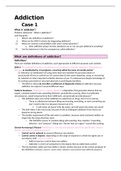
What are definitions of addiction?
Definitionsi
There are multiple definitions of addiction, each appropriate to different purposes and contexts.
DSM-4: “A maladaptive pattern of substance use, leading to clinically significant impairment or
distress, as manifested by ≥3 symptoms, occurring within the same 12-month period:”
(1) tolerance (2) withdrawal (3) using more than was intended (4) persistent desire or
unsuccessful eff orts to control use (5) a great deal of time spent obtaining, using, or recovering
(6) reduction in other important activities because of use (7) continued use despite knowledge of
its causing a persistent or recurrent physical or psychological problem.
The DSM-4 criteria do not offer a unified set of diagnostic criteria of addiction, because
addiction can express in several different ways.
Foddy & Savulescu: “Addiction is a strong appetite; a disposition that generates desires that are
urgent, oriented toward some rewarding behavior, periodically recurring, often in predictable
circumstances, sated temporarily by their fulfillment, and generally provide pleasure”
This definition does not restrict addiction to substances or drugs, but it is too narrow.
o There is a distinction between liking and wanting something: to want something you
don’t need to like it or pleasure/reward out of it.
A salt water rat doesn’t like the water, but still wants the water very much.
This defi nition is also too broad, because it fails to distinguish addiction from heavy use
based on strong desire.
The double requirement of like and want is a problem, because some (extreme) addicts no
longer like the drugs that they want.
o This definition seems to combine liking with wanting: they mention “rewarding
behavior” and “pleasure” (liking) but “desires that are urgent” sounds like wanting.
Sinnott-Armstrong & Pickard: “Addiction is a strong and habitual want that significantly reduces
control and leads to significant harm.”
Control can be reduced by several influences (see below).
Control comes in degrees, depending on the range of situations in which the agent acts in
accordance with wants or reasons.
o Addicts have less control than non-addicts.
o Addiction is a form of compulsion to the degree that an addict lacks control
The line between addict and non-addict is drawn variates because of the various purposes of
the definition (clinicians, insurers, courts of law, relatives, and scientists have different purposes) .
, Difference between heavy use and addiction = control
Addicts lack the degree of control that we normally expect people to have over their behavior.
Two accounts on what control is:
1. Wants; someone has control over a type of action if they want to perform it, they usually do.
Heavy users claim that they want drugs because of a strong desire without liking it or getting
any pleasure anymore; they lack on wants accounts.
2. Reasons-responsiveness; someone has control over a type of action if they have a reason to
perform it, they usually do.
Users lack on reasons-responsiveness accounts if they use drugs because of their strong wants
without a reason to use and with a strong reason to not use.
Factors that can reduce control over drug use:
1. The desire to use drugs can become strong and habitual.
o Long-term drug use can affect neural mechanisms, by directly increasing levels of
synaptic dopamine.
This affects processes of associated learning related to survival and rewards.
o Once drug-related pathways are created, users experience an unusual strong
motivation to pursue the reward of drugs.
A key feature of clinical dependence is the persistence of the behavior
despite increasing costs indicative of the hyper-valuation of the reward. (Tunney
& James; commentary)
2. It takes effort and resolve to keep exercising willpower.
o It takes an active attempt to resist the pull of the drugs.
3. Attention and cognition affect the capacity for long-term control.
o Drug associations and cues may cause intrusive, obsessional drug-related thinking.
This can make it difficult to recall and attend to non-drug-related desires and
values.
4. When resolving to stop using drugs will still experience some motivational conflict with the
appetite that constitutes their addiction.
o Wanting to stop does not make the desire for drugs disappear.
5. Withdrawal symptoms may be physically unpleasant or life-threatening.
6. Drug use may provide relief from life’s miseries.
Importance of a definition
Clinicians need to decide whom to treat.
o Appropriate treatment is symptom dependent.
Health insurance companies need to decide for whom they are willing to pay for treatment.
Law courts need to decide whether a defendant is criminally responsible or whether they
should get a treatment program.
Scientist need a definition that allows them to collect precise data for generalizations and
theories.
Individuals need to decide how to think/feel about relatives who abuse drugs.
Challenges to define addiction
You can get addicted to many different things:
o Illegal drugs: heroin, cocaine, morphine, amphetamines.
o Legal drugs: alcohol, nicotine, caffeine, prescribed medications.
o Behaviors: sex, work, food, shopping, internet surfing, gaming.
Difference in existence and nature of withdrawal symptoms:
o Heroin " bad flu
Case 1
What is ‘addiction’?
Problem statement: “What is addiction?”
Learning goals:
I. What is the definition of addiction?
II. What are the DSM-V criteria for diagnosing addiction?
III. What are common comorbidities with other mental disorders?
a. Does addiction always involve substance use or can you get addicted to anything?
IV. Can the behaviors in the five examples be called addiction?
What are definitions of addiction?
Definitionsi
There are multiple definitions of addiction, each appropriate to different purposes and contexts.
DSM-4: “A maladaptive pattern of substance use, leading to clinically significant impairment or
distress, as manifested by ≥3 symptoms, occurring within the same 12-month period:”
(1) tolerance (2) withdrawal (3) using more than was intended (4) persistent desire or
unsuccessful eff orts to control use (5) a great deal of time spent obtaining, using, or recovering
(6) reduction in other important activities because of use (7) continued use despite knowledge of
its causing a persistent or recurrent physical or psychological problem.
The DSM-4 criteria do not offer a unified set of diagnostic criteria of addiction, because
addiction can express in several different ways.
Foddy & Savulescu: “Addiction is a strong appetite; a disposition that generates desires that are
urgent, oriented toward some rewarding behavior, periodically recurring, often in predictable
circumstances, sated temporarily by their fulfillment, and generally provide pleasure”
This definition does not restrict addiction to substances or drugs, but it is too narrow.
o There is a distinction between liking and wanting something: to want something you
don’t need to like it or pleasure/reward out of it.
A salt water rat doesn’t like the water, but still wants the water very much.
This defi nition is also too broad, because it fails to distinguish addiction from heavy use
based on strong desire.
The double requirement of like and want is a problem, because some (extreme) addicts no
longer like the drugs that they want.
o This definition seems to combine liking with wanting: they mention “rewarding
behavior” and “pleasure” (liking) but “desires that are urgent” sounds like wanting.
Sinnott-Armstrong & Pickard: “Addiction is a strong and habitual want that significantly reduces
control and leads to significant harm.”
Control can be reduced by several influences (see below).
Control comes in degrees, depending on the range of situations in which the agent acts in
accordance with wants or reasons.
o Addicts have less control than non-addicts.
o Addiction is a form of compulsion to the degree that an addict lacks control
The line between addict and non-addict is drawn variates because of the various purposes of
the definition (clinicians, insurers, courts of law, relatives, and scientists have different purposes) .
, Difference between heavy use and addiction = control
Addicts lack the degree of control that we normally expect people to have over their behavior.
Two accounts on what control is:
1. Wants; someone has control over a type of action if they want to perform it, they usually do.
Heavy users claim that they want drugs because of a strong desire without liking it or getting
any pleasure anymore; they lack on wants accounts.
2. Reasons-responsiveness; someone has control over a type of action if they have a reason to
perform it, they usually do.
Users lack on reasons-responsiveness accounts if they use drugs because of their strong wants
without a reason to use and with a strong reason to not use.
Factors that can reduce control over drug use:
1. The desire to use drugs can become strong and habitual.
o Long-term drug use can affect neural mechanisms, by directly increasing levels of
synaptic dopamine.
This affects processes of associated learning related to survival and rewards.
o Once drug-related pathways are created, users experience an unusual strong
motivation to pursue the reward of drugs.
A key feature of clinical dependence is the persistence of the behavior
despite increasing costs indicative of the hyper-valuation of the reward. (Tunney
& James; commentary)
2. It takes effort and resolve to keep exercising willpower.
o It takes an active attempt to resist the pull of the drugs.
3. Attention and cognition affect the capacity for long-term control.
o Drug associations and cues may cause intrusive, obsessional drug-related thinking.
This can make it difficult to recall and attend to non-drug-related desires and
values.
4. When resolving to stop using drugs will still experience some motivational conflict with the
appetite that constitutes their addiction.
o Wanting to stop does not make the desire for drugs disappear.
5. Withdrawal symptoms may be physically unpleasant or life-threatening.
6. Drug use may provide relief from life’s miseries.
Importance of a definition
Clinicians need to decide whom to treat.
o Appropriate treatment is symptom dependent.
Health insurance companies need to decide for whom they are willing to pay for treatment.
Law courts need to decide whether a defendant is criminally responsible or whether they
should get a treatment program.
Scientist need a definition that allows them to collect precise data for generalizations and
theories.
Individuals need to decide how to think/feel about relatives who abuse drugs.
Challenges to define addiction
You can get addicted to many different things:
o Illegal drugs: heroin, cocaine, morphine, amphetamines.
o Legal drugs: alcohol, nicotine, caffeine, prescribed medications.
o Behaviors: sex, work, food, shopping, internet surfing, gaming.
Difference in existence and nature of withdrawal symptoms:
o Heroin " bad flu