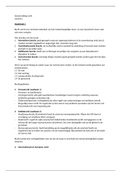
BPM 4 sum:
What is lean six sigma:
1. Effective:
- Reduce variation
- Reduce effects
2. Efficient:
- Reduce waste
- Lean value-added steps
In order to achieve strategic lean thinking, a few steps must be made:
1. Define value add and non-value add
2. Map the value stream
3. Establish process flow
4. Shift from push to pull systems
5. Strive for perfection / zero defects
DMAIC:
Define: Describe the problem we are working on and the CTQ. Organize the team.
Measure: Define the defect. Choose Y. Describe the process. Collect data with a capable
measurement system. Establish baseline process capability. Establish improvement goals.
Analyze: Determine which process inputs (Xs) most influence the key process outputs (Y)
Improve: Identify routes to improving performance & confirm changes will achieve the project
goals.
Control: Implement the solution and establish ongoing mechanisms to “lock in” the
improvements and share them elsewhere
Different ways to describe process quality measurements:
- DPMO = Defects per million opportunities
- Yield % = Number of good products compared to all products
- CpK = Process capability relative to product specifications
VOC = Voice of the customer
CTQ = Critical to quality
Example:
VOC = ‘’My coffee tastes bad’’
- Specific need = I want my coffee hot
- Metric = Temperature in celsius
- Target = 80 degrees
- Specification / tolerance limits = +/- 10 degrees
Thought process map (TPM): Critical thought/logic flow chart for a project which
includes the questions, tools used, and answers obtained during a project
, What is a project charter: The Project Charter is a living document that outlines a process
improvement project for both the team as well as leadership.
A project charter should include:
- A problem statement
- A business case
- A goal statement
- Timeline
- Scope
- Team members
Three focuses on analyzing processes:
1. Moments of truth: Any point at which the customer draws a critical judgment
(positive or negative) of the quality/value delivered
2. Handoffs: Where an item/service is passed from 1 person/part to the next
person/part. This is where most problems start.
3. Value add: Which tasks add value, and which do not
Evaluating the value of activities:
What is lean six sigma:
1. Effective:
- Reduce variation
- Reduce effects
2. Efficient:
- Reduce waste
- Lean value-added steps
In order to achieve strategic lean thinking, a few steps must be made:
1. Define value add and non-value add
2. Map the value stream
3. Establish process flow
4. Shift from push to pull systems
5. Strive for perfection / zero defects
DMAIC:
Define: Describe the problem we are working on and the CTQ. Organize the team.
Measure: Define the defect. Choose Y. Describe the process. Collect data with a capable
measurement system. Establish baseline process capability. Establish improvement goals.
Analyze: Determine which process inputs (Xs) most influence the key process outputs (Y)
Improve: Identify routes to improving performance & confirm changes will achieve the project
goals.
Control: Implement the solution and establish ongoing mechanisms to “lock in” the
improvements and share them elsewhere
Different ways to describe process quality measurements:
- DPMO = Defects per million opportunities
- Yield % = Number of good products compared to all products
- CpK = Process capability relative to product specifications
VOC = Voice of the customer
CTQ = Critical to quality
Example:
VOC = ‘’My coffee tastes bad’’
- Specific need = I want my coffee hot
- Metric = Temperature in celsius
- Target = 80 degrees
- Specification / tolerance limits = +/- 10 degrees
Thought process map (TPM): Critical thought/logic flow chart for a project which
includes the questions, tools used, and answers obtained during a project
, What is a project charter: The Project Charter is a living document that outlines a process
improvement project for both the team as well as leadership.
A project charter should include:
- A problem statement
- A business case
- A goal statement
- Timeline
- Scope
- Team members
Three focuses on analyzing processes:
1. Moments of truth: Any point at which the customer draws a critical judgment
(positive or negative) of the quality/value delivered
2. Handoffs: Where an item/service is passed from 1 person/part to the next
person/part. This is where most problems start.
3. Value add: Which tasks add value, and which do not
Evaluating the value of activities: