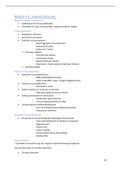
NR 340 Week 3 Exam One (Latest Version 2)
Critical Care
Direct delivery of medical care within a specialized unit with specialized personnel
o Mainly for the treatment of life-threatening problems
o Levels of Care
I: Most comprehensive, typically a teaching environment
Staffed by specialty Drs & RNs
II: Limited care to specialty patients
burn units
III: Limited availability for comprehensive critical care
med-evac to a more comprehensive facility if out of scope for care
o Types of Units
Open Unit
Docs aren't ICU based, so frequent calls out occur
multidisciplinary team is based in ICU
Possible use of an Intensivist for patient management
Closed Unit
Physician collaboration
Multidisciplinary team with an Intensivist
Better patient outcomes than with an open unit
o Sentinel Events
actual or potential outcomes that can cause patient harm or death
commonplace in ICUs
o Strategies for Error Prevention
Forcing Functions
used to correct errors that can occur within the patient care setting
no mixing of own meds
o done at the pharmacy level or hand delivered to the unit
Use patient constraints
allergy bands, fall risk identification, height or weights
Restrict number of hours that can be worked in succession
Use timeouts prior to procedures
simplify processes
Ethical Principles
Advocacy
o act on behalf of the patient foremost, then the family
Autonomy
o patient has the right to determine what, if any medical care they may receive
Beneficence
o duty to prevent/remove harm & promote good
Nonmalficence
o do no harm
Justice
o fair allocation & distribution of health resources to all
Confidentially
, o respect for the right to control patient information
o HIPPA
CC Nurse Stressors
Moral distress
o providing aggressive care to patients who may not benefit from it
powerlessness
o unable to find meaning in suffering
doing invasive procedures that will not help in the end
o lots of RNs leave ICU environment r/t loss of inability to have compassion for pts
Compassion Fatigue
o difficulty separating work from personal life
o lowered frustration tolerance
o angry outbursts
o depression
Sources of stress for patients and families
inability to communicate related to tubes, etc
anxiety
sleeplessness
delirium related to environment, lack of sleep
pain
Communication with critically ill patients
difficult for patient & RN
sedation results in issues with communication
RN must anticipate what pt needs
use of writing tools may help with communication
Pain Management
unpleasant sensory & emotional experience
Predisposing factors for pain
o disease, procedures, trauma, nursing care
o Influence on pain perceptions
expectations & previous pain experiences
emotional & cognitive state
Assessment Tools
o Numerical pain scoring
0-10, with 0=no pain & 10=worst pain imaginable
o Wong-Baker faces
useful in children and those who may not speak English well or at all
o Behavioral Pain Scale
Facial expression (1=relaxed up to 4=grimacing)
Upper limbs (1=no movement up to 4=permanently retracted)
Compliance with Vent (1=tolerating movement up to 4=unable to control
ventilation)
o FLACC
Face
Legs
, Activity
Cry & Consolability
Pharmacological Management of Pain
o Opioids (CNS)-watch for resp. depression & hypotension
Morphine sulfate
Potent with a rapid onset (~5m)
drug of choice (1st line)
inexpensive
duration ~2h, so can be given PRN
Fentanyl
extremely potent with faster onset than morphine (~1-2m)
use for acute distress or ongoing hemodynamic instability
o NSAIDs (PNS)-increases risk for GI bleeds, renal (I) or liver (A) insufficiency;
decreases need for opioid medications
Tylenol (Acetominophen)
Motrin (Ibuprofen)
Toradol
good for use as an all-over anti-inflammatory
o PCAs (patient controlled analgesia)
Patient must be able to manage pump to be effective
best for patients with
elective surgery
large surgical or traumatic wounds
normal cognitive/motor skills
Anxiety
prolonged state of apprehension in response to fear
agitation, autonomic arousal, pain, sleep deprivation, noises in hospital setting
predisposing factors
o ET tube
o alarms from monitors
o inability to move freely
o sleep deprivation
Delirium: causes and assessment.
acutely changing mental status & inattention
o hyperactive-agitated, combative, disoriented, restless
pt may be hard to keep in bed
o hypoactive-quiet, depression, withdrawn, flat affect, lethatgic
o mixed-fluctuation between hyper/hypo states
sundowning
Assessment
o CAM-ICU
worksheet to watch for acute changes in pt
o ICDSC
watches for disorganized thinking and decreased alertness
Predisposing factors
o polypharmacy
Critical Care
Direct delivery of medical care within a specialized unit with specialized personnel
o Mainly for the treatment of life-threatening problems
o Levels of Care
I: Most comprehensive, typically a teaching environment
Staffed by specialty Drs & RNs
II: Limited care to specialty patients
burn units
III: Limited availability for comprehensive critical care
med-evac to a more comprehensive facility if out of scope for care
o Types of Units
Open Unit
Docs aren't ICU based, so frequent calls out occur
multidisciplinary team is based in ICU
Possible use of an Intensivist for patient management
Closed Unit
Physician collaboration
Multidisciplinary team with an Intensivist
Better patient outcomes than with an open unit
o Sentinel Events
actual or potential outcomes that can cause patient harm or death
commonplace in ICUs
o Strategies for Error Prevention
Forcing Functions
used to correct errors that can occur within the patient care setting
no mixing of own meds
o done at the pharmacy level or hand delivered to the unit
Use patient constraints
allergy bands, fall risk identification, height or weights
Restrict number of hours that can be worked in succession
Use timeouts prior to procedures
simplify processes
Ethical Principles
Advocacy
o act on behalf of the patient foremost, then the family
Autonomy
o patient has the right to determine what, if any medical care they may receive
Beneficence
o duty to prevent/remove harm & promote good
Nonmalficence
o do no harm
Justice
o fair allocation & distribution of health resources to all
Confidentially
, o respect for the right to control patient information
o HIPPA
CC Nurse Stressors
Moral distress
o providing aggressive care to patients who may not benefit from it
powerlessness
o unable to find meaning in suffering
doing invasive procedures that will not help in the end
o lots of RNs leave ICU environment r/t loss of inability to have compassion for pts
Compassion Fatigue
o difficulty separating work from personal life
o lowered frustration tolerance
o angry outbursts
o depression
Sources of stress for patients and families
inability to communicate related to tubes, etc
anxiety
sleeplessness
delirium related to environment, lack of sleep
pain
Communication with critically ill patients
difficult for patient & RN
sedation results in issues with communication
RN must anticipate what pt needs
use of writing tools may help with communication
Pain Management
unpleasant sensory & emotional experience
Predisposing factors for pain
o disease, procedures, trauma, nursing care
o Influence on pain perceptions
expectations & previous pain experiences
emotional & cognitive state
Assessment Tools
o Numerical pain scoring
0-10, with 0=no pain & 10=worst pain imaginable
o Wong-Baker faces
useful in children and those who may not speak English well or at all
o Behavioral Pain Scale
Facial expression (1=relaxed up to 4=grimacing)
Upper limbs (1=no movement up to 4=permanently retracted)
Compliance with Vent (1=tolerating movement up to 4=unable to control
ventilation)
o FLACC
Face
Legs
, Activity
Cry & Consolability
Pharmacological Management of Pain
o Opioids (CNS)-watch for resp. depression & hypotension
Morphine sulfate
Potent with a rapid onset (~5m)
drug of choice (1st line)
inexpensive
duration ~2h, so can be given PRN
Fentanyl
extremely potent with faster onset than morphine (~1-2m)
use for acute distress or ongoing hemodynamic instability
o NSAIDs (PNS)-increases risk for GI bleeds, renal (I) or liver (A) insufficiency;
decreases need for opioid medications
Tylenol (Acetominophen)
Motrin (Ibuprofen)
Toradol
good for use as an all-over anti-inflammatory
o PCAs (patient controlled analgesia)
Patient must be able to manage pump to be effective
best for patients with
elective surgery
large surgical or traumatic wounds
normal cognitive/motor skills
Anxiety
prolonged state of apprehension in response to fear
agitation, autonomic arousal, pain, sleep deprivation, noises in hospital setting
predisposing factors
o ET tube
o alarms from monitors
o inability to move freely
o sleep deprivation
Delirium: causes and assessment.
acutely changing mental status & inattention
o hyperactive-agitated, combative, disoriented, restless
pt may be hard to keep in bed
o hypoactive-quiet, depression, withdrawn, flat affect, lethatgic
o mixed-fluctuation between hyper/hypo states
sundowning
Assessment
o CAM-ICU
worksheet to watch for acute changes in pt
o ICDSC
watches for disorganized thinking and decreased alertness
Predisposing factors
o polypharmacy