Chapter 1: Theories of Global political economy
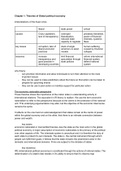
interpretations of the Asian crisis
liberal state power critical
causes Crony capitalism, overrapid predatory liberalism,
lack of transparency liberalization, power of financial
reduced state interests, systemic
capacity to regulate flaws
key issues corruption, lakc of clack of anglo human suffering
liberal economic american cs asian cuased by financial
practices models collapse
lessones increase limit financial reform international
transparency and speculation through financial system,
good practise in state policies defend national
developing countries system
why theory
- can prioritize information and allow individuals to turn their attention to the most
important issues
- they can be used to make predictions about the future so that action can be taken to
prepare for upcoming events
- they can be use to plan action or mobilize support for particular action
The economic nationalist perspective
These theories stress the importance of the nation state in understanding activity in
international relations. The equivalent in IR theory is realism. We use the term economic
nationalism to refer to this perspective because at the centre is the protection of the national
unit. THe underlying argumentation may alter, but the objective of the economic intercourse
remains the same.
It reflects on the one hand an acknowledgement that states remain at the centre of power
within the global economy and on the other, that there is an intimate connection between
power and wealth.
key actors
economic nationalist or mercantilist theories view the state as the main actor in the global
political economy. A major assumption of economic nationalists is the primacy of the political
over other aspects of life. The interstate system is anarchical and it is therefore the duty of
each state to protect it's own interests. The state is the central instrument through which
people can fulfill their goals, it follows that the state remains the preeminent actor in the
domestic and international domains. Firms are subject to the dictates of states
key dynamics
IPE (international political economy) is constituted through the actions of rational states. The
determination of a state's fate resides in it's ability to ensure that it's citizens reap
,advantages from international production and exchange. Economic activity is subordinate to
political goals and objectives. it can be claimed that states remain powerful actors and the
only legitimate centers of authority in the modern world, nothing significant has occurred in
the global political economy
conflict and cooperation
relations between states are characterized by unending conflict and the pursuit of power.
International economic relations are therefore perceived as zero- sum game where the gain
of one party necessitates a loss for another party. Since the outcome of markets can be
negative, economic nationalists argue for the state having control over the key economic
actors. Economic nationalist thought is behind arguments that seek to restrict foreign
investment and supports the rights of local investors over foreigners
The Liberal perspective
liberals focus on either the individual or a wide range of actors from state to corporation to
interest groups. They do not see the state as a unitary actor but as influenced by numerous
factors. Rather than stress the inevitability of conflict, liberals search out the conditions for
cooperation.
Liberals see the world system as one of interdependence rather than anarchy. States and
peoples can cooperate for mutual benefit in the liberal view. Rather than a zero sum game,
Liberals see a positive sum game where the pie grows bigger and bigger and everyone
gains
key actors
For liberals, the starting point of analysis is the individual. Individuals in pursuit of self
interest will maximize the benefits of economic exchange for society. The firm also plays an
important role, is seen as a source of economic wealth. The state is viewed with hostility
since it brings politics in the realm of economics. Liberals believe that if individuals are left
freely to engage in production , exchange and consumption, all will benefit and the insertion
of state control distorts benefits and adds costs to participants in the market.
key dynamics
for liberal theorists the market lies at the centre of economic life. Economic progress results
from the interaction of diverse individuals pursuing their own ends.While liberals
acknowlegde that market relations are not always optimal, they tend to argue that
intervention in the market is most likely to produce suboptimal outcomes. IPE is constituted
by a search for wealth
conflict and cooperation
they believe that market relations will lead to positive outcomes for all. In other words,
economic relations are a positive sum.
neoliberalism is a term that refers to an economic and political philosophy that places
emphasis on the individual freedom and wellbeing through the expansion of free markets to
allocate resources and make decisions
The Critical Perspective
, These are called critical theories because they question the way the world is organized and
seek to change the world. They are sometimes labelled as radical because they challenge
the established forms of organization. The three most common variants of critical thought in
IPE are marxist, feminist and environmentalist theories. (focus in this chapter is on Marxism)
Marxist theories focus on class and the interests of workers rather than state interests.
Feminist also see a owrld of explotiation but their theories look at gender relations between
women and men. They seek to uncover how our ideas about what men and women are
supposed to be shape the ways in which society is organized. Green theories have taken the
environment and the planet as objects to be highlighted. Neo Gramscian theories stress the
role of transnational classes and ideology in their efforts to understand the global economy
key actors
marxist writers begin with a focus on class as the main actor in the global political economy.
They embrace the collectivist approach of economic nationalist theories. Class is here
simply defined as arising from one's position in the structure of production. Within Marxist
writing, the firm is an instrument of exploitation
key dynamics
dominance and exploitation among and within societies provide the main dynamic for
Marxist theories in IPE. They see three tendencies of capitalism
- the tendency for the rate of profit to fall sees capitalists engaged in fierce competition
with each other, which tends to drive down workers wages
- capitalism leads to uneven development as some centres increase their wealth and
growth at the expense of others. Uneven development sows the seeds of conflict
between countries
- marxists argue that capitalism leads to overproduction or underconsumption, giving
rise to fluctuations in the business cycle and undermining social stability
conflict and cooperation
critical writers tend to perceive international economic relations as a zero sum game. The
structure of global capitalism is fundamentally conflictual. Two types of conflict arise; wihtin
states between workers and capitalists, and internationally between nationalism and state
intervention. International conflict is inevitable because of the drive for profit. Critical analysis
depict a global conflict that takes place within, above and across states
comparison of the three
aspect economic nationalist liberal critical
historical origins 15th century 19th century 19th century
major figures Hamilton, List, Smith, Ricardo, Marx, Lenin, Frank,
Krasner Kant, Keynes, Cox
Hayek
variants Mercantilism, free trade, marxism, feminism,
realism interdependence environmentalism
interpretations of the Asian crisis
liberal state power critical
causes Crony capitalism, overrapid predatory liberalism,
lack of transparency liberalization, power of financial
reduced state interests, systemic
capacity to regulate flaws
key issues corruption, lakc of clack of anglo human suffering
liberal economic american cs asian cuased by financial
practices models collapse
lessones increase limit financial reform international
transparency and speculation through financial system,
good practise in state policies defend national
developing countries system
why theory
- can prioritize information and allow individuals to turn their attention to the most
important issues
- they can be used to make predictions about the future so that action can be taken to
prepare for upcoming events
- they can be use to plan action or mobilize support for particular action
The economic nationalist perspective
These theories stress the importance of the nation state in understanding activity in
international relations. The equivalent in IR theory is realism. We use the term economic
nationalism to refer to this perspective because at the centre is the protection of the national
unit. THe underlying argumentation may alter, but the objective of the economic intercourse
remains the same.
It reflects on the one hand an acknowledgement that states remain at the centre of power
within the global economy and on the other, that there is an intimate connection between
power and wealth.
key actors
economic nationalist or mercantilist theories view the state as the main actor in the global
political economy. A major assumption of economic nationalists is the primacy of the political
over other aspects of life. The interstate system is anarchical and it is therefore the duty of
each state to protect it's own interests. The state is the central instrument through which
people can fulfill their goals, it follows that the state remains the preeminent actor in the
domestic and international domains. Firms are subject to the dictates of states
key dynamics
IPE (international political economy) is constituted through the actions of rational states. The
determination of a state's fate resides in it's ability to ensure that it's citizens reap
,advantages from international production and exchange. Economic activity is subordinate to
political goals and objectives. it can be claimed that states remain powerful actors and the
only legitimate centers of authority in the modern world, nothing significant has occurred in
the global political economy
conflict and cooperation
relations between states are characterized by unending conflict and the pursuit of power.
International economic relations are therefore perceived as zero- sum game where the gain
of one party necessitates a loss for another party. Since the outcome of markets can be
negative, economic nationalists argue for the state having control over the key economic
actors. Economic nationalist thought is behind arguments that seek to restrict foreign
investment and supports the rights of local investors over foreigners
The Liberal perspective
liberals focus on either the individual or a wide range of actors from state to corporation to
interest groups. They do not see the state as a unitary actor but as influenced by numerous
factors. Rather than stress the inevitability of conflict, liberals search out the conditions for
cooperation.
Liberals see the world system as one of interdependence rather than anarchy. States and
peoples can cooperate for mutual benefit in the liberal view. Rather than a zero sum game,
Liberals see a positive sum game where the pie grows bigger and bigger and everyone
gains
key actors
For liberals, the starting point of analysis is the individual. Individuals in pursuit of self
interest will maximize the benefits of economic exchange for society. The firm also plays an
important role, is seen as a source of economic wealth. The state is viewed with hostility
since it brings politics in the realm of economics. Liberals believe that if individuals are left
freely to engage in production , exchange and consumption, all will benefit and the insertion
of state control distorts benefits and adds costs to participants in the market.
key dynamics
for liberal theorists the market lies at the centre of economic life. Economic progress results
from the interaction of diverse individuals pursuing their own ends.While liberals
acknowlegde that market relations are not always optimal, they tend to argue that
intervention in the market is most likely to produce suboptimal outcomes. IPE is constituted
by a search for wealth
conflict and cooperation
they believe that market relations will lead to positive outcomes for all. In other words,
economic relations are a positive sum.
neoliberalism is a term that refers to an economic and political philosophy that places
emphasis on the individual freedom and wellbeing through the expansion of free markets to
allocate resources and make decisions
The Critical Perspective
, These are called critical theories because they question the way the world is organized and
seek to change the world. They are sometimes labelled as radical because they challenge
the established forms of organization. The three most common variants of critical thought in
IPE are marxist, feminist and environmentalist theories. (focus in this chapter is on Marxism)
Marxist theories focus on class and the interests of workers rather than state interests.
Feminist also see a owrld of explotiation but their theories look at gender relations between
women and men. They seek to uncover how our ideas about what men and women are
supposed to be shape the ways in which society is organized. Green theories have taken the
environment and the planet as objects to be highlighted. Neo Gramscian theories stress the
role of transnational classes and ideology in their efforts to understand the global economy
key actors
marxist writers begin with a focus on class as the main actor in the global political economy.
They embrace the collectivist approach of economic nationalist theories. Class is here
simply defined as arising from one's position in the structure of production. Within Marxist
writing, the firm is an instrument of exploitation
key dynamics
dominance and exploitation among and within societies provide the main dynamic for
Marxist theories in IPE. They see three tendencies of capitalism
- the tendency for the rate of profit to fall sees capitalists engaged in fierce competition
with each other, which tends to drive down workers wages
- capitalism leads to uneven development as some centres increase their wealth and
growth at the expense of others. Uneven development sows the seeds of conflict
between countries
- marxists argue that capitalism leads to overproduction or underconsumption, giving
rise to fluctuations in the business cycle and undermining social stability
conflict and cooperation
critical writers tend to perceive international economic relations as a zero sum game. The
structure of global capitalism is fundamentally conflictual. Two types of conflict arise; wihtin
states between workers and capitalists, and internationally between nationalism and state
intervention. International conflict is inevitable because of the drive for profit. Critical analysis
depict a global conflict that takes place within, above and across states
comparison of the three
aspect economic nationalist liberal critical
historical origins 15th century 19th century 19th century
major figures Hamilton, List, Smith, Ricardo, Marx, Lenin, Frank,
Krasner Kant, Keynes, Cox
Hayek
variants Mercantilism, free trade, marxism, feminism,
realism interdependence environmentalism