Fluorescent probes enable researchers to detect particular components of complex biomolecular assemblies, such
as live cells, with exquisite sensitivity and selectivity. The purpose of this introduction is to briefly outline
fluorescence principles and techniques for newcomers to the field.
The Fluorescence Process
Fluorescence is the result of a three-stage process that occurs in certain molecules (generally polyaromatic
hydrocarbons or heterocycles) called fluorophores or fluorescent dyes (Figure 1). A fluorescent probe is a
fluorophore designed to respond to a specific stimulus or to localize within a specific region of a biological
specimen. The process responsible for the fluorescence of fluorescent probes and other fluorophores is illustrated
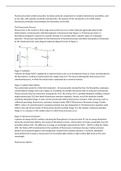
by the simple electronic-state diagram (Jablonski diagram) shown in Figure 2.
Stage 1: Excitation
A photon of energy hνEX is supplied by an external source such as an incandescent lamp or a laser and absorbed by
the fluorophore, creating an excited electronic singlet state (S1'). This process distinguishes fluorescence from
chemiluminescence, in which the excited state is populated by a chemical reaction.
Stage 2: Excited-State Lifetime
The excited state exists for a finite time (typically 1–10 nanoseconds). During this time, the fluorophore undergoes
conformational changes and is also subject to a multitude of possible interactions with its molecular environment.
These processes have two important consequences. First, the energy of S1' is partially dissipated, yielding a relaxed
singlet excited state (S1) from which fluorescence emission originates. Second, not all the molecules initially
excited by absorption (Stage 1) return to the ground state (S0) by fluorescence emission. Other processes such as
collisional quenching, fluorescence resonance energy transfer (FRET) (Fluorescence Resonance Energy Transfer
(FRET)—Note 1.2) and intersystem crossing (see below) may also depopulate S1. The fluorescence quantum yield,
which is the ratio of the number of fluorescence photons emitted (Stage 3) to the number of photons absorbed
(Stage 1), is a measure of the relative extent to which these processes occur.
Stage 3: Fluorescence Emission
A photon of energy hνEM is emitted, returning the fluorophore to its ground state S0. Due to energy dissipation
during the excited-state lifetime, the energy of this photon is lower, and therefore of longer wavelength, than the
excitation photon hνEX. The difference in energy or wavelength represented by (hνEX – hνEM) is called the Stokes
shift. The Stokes shift is fundamental to the sensitivity of fluorescence techniques because it allows emission
photons to be detected against a low background, isolated from excitation photons. In contrast, absorption
spectrophotometry requires measurement of transmitted light relative to high incident light levels at the same
wavelength.
Fluorescence Spectra
, The entire fluorescence process is cyclical. Unless the fluorophore is irreversibly destroyed in the excited state (an
important phenomenon known as photobleaching, see below), the same fluorophore can be repeatedly excited
and detected. The fact that a single fluorophore can generate many thousands of detectable photons is
fundamental to the high sensitivity of fluorescence detection techniques. For polyatomic molecules in solution, the
discrete electronic transitions represented by hνEX and hνEM in Figure 2 are replaced by rather broad energy
spectra called the fluorescence excitation spectrum and fluorescence emission spectrum, respectively (Figure 3,
Table 1). The bandwidths of these spectra are parameters of particular importance for applications in which two or
more different fluorophores are simultaneously detected (see below). The fluorescence excitation spectrum of a
single fluorophore species in dilute solution is usually identical to its absorption spectrum. The absorption
spectrum can therefore be used as a surrogate excitation spectrum data set. Under the same conditions, the
fluorescence emission spectrum is independent of the excitation wavelength, due to the partial dissipation of
excitation energy during the excited-state lifetime, as illustrated in Figure 2. The emission intensity is proportional
to the amplitude of the fluorescence excitation spectrum at the excitation wavelength (Figure 4).
Figure 4. Excitation of a fluorophore at three
different wavelengths (EX 1, EX 2, EX 3) does not change the emission profile but does produce variations in
fluorescence emission intensity (EM 1, EM 2, EM 3) that correspond to the amplitude of the excitation spectrum.
Table 1. Spectroscopic properties of fluorescent dyes.
Property Definition Significance
Fluorescence excitation An X,Y plot of excitation wavelength Optimum instrument setup should
spectrum * versus number of fluorescence deliver excitation light as close to the
photons generated by a fluorophore. peak of the excitation spectrum of the
fluorophore as possible.
Absorption spectrum An X,Y plot of wavelength versus To a first approximation, the absorption
absorbance of a chromophore or spectrum of a fluorophore is equivalent
fluorophore. to the fluorescence excitation
spectrum.† To the extent that this
approximation holds, the absorption
spectrum can be used as a surrogate
as live cells, with exquisite sensitivity and selectivity. The purpose of this introduction is to briefly outline
fluorescence principles and techniques for newcomers to the field.
The Fluorescence Process
Fluorescence is the result of a three-stage process that occurs in certain molecules (generally polyaromatic
hydrocarbons or heterocycles) called fluorophores or fluorescent dyes (Figure 1). A fluorescent probe is a
fluorophore designed to respond to a specific stimulus or to localize within a specific region of a biological
specimen. The process responsible for the fluorescence of fluorescent probes and other fluorophores is illustrated
by the simple electronic-state diagram (Jablonski diagram) shown in Figure 2.
Stage 1: Excitation
A photon of energy hνEX is supplied by an external source such as an incandescent lamp or a laser and absorbed by
the fluorophore, creating an excited electronic singlet state (S1'). This process distinguishes fluorescence from
chemiluminescence, in which the excited state is populated by a chemical reaction.
Stage 2: Excited-State Lifetime
The excited state exists for a finite time (typically 1–10 nanoseconds). During this time, the fluorophore undergoes
conformational changes and is also subject to a multitude of possible interactions with its molecular environment.
These processes have two important consequences. First, the energy of S1' is partially dissipated, yielding a relaxed
singlet excited state (S1) from which fluorescence emission originates. Second, not all the molecules initially
excited by absorption (Stage 1) return to the ground state (S0) by fluorescence emission. Other processes such as
collisional quenching, fluorescence resonance energy transfer (FRET) (Fluorescence Resonance Energy Transfer
(FRET)—Note 1.2) and intersystem crossing (see below) may also depopulate S1. The fluorescence quantum yield,
which is the ratio of the number of fluorescence photons emitted (Stage 3) to the number of photons absorbed
(Stage 1), is a measure of the relative extent to which these processes occur.
Stage 3: Fluorescence Emission
A photon of energy hνEM is emitted, returning the fluorophore to its ground state S0. Due to energy dissipation
during the excited-state lifetime, the energy of this photon is lower, and therefore of longer wavelength, than the
excitation photon hνEX. The difference in energy or wavelength represented by (hνEX – hνEM) is called the Stokes
shift. The Stokes shift is fundamental to the sensitivity of fluorescence techniques because it allows emission
photons to be detected against a low background, isolated from excitation photons. In contrast, absorption
spectrophotometry requires measurement of transmitted light relative to high incident light levels at the same
wavelength.
Fluorescence Spectra
, The entire fluorescence process is cyclical. Unless the fluorophore is irreversibly destroyed in the excited state (an
important phenomenon known as photobleaching, see below), the same fluorophore can be repeatedly excited
and detected. The fact that a single fluorophore can generate many thousands of detectable photons is
fundamental to the high sensitivity of fluorescence detection techniques. For polyatomic molecules in solution, the
discrete electronic transitions represented by hνEX and hνEM in Figure 2 are replaced by rather broad energy
spectra called the fluorescence excitation spectrum and fluorescence emission spectrum, respectively (Figure 3,
Table 1). The bandwidths of these spectra are parameters of particular importance for applications in which two or
more different fluorophores are simultaneously detected (see below). The fluorescence excitation spectrum of a
single fluorophore species in dilute solution is usually identical to its absorption spectrum. The absorption
spectrum can therefore be used as a surrogate excitation spectrum data set. Under the same conditions, the
fluorescence emission spectrum is independent of the excitation wavelength, due to the partial dissipation of
excitation energy during the excited-state lifetime, as illustrated in Figure 2. The emission intensity is proportional
to the amplitude of the fluorescence excitation spectrum at the excitation wavelength (Figure 4).
Figure 4. Excitation of a fluorophore at three
different wavelengths (EX 1, EX 2, EX 3) does not change the emission profile but does produce variations in
fluorescence emission intensity (EM 1, EM 2, EM 3) that correspond to the amplitude of the excitation spectrum.
Table 1. Spectroscopic properties of fluorescent dyes.
Property Definition Significance
Fluorescence excitation An X,Y plot of excitation wavelength Optimum instrument setup should
spectrum * versus number of fluorescence deliver excitation light as close to the
photons generated by a fluorophore. peak of the excitation spectrum of the
fluorophore as possible.
Absorption spectrum An X,Y plot of wavelength versus To a first approximation, the absorption
absorbance of a chromophore or spectrum of a fluorophore is equivalent
fluorophore. to the fluorescence excitation
spectrum.† To the extent that this
approximation holds, the absorption
spectrum can be used as a surrogate