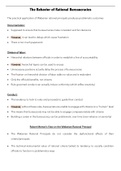
The Behavior of Rational Bureaucracies
The practical application of Weberian rational principals produces problematic outcomes
Documentation:
• Supposed to ensure that bureaucracies make consistent and fair decisions
• However, it can lead to delays which cause frustration
• There is too much paperwork
Division of labor:
• Hierarchal relations between officials in order to establish a line of accountability
• However, hierarchal layers can be used to excess
• Unnecessary positions actually delay the process of bureaucracies
• The fixation on hierarchal division of labor adds no value and is redundant
• Only the officials benefits, not citizens
• Rule governed conduct can actually induce conformity (which stifles creativity)
Conduct:
• The tendency to look to rules and proceeds to guide their conduct
• However, without these rules, bureaucrats are unable to engage with citizens on a “human” level
• This means that bureaucrats may not be able to engage compassionately with citizens
• Building a career in the bureaucracy can be problematic over time (over-reliance on seniority)
Robert Merton’s View on the Weberian Rational Principal
• The Weberian Rational Principals do not consider the dysfunctional effects of their
criteria/principals
• The technical-instrumental value of rational criteria belied its tendency to socially condition
officials to function in problematics ways
The practical application of Weberian rational principals produces problematic outcomes
Documentation:
• Supposed to ensure that bureaucracies make consistent and fair decisions
• However, it can lead to delays which cause frustration
• There is too much paperwork
Division of labor:
• Hierarchal relations between officials in order to establish a line of accountability
• However, hierarchal layers can be used to excess
• Unnecessary positions actually delay the process of bureaucracies
• The fixation on hierarchal division of labor adds no value and is redundant
• Only the officials benefits, not citizens
• Rule governed conduct can actually induce conformity (which stifles creativity)
Conduct:
• The tendency to look to rules and proceeds to guide their conduct
• However, without these rules, bureaucrats are unable to engage with citizens on a “human” level
• This means that bureaucrats may not be able to engage compassionately with citizens
• Building a career in the bureaucracy can be problematic over time (over-reliance on seniority)
Robert Merton’s View on the Weberian Rational Principal
• The Weberian Rational Principals do not consider the dysfunctional effects of their
criteria/principals
• The technical-instrumental value of rational criteria belied its tendency to socially condition
officials to function in problematics ways