CONSTITUTIONAL LAW
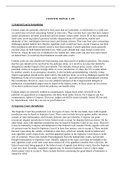
1) Federal Courts Jurisdiction
Federal courts are generally allowed to hear cases that are justiciable, in which there is a valid case
or controversy involved concerning federal or state laws. They can also hear cases that have subject
matter jurisdiction, personal jurisdiction and are proper venues under Article III of the Constitution.
Such cases involving federal questions include interpretations of Constitution, treaties and
admiralty of law, and disputes between states and foreign citizens. They may hear cases concerning
challenges against federal laws that the Appellate court would later hear, except Congress can limit
their jurisdiction and allow federal courts to hear them instead. Federal appellate courts generally
can hear cases on both federal and state laws. State courts should hear cases based on state laws.
However, where the state law is identical to the federal law, state courts can also hear cases based
on federal laws, to avoid any discrimination towards state courts.
Federal courts are also disallowed from hearing cases that consist of political questions. This means
that the case should not be resolved by the judiciary alone, as it involves an issue that should be
delegated to another branch of the government. This includes foreign policy issues, where the
president wishes to recognise foreign tribes or a new jurisdiction, or where the US is under attack
by another country in an emergency situation. It also includes gerrymandering, whereby voting
district segregation should not be dealt with by the judiciary alone, as well as challenges against the
Republican Form of Government Clause under Article IV, and ratification of amendments towards
the Constitution. However, cases over any arbitral exclusion of the Congressional delegate or
production of presidential papers may be heard in the federal courts, as these issues do not consist
of exclusive political issues which the judiciary can handle alone.
Federal judges are generally entitled to compensation. Judges hired under Article III by the
judiciary are guaranteed to compensation, but those hired under Article I by Congress can lose
compensatory rights to Congress. However, judges can still be removed under Article III, but only
by impeachment, when they are not on good behaviour.
2) Supreme Court Jurisdiction
The Supreme Court has jurisdiction over two types of cases. On the one hand, cases with original
jurisdiction may be heard in Supreme Court. These cases include lawsuits against public ministers,
consuls or state ambassadors, and lawsuits between state governments. Congress can grant
concurrent original jurisdiction to lower federal courts (except for disputes between states). On the
other hand, cases with appellate jurisdiction may be heard in Supreme Court in two ways. However,
it may be limited by Congress and delineated to the Federal Court instead. Firstly, appeals with writ
of certiorari may be heard in Supreme Court if at least four justices vote to accept it. These include
lawsuits concerning the validity of federal or state laws, which are initially heard in federal and
state appellate courts respectively, and then appealed against in the Supreme Court where it holds
writ of certiorari. These only include final judgments from the federal/state courts, not lawsuits
brought immediately to Supreme Court. Initially, appeals in the state court must be brought to the
state appellate court as the state court must exhaust all of its appellate remedies first. Likewise, the
federal court must bring appeals to the federal court of appeals (not district court), then the Supreme
Court may hear. Secondly, mandatory appeals may be heard in Supreme Court if a three-judge
district panel votes to accept it. These include lawsuits concerning the grant/denial of immunity or
injunctive relief.
1) Federal Courts Jurisdiction
Federal courts are generally allowed to hear cases that are justiciable, in which there is a valid case
or controversy involved concerning federal or state laws. They can also hear cases that have subject
matter jurisdiction, personal jurisdiction and are proper venues under Article III of the Constitution.
Such cases involving federal questions include interpretations of Constitution, treaties and
admiralty of law, and disputes between states and foreign citizens. They may hear cases concerning
challenges against federal laws that the Appellate court would later hear, except Congress can limit
their jurisdiction and allow federal courts to hear them instead. Federal appellate courts generally
can hear cases on both federal and state laws. State courts should hear cases based on state laws.
However, where the state law is identical to the federal law, state courts can also hear cases based
on federal laws, to avoid any discrimination towards state courts.
Federal courts are also disallowed from hearing cases that consist of political questions. This means
that the case should not be resolved by the judiciary alone, as it involves an issue that should be
delegated to another branch of the government. This includes foreign policy issues, where the
president wishes to recognise foreign tribes or a new jurisdiction, or where the US is under attack
by another country in an emergency situation. It also includes gerrymandering, whereby voting
district segregation should not be dealt with by the judiciary alone, as well as challenges against the
Republican Form of Government Clause under Article IV, and ratification of amendments towards
the Constitution. However, cases over any arbitral exclusion of the Congressional delegate or
production of presidential papers may be heard in the federal courts, as these issues do not consist
of exclusive political issues which the judiciary can handle alone.
Federal judges are generally entitled to compensation. Judges hired under Article III by the
judiciary are guaranteed to compensation, but those hired under Article I by Congress can lose
compensatory rights to Congress. However, judges can still be removed under Article III, but only
by impeachment, when they are not on good behaviour.
2) Supreme Court Jurisdiction
The Supreme Court has jurisdiction over two types of cases. On the one hand, cases with original
jurisdiction may be heard in Supreme Court. These cases include lawsuits against public ministers,
consuls or state ambassadors, and lawsuits between state governments. Congress can grant
concurrent original jurisdiction to lower federal courts (except for disputes between states). On the
other hand, cases with appellate jurisdiction may be heard in Supreme Court in two ways. However,
it may be limited by Congress and delineated to the Federal Court instead. Firstly, appeals with writ
of certiorari may be heard in Supreme Court if at least four justices vote to accept it. These include
lawsuits concerning the validity of federal or state laws, which are initially heard in federal and
state appellate courts respectively, and then appealed against in the Supreme Court where it holds
writ of certiorari. These only include final judgments from the federal/state courts, not lawsuits
brought immediately to Supreme Court. Initially, appeals in the state court must be brought to the
state appellate court as the state court must exhaust all of its appellate remedies first. Likewise, the
federal court must bring appeals to the federal court of appeals (not district court), then the Supreme
Court may hear. Secondly, mandatory appeals may be heard in Supreme Court if a three-judge
district panel votes to accept it. These include lawsuits concerning the grant/denial of immunity or
injunctive relief.