
Introduction
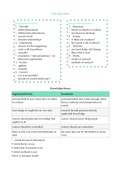
Four goals of science: Four values of science:
1. Describe 1. Empirical
- define phenomena - based on objective evidence
- differentiate phenomena - not based on ideology
- record events 2. Sceptic
- describe relationships - is there any evidence?
2. Understand - how good is the evidence?
- reasons for this happening 3. Tentative
- starts with hypotheses - our knowledge will change
- causality - then what is true?
* covariation + time precedence + no 4. Public
alternative explanation - results of research
3. Predict - methods of research
- applied
- research
4. Control
- is it even possible?
- should we control behaviour?
Knowledge theory
logical positivism humanism
personal beliefs and values have no effect personal beliefs and values strongly affect
on science theory, methods and interpretation of
results
knowledge is sought for its own sake research should generate directly
applicable knowledge
science should generate knowledge that science should aim to help people
applies to all
science should be controlled science should see naturalism
there is only one correct interpretation of the same data can be interpreted in many
data ways
- crucial because it determines
• which theory to use
• what kind of research to do
• which methods to use
• how to interpret results
,Theory - set of statements about a relationship between variables
Components of theories:
- assumptions
Types of hypothetical contracts:
• implicit
1. uni-dimensional
• paradigmatic 2. multi-dimensional
- hypothetical constructs 3. multi-faceted
• abstract
• cannot directly observe
- propositions
• describe abstract relationships
• cannot be tested directly
- definitions
• narrative
• operational (how to measure?)
- variables
• explanatory variable (goal difficulty)
• response variable (work motivation)
• mediating variable (work motivation)
• moderating variable (worker ability)
Characteristics of theories:
- specificity
• precise, explicit
• vague, ambiguous
- scope
• narrow
• wide
Purpose of theories:
- organisation of knowledge
- increase of knowledge
- guiding action
Criteria for theories:
- logically consistent
- falsifiable
- in agreement with data
- celar
- parsimonious
- consistent with other theories
- useful
, Propositions - describe relationships among hypothetical constructs
Hypotheses - describe relationships among operational definitions
- eg. having to wait for public transport cause aggression in people
Developing background: Choosing a topic: Formulating research
- informal knowledge - is it interesting? question:
- from topic to question
• own experience • higher motivation
• preliminary research
- formal background • better research - what is a good
• previous research - check feasibility question?
• existing theories • specific population • does it add anything?
• available methods • specific equipment • based on literature
• researchable
• sufficient money
• important
• sufficient time
Sources of ideas:
- theories Reviewing literature:
• confirm, reject or compare - scientific background and context
- practical problems - avoid duplication
- avoid problems later
• eg. gaming - pay attention to
- previous research • relevant theories
• case studies • relevant research
• contradicting results • methods
• analyses
• alternative explanations
• overlooked variables
________________________________________________________________________________
Lecture Two
Research hypothesis - describes the relationship among variables
- eg. aggression increases with waiting time
Statistical hypothesis - expected result of statistical test has to match the research
hypothesis
- eg. significant positive correlation between number of minuets waiting time and
amount of blood pressure
, Replication research:
- direct replication Measurement levels:
• not highly values, not creative 1. nominal
• highly needed agents type I errors - qualitative
2. ordinal
• new sample, time and setting
- more or less
- conceptual replication 3. interval
• choose different setting, method and population - same distances
• is the result generalisable? - no absolute zero
• boundary conditions 4. ration
- absolute zero point
- replication and extensions
• replicate and add new research question
Results of Replication
type of replication successful unsuccessful
direct supports the principle weakens the principle
conceptual supports and extends the limits the principle
principle (boundary condition)
When to replicate?
- important hypothesis
- unexpected findings
- suspect studies
- alternative explanations
- generalisability
Surveys and questionnaires:
- estimate population parameter
- test hypothesis Types of surveys:
- open-ended questions 1. sample survey
- representative sample
• describe an experience
2. convenience survey
• generate possible answers - research sample
• sensitive topics
- closed-ended questions
• select one or more responses
- important
• use of language of participants
• avoid double negations
• only one question
• no suggestive questions
Four goals of science: Four values of science:
1. Describe 1. Empirical
- define phenomena - based on objective evidence
- differentiate phenomena - not based on ideology
- record events 2. Sceptic
- describe relationships - is there any evidence?
2. Understand - how good is the evidence?
- reasons for this happening 3. Tentative
- starts with hypotheses - our knowledge will change
- causality - then what is true?
* covariation + time precedence + no 4. Public
alternative explanation - results of research
3. Predict - methods of research
- applied
- research
4. Control
- is it even possible?
- should we control behaviour?
Knowledge theory
logical positivism humanism
personal beliefs and values have no effect personal beliefs and values strongly affect
on science theory, methods and interpretation of
results
knowledge is sought for its own sake research should generate directly
applicable knowledge
science should generate knowledge that science should aim to help people
applies to all
science should be controlled science should see naturalism
there is only one correct interpretation of the same data can be interpreted in many
data ways
- crucial because it determines
• which theory to use
• what kind of research to do
• which methods to use
• how to interpret results
,Theory - set of statements about a relationship between variables
Components of theories:
- assumptions
Types of hypothetical contracts:
• implicit
1. uni-dimensional
• paradigmatic 2. multi-dimensional
- hypothetical constructs 3. multi-faceted
• abstract
• cannot directly observe
- propositions
• describe abstract relationships
• cannot be tested directly
- definitions
• narrative
• operational (how to measure?)
- variables
• explanatory variable (goal difficulty)
• response variable (work motivation)
• mediating variable (work motivation)
• moderating variable (worker ability)
Characteristics of theories:
- specificity
• precise, explicit
• vague, ambiguous
- scope
• narrow
• wide
Purpose of theories:
- organisation of knowledge
- increase of knowledge
- guiding action
Criteria for theories:
- logically consistent
- falsifiable
- in agreement with data
- celar
- parsimonious
- consistent with other theories
- useful
, Propositions - describe relationships among hypothetical constructs
Hypotheses - describe relationships among operational definitions
- eg. having to wait for public transport cause aggression in people
Developing background: Choosing a topic: Formulating research
- informal knowledge - is it interesting? question:
- from topic to question
• own experience • higher motivation
• preliminary research
- formal background • better research - what is a good
• previous research - check feasibility question?
• existing theories • specific population • does it add anything?
• available methods • specific equipment • based on literature
• researchable
• sufficient money
• important
• sufficient time
Sources of ideas:
- theories Reviewing literature:
• confirm, reject or compare - scientific background and context
- practical problems - avoid duplication
- avoid problems later
• eg. gaming - pay attention to
- previous research • relevant theories
• case studies • relevant research
• contradicting results • methods
• analyses
• alternative explanations
• overlooked variables
________________________________________________________________________________
Lecture Two
Research hypothesis - describes the relationship among variables
- eg. aggression increases with waiting time
Statistical hypothesis - expected result of statistical test has to match the research
hypothesis
- eg. significant positive correlation between number of minuets waiting time and
amount of blood pressure
, Replication research:
- direct replication Measurement levels:
• not highly values, not creative 1. nominal
• highly needed agents type I errors - qualitative
2. ordinal
• new sample, time and setting
- more or less
- conceptual replication 3. interval
• choose different setting, method and population - same distances
• is the result generalisable? - no absolute zero
• boundary conditions 4. ration
- absolute zero point
- replication and extensions
• replicate and add new research question
Results of Replication
type of replication successful unsuccessful
direct supports the principle weakens the principle
conceptual supports and extends the limits the principle
principle (boundary condition)
When to replicate?
- important hypothesis
- unexpected findings
- suspect studies
- alternative explanations
- generalisability
Surveys and questionnaires:
- estimate population parameter
- test hypothesis Types of surveys:
- open-ended questions 1. sample survey
- representative sample
• describe an experience
2. convenience survey
• generate possible answers - research sample
• sensitive topics
- closed-ended questions
• select one or more responses
- important
• use of language of participants
• avoid double negations
• only one question
• no suggestive questions



