18-10-2021 1
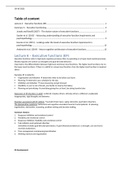
Table of content
Lecture 6 – Executive functions (EF).......................................................................................................1
Summary 6 – Executive functioning.......................................................................................................5
Jurado and Roselli (2007) – The elusive nature of executive functions..............................................5
Snyder et al. (2015) – Advancing understanding of executive function impairments and
psychopathology................................................................................................................................9
Heeren et al. (2015) – Looking under the hood of executive function impairments in
psychopathology..............................................................................................................................13
Ambrosini et al. (2019) – Neuro-cognitive architecture of executive functions...............................13
Lecture 6 – Executive functions (EF)
Executive functions refer to high-level cognitive processes that, by operating on a lower-level mental processes,
flexibly regulate and control our thoughts and goal-directed behavior.
Important is the differentiation between high-level and lower-level functions. The higher-level functions rely on
the lower-level functions. If there is a deficit in a lower-level function, then the higher-level function is impaired
either.
Examples EF in daily life:
Organization and initiation determine what to do before you leave
Planning determine your schedule for the day
Inhibition and initiation stop showering and get dressed
Flexibility you’re out of bread, you decide to stop by the bakery
Planning and prioritizing prioritizing giving the cat food, but doing laundry later
Expression of EF disorders in adult: scattered, impulse-driven, stimulus-driven, unfiltered, unadjusted,
inappropriate, rigid thoughts and behavior.
Disorders associated with EF deficits: Traumatic Brain Injury, aging: dementia, psychiatric disorders.
The dysexecutive syndrome: behavioral and cognitive anomalies found in frontal patients planning,
organization, abstraction, reasoning, problem-solving and decision-making.
Common clusters:
1. Response inhibition and emotional control
2. Flexibility and emotional control
3. Response inhibition, flexibility and emotional control
4. Task initiation and sustained attention
Sometimes includes goal directed persistence. If goal directed persistence is a strength, can use that to
override weaknesses.
5. Time management and planning/prioritization
6. Working memory and organization
EF development:
, 18-10-2021 2
Starts developing around the age of 5 and keep developing in adolescence. Developmental spurt around 12
(goal setting skills), 14 (working memory) and 16 (attentional capacity). From around 15 years working
memory, shifting attention and inhibitory control relatively stable and close to adult level.
EF decline over lifespan. EF are the last to develop and first to decline. This is dependent on the network and
not just on the frontal lobe volume loss.
It is not clear if lower-levels or higher-levels are affected.
There is more research needed on age-related decline of EF. Normal aging vs. pathological aging.
Models of EF
Baddeley and Hitch: Central executive, phonological loop, visualspatial sketchpad
The central executive has attentional control that determines which information becomes stored.
Meta cognition is the ability to view, observe, and assess more basic cognitive procedures, including self-
awareness, self-monitoring and self control.
Ylvisaker has different steps
˃ Self awareness of strengths and needs
˃ Realistic and concrete goal-setting
˃ Planning the steps to these goals
˃ Self-initiating these plans
˃ Self-monitoring and evaluating performance according to plan and goal (metacognition)
˃ Self-inhibiting behavior not leading to the goals set
˃ Flexibility and problem solving when situation cannot be dealt with according to plan
˃ Strategic behavior and transfer of successful behaviors to other situations
Unity/diversity framework suggests that the executive system contains both unitary and non-unitary
(diverse) components
Dawson and Guare model suggest that EF are brain-based skills to execute tasks. It is based on two
premises:
˃ We all have an array of strengths and weaknesses
˃ Identify weaknesses and focus intervention on compensating these, while building on strenghts
EF vs. attention vs. working memory
Working memory has the central executive system that has attentional control able to focus on switch
attention, but without storage capacity. It has active manipulation of information
executive function part: prioritizing; working memory determines which information is pulled from
storage/needs to be manipulated
Attention has selective and divided attention executive function part; prioritizing attention to the most
important information.
Table of content
Lecture 6 – Executive functions (EF).......................................................................................................1
Summary 6 – Executive functioning.......................................................................................................5
Jurado and Roselli (2007) – The elusive nature of executive functions..............................................5
Snyder et al. (2015) – Advancing understanding of executive function impairments and
psychopathology................................................................................................................................9
Heeren et al. (2015) – Looking under the hood of executive function impairments in
psychopathology..............................................................................................................................13
Ambrosini et al. (2019) – Neuro-cognitive architecture of executive functions...............................13
Lecture 6 – Executive functions (EF)
Executive functions refer to high-level cognitive processes that, by operating on a lower-level mental processes,
flexibly regulate and control our thoughts and goal-directed behavior.
Important is the differentiation between high-level and lower-level functions. The higher-level functions rely on
the lower-level functions. If there is a deficit in a lower-level function, then the higher-level function is impaired
either.
Examples EF in daily life:
Organization and initiation determine what to do before you leave
Planning determine your schedule for the day
Inhibition and initiation stop showering and get dressed
Flexibility you’re out of bread, you decide to stop by the bakery
Planning and prioritizing prioritizing giving the cat food, but doing laundry later
Expression of EF disorders in adult: scattered, impulse-driven, stimulus-driven, unfiltered, unadjusted,
inappropriate, rigid thoughts and behavior.
Disorders associated with EF deficits: Traumatic Brain Injury, aging: dementia, psychiatric disorders.
The dysexecutive syndrome: behavioral and cognitive anomalies found in frontal patients planning,
organization, abstraction, reasoning, problem-solving and decision-making.
Common clusters:
1. Response inhibition and emotional control
2. Flexibility and emotional control
3. Response inhibition, flexibility and emotional control
4. Task initiation and sustained attention
Sometimes includes goal directed persistence. If goal directed persistence is a strength, can use that to
override weaknesses.
5. Time management and planning/prioritization
6. Working memory and organization
EF development:
, 18-10-2021 2
Starts developing around the age of 5 and keep developing in adolescence. Developmental spurt around 12
(goal setting skills), 14 (working memory) and 16 (attentional capacity). From around 15 years working
memory, shifting attention and inhibitory control relatively stable and close to adult level.
EF decline over lifespan. EF are the last to develop and first to decline. This is dependent on the network and
not just on the frontal lobe volume loss.
It is not clear if lower-levels or higher-levels are affected.
There is more research needed on age-related decline of EF. Normal aging vs. pathological aging.
Models of EF
Baddeley and Hitch: Central executive, phonological loop, visualspatial sketchpad
The central executive has attentional control that determines which information becomes stored.
Meta cognition is the ability to view, observe, and assess more basic cognitive procedures, including self-
awareness, self-monitoring and self control.
Ylvisaker has different steps
˃ Self awareness of strengths and needs
˃ Realistic and concrete goal-setting
˃ Planning the steps to these goals
˃ Self-initiating these plans
˃ Self-monitoring and evaluating performance according to plan and goal (metacognition)
˃ Self-inhibiting behavior not leading to the goals set
˃ Flexibility and problem solving when situation cannot be dealt with according to plan
˃ Strategic behavior and transfer of successful behaviors to other situations
Unity/diversity framework suggests that the executive system contains both unitary and non-unitary
(diverse) components
Dawson and Guare model suggest that EF are brain-based skills to execute tasks. It is based on two
premises:
˃ We all have an array of strengths and weaknesses
˃ Identify weaknesses and focus intervention on compensating these, while building on strenghts
EF vs. attention vs. working memory
Working memory has the central executive system that has attentional control able to focus on switch
attention, but without storage capacity. It has active manipulation of information
executive function part: prioritizing; working memory determines which information is pulled from
storage/needs to be manipulated
Attention has selective and divided attention executive function part; prioritizing attention to the most
important information.