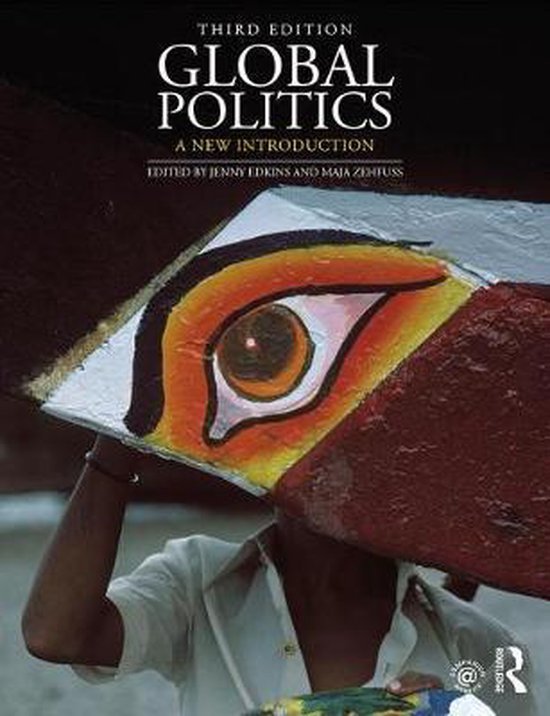
Global Politics: A New Introduction, Second Edition (2014)
Jenny Edkins and Maja Zehfuss
ISBN 978-0-415-68481-1
This summary contains following chapters:
Chapter 2: How do we begin to think about the world? ............................................................. 2
Chapter 3: What happens if we don´t take nature for granted? .................................................. 3
Chapter 4: Can we save the planet? ........................................................................................... 4
Chapter 10: Why is people’s movement restricted?................................................................... 5
Chapter 11: Why is the world divided territorially? .................................................................. 6
Chapter 12: How do people come to identify w/ nations? ......................................................... 7
Chapter 21: Why do some people think they know what is good for others?............................ 9
Chapter 25: What can we do to stop people harming others? .................................................. 10
1
, Chapter 2: How do we begin to think about the world?
- how we think about the world affects how we live in it
- ethics is how we should live w/ other people in the world
- ethics = moral rules
- politics is about what kinds of living and ways of thinking about who we are made
possible
- politics and ethics are inseparable due to that what I see as ´weird´ (politics) can effect
how I then treat you (ethics)
Example: ticking bomb scenario
- torture implicates many lives
General responses:
- moral decisions = what we should do
- ´we´ as members of the whole humanity (cosmopolitanism) or as members of specific
political communities (communitarianism)
Communitarianism Cosmopolitanism
- Michael Walzer - Charles Beitz
- humans have in common - it says that we can understand
particularism other cultures and make moral
- right and wrongness depend on judgements without worrying
particular socio-cultural about mistranslation of
practices misunderstanding
- states are the moral subjects - ideal principles of justice
- reason cannot overcome - what morally matters is our
interests, biases and socio- humanity
cultural meanings - individuals are moral subjects
- the ethics outside the state is of global politics
not our primary moral - reasons transcends our interests
concern and biases
- ethical responsibility extends to
every person regardless of
where they live
John Rawls – liberal political philosopher, Beitz is basing his theory on Rawls
Broader issues: thinking about thinking
- Ludwig Wittgenstein and his theory about relationship b/w language and the world
- we are wholly dependent upon language to make sense of and understand the world
we live in
2
Jenny Edkins and Maja Zehfuss
ISBN 978-0-415-68481-1
This summary contains following chapters:
Chapter 2: How do we begin to think about the world? ............................................................. 2
Chapter 3: What happens if we don´t take nature for granted? .................................................. 3
Chapter 4: Can we save the planet? ........................................................................................... 4
Chapter 10: Why is people’s movement restricted?................................................................... 5
Chapter 11: Why is the world divided territorially? .................................................................. 6
Chapter 12: How do people come to identify w/ nations? ......................................................... 7
Chapter 21: Why do some people think they know what is good for others?............................ 9
Chapter 25: What can we do to stop people harming others? .................................................. 10
1
, Chapter 2: How do we begin to think about the world?
- how we think about the world affects how we live in it
- ethics is how we should live w/ other people in the world
- ethics = moral rules
- politics is about what kinds of living and ways of thinking about who we are made
possible
- politics and ethics are inseparable due to that what I see as ´weird´ (politics) can effect
how I then treat you (ethics)
Example: ticking bomb scenario
- torture implicates many lives
General responses:
- moral decisions = what we should do
- ´we´ as members of the whole humanity (cosmopolitanism) or as members of specific
political communities (communitarianism)
Communitarianism Cosmopolitanism
- Michael Walzer - Charles Beitz
- humans have in common - it says that we can understand
particularism other cultures and make moral
- right and wrongness depend on judgements without worrying
particular socio-cultural about mistranslation of
practices misunderstanding
- states are the moral subjects - ideal principles of justice
- reason cannot overcome - what morally matters is our
interests, biases and socio- humanity
cultural meanings - individuals are moral subjects
- the ethics outside the state is of global politics
not our primary moral - reasons transcends our interests
concern and biases
- ethical responsibility extends to
every person regardless of
where they live
John Rawls – liberal political philosopher, Beitz is basing his theory on Rawls
Broader issues: thinking about thinking
- Ludwig Wittgenstein and his theory about relationship b/w language and the world
- we are wholly dependent upon language to make sense of and understand the world
we live in
2