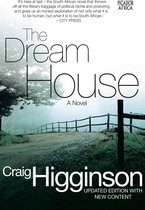
The Dream House
Craig Higginson
, Craig Higginson on The Dream House
'This landscape is in transition, it’s not a farm, it’s not a gated community. It’
in a state of both renewal and decay. The buildings coming out of the mud are
half-new, half-ruins, and that’s where SA feels to me to be.'
'I decided to write a novel that was about us right now. How could I capture
this strange in-between space the country was in?'
' I didn’t want an allegory of doom and apocalypse, I wanted to find a middle
space…'
'My characters are each dreaming of a house to dwell in and a country they
can unambiguously call home. That remains an aspiration for each of us.'
, 'As if it is too much to ask of us that we also look at the consequences of violenc
how to survive it, how to imagine an alternative.'
Higginson says he wrote the novel to examine 'the space between a bleak outco
and a redemptive, hopeful one'.
'What I would like to suggest, however, is that I believe the quality of our fiction
depend entirely on the quality of our engagement with questions of content, fo
and context. It seems to me that the time we live in - in South Africa and more
generally - requires works of the imagination that are nimble, dextrous and capa
infiltrating and engaging a range of perspectives at once.'
Higginson prefers writing novels, 'because they become a place where you have
live. 'I can draft a play while I come and go. A play is somewhere you visit. A nov
place you inhabit.'
Craig Higginson
, Craig Higginson on The Dream House
'This landscape is in transition, it’s not a farm, it’s not a gated community. It’
in a state of both renewal and decay. The buildings coming out of the mud are
half-new, half-ruins, and that’s where SA feels to me to be.'
'I decided to write a novel that was about us right now. How could I capture
this strange in-between space the country was in?'
' I didn’t want an allegory of doom and apocalypse, I wanted to find a middle
space…'
'My characters are each dreaming of a house to dwell in and a country they
can unambiguously call home. That remains an aspiration for each of us.'
, 'As if it is too much to ask of us that we also look at the consequences of violenc
how to survive it, how to imagine an alternative.'
Higginson says he wrote the novel to examine 'the space between a bleak outco
and a redemptive, hopeful one'.
'What I would like to suggest, however, is that I believe the quality of our fiction
depend entirely on the quality of our engagement with questions of content, fo
and context. It seems to me that the time we live in - in South Africa and more
generally - requires works of the imagination that are nimble, dextrous and capa
infiltrating and engaging a range of perspectives at once.'
Higginson prefers writing novels, 'because they become a place where you have
live. 'I can draft a play while I come and go. A play is somewhere you visit. A nov
place you inhabit.'