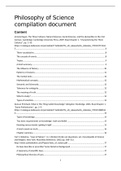
Philosophy of Science
compilation document
Content
Jerome Kagan, The Three Cultures: Natural Sciences, Social Sciences, and the Humanities in the 21st
Century. Cambridge: Cambridge University Press, 2009. Read Chapter 1, “Characterizing the Three
Cultures”, pp. 1–50.
https://catalogue.leidenuniv.nl/permalink/f/1e3kn0k/TN_cdi_askewsholts_vlebooks_978110719165
5..............................................................................................................................................................6
Three vocabularies.............................................................................................................................8
The cascade of events........................................................................................................................8
Tropes.................................................................................................................................................9
A brief summary.................................................................................................................................9
The influence of history....................................................................................................................10
Patterns or features..........................................................................................................................11
The mental tools...............................................................................................................................12
Mathematical concepts....................................................................................................................12
Semantic and Schematic...................................................................................................................13
Tolerance for ambiguity....................................................................................................................13
The meaning of truth........................................................................................................................13
What to study?.................................................................................................................................14
Types of scientists.............................................................................................................................14
Duncan Pritchard, What Is This Thing Called Knowledge? Abingdon: Routledge, 2006. Read Chapter 1,
“Some Preliminaries”, pp. 3–9.
https://catalogue.leidenuniv.nl/permalink/f/1e3kn0k/TN_cdi_askewsholts_vlebooks_978131588944
3............................................................................................................................................................15
Types of knowledge..........................................................................................................................15
Two basic requirements on knowledge: truth and belief.................................................................15
Knowing versus merely ‘getting it right’...........................................................................................15
A brief remark on truth.....................................................................................................................16
Chapter summary.............................................................................................................................16
Yuri V. Balashov, “Laws of Nature”, in J. Wentzel Vrede van Huyssteen, ed., Encyclopedia of Science
and Religion. New York: Macmillan Reference, 2003; pp. 508–513.
http://www.yuribalashov.com/Papers/laws_of_nature.pdf................................................................17
Do laws describe or prescribe? Some historical background............................................................17
A taxonomy of scientific laws...........................................................................................................17
Philosophical theories of laws..........................................................................................................17
1
, Laws and explanation.......................................................................................................................18
Laws and reductionism.....................................................................................................................18
Ahmed Jamal Anwer, “Some Approaches to the Problem of Induction”, Indian Philosophical Quarterly
22 (1995), pp. 247–258. http://www.unipune.ac.in/snc/cssh/ipq/english/IPQ/21-25%20volumes/
22%2003/PDF/22-3- 7.pdf....................................................................................................................19
Way #3..............................................................................................................................................19
Way #2..............................................................................................................................................19
Way #1..............................................................................................................................................20
Conclusion........................................................................................................................................20
Michael Strevens, “Scientific Explanation”, in Donald M. Borchert, ed., Encyclopedia of Philosophy.
Second edition. Detroit, Mich.: Macmillan Reference, 2006.
http://www.strevens.org/research/simplexuality/Expln.pdf...............................................................22
The DN Account................................................................................................................................22
Objections to the DN account...........................................................................................................23
The IS Account..................................................................................................................................24
The Statistical Relevance Account....................................................................................................24
The Unication Account.....................................................................................................................25
The Causal Approach........................................................................................................................25
Other issues......................................................................................................................................27
Bruce J. Caldwell, “Clarifying Popper”, Journal of Economic Literature 29 (1991), pp. 1–33. Read pp.
1–13. https://catalogue.leidenuniv.nl/permalink/f/1e3kn0k/TN_cdi_proquest_journals_1300295229
..............................................................................................................................................................28
Introduction......................................................................................................................................28
Popper on demarcation and falsificationism....................................................................................28
Statement of popper’s position....................................................................................................28
Proponents of falsificationism in economics................................................................................29
The critique of falsificationism in economics................................................................................29
An aside: Kuhn and Lakatos..........................................................................................................30
Paul Hoyningen-Huene, “On Thomas Kuhn’s Philosophical Significance”, Configurations 6 (1998), pp.
1–14.
https://catalogue.leidenuniv.nl/permalink/f/1e3kn0k/TN_cdi_crossref_primary_10_1353_con_1
998_0005..............................................................................................................................................32
Daniela M. Bailer-Jones, “Models, Metaphors and Analogies”, in Peter Machamer and Michael
Silberstein, eds., The Blackwell Guide to the Philosophy of Science. Oxford: Blackwell, 2002; pp. 108–
127. http://pages.wustl.edu/files/pages/imce/cfcraver/struct_scientif_theories_0.pdf.....................35
Models..............................................................................................................................................35
Analogy.............................................................................................................................................35
Metaphor..........................................................................................................................................36
Metaphorical models........................................................................................................................37
2
, Familiarity and understanding......................................................................................................37
Material for exploration...............................................................................................................37
Coping with negative analogies....................................................................................................37
New terminology..........................................................................................................................37
Literal versus metaphorical..........................................................................................................37
Current Issues...................................................................................................................................38
Creativity......................................................................................................................................38
Acquisition of new meaning.........................................................................................................38
Metaphorical models and metaphorical terminology..................................................................38
The relationships between models, metaphors and analogies.....................................................39
John Gerring and Craig W. Thomas, “Quantitative and Qualitative: A Question of Comparability”, in
Bertrand Badie, Dirk Berg-Schlosser, and Leonardo Morlino, eds., International Encyclopedia of
Political Science. Los Angeles, Cal.: Sage, 2011; pp. 2189–2196.
http://people.bu.edu/jgerring/documents/QUANTITATIVEANDQUALITATIVE_Extended.pdf.............40
Comparability...................................................................................................................................41
Precision and explicitness.................................................................................................................41
Trade-offs: thick and thin description...............................................................................................42
Construing meaning versus analysing behavior................................................................................42
Conclusion........................................................................................................................................43
Peter M. Todd and Gerd Gigerenzer, “Précis of Simple Heuristics that Make Us Smart”, Behavioral
and Brain Sciences 23 (2000), pp. 727–741. 5
https://catalogue.leidenuniv.nl/permalink/f/1e3kn0k/TN_cdi_elsevier_sciencedirect_doi_10_10
16_B0_08_043076_7_01022_6............................................................................................................45
Introduction......................................................................................................................................46
Visions of rationality: from demons to bounded rationality.............................................................46
Unbounded rationality.................................................................................................................47
Optimization under constraints....................................................................................................47
Bounded rationality: satisficing....................................................................................................48
Bounded rationality: fast and frugal heuristics.............................................................................48
The ABCs of fast and frugal heuristics...............................................................................................48
Heuristic principles for guiding search..........................................................................................49
Heuristic principles for stopping search........................................................................................49
Heuristic principles for decision making.......................................................................................49
Putting heuristic building blocks together....................................................................................49
Classes of heuristics..........................................................................................................................49
Ignorance-based decision making.................................................................................................49
One-reason decision making........................................................................................................50
3
, Elimination heuristics for multiple-option choices.......................................................................51
Satisficing heuristics......................................................................................................................52
Why and when do simple heuristics work? The basics of ecological rationality...............................52
Exploiting environment structure.................................................................................................52
Robustness...................................................................................................................................53
How can simple heuristics be evaluated?.........................................................................................53
Performance in real-world environments.....................................................................................53
Do people use fast and frugal heuristics?.....................................................................................53
How our research program relates to earlier notions of heuristics..................................................54
The adaptive toolbox........................................................................................................................54
Remaining challenges.......................................................................................................................54
Summary of the ABC view of rationality...........................................................................................55
Jan Bransen, “Verstehen and Erklaren, Philosophy of”, in Neil J. Smelser and Paul B. Baltes, eds.,
International Encyclopedia of the Social and Behavioral Sciences. Oxford: Elsevier, 2001; pp. 16165–
16170.
https://catalogue.leidenuniv.nl/permalink/f/1e3kn0k/TN_cdi_elsevier_sciencedirect_doi_10_10
16_B0_08_043076_7_01022_6............................................................................................................57
The autonomy of the Geisteswissenschaften...................................................................................57
Meaningfulness............................................................................................................................58
Purposiveness...............................................................................................................................58
Essential relationality (holism)......................................................................................................58
Two ways to do social science? Some controversies........................................................................58
Unity of science............................................................................................................................59
Intentional explanations...............................................................................................................59
subjective meanings.....................................................................................................................59
Deliberation..................................................................................................................................60
John Gerring and Craig W. Thomas, “Quantitative and Qualitative: A Question of Comparability”, in
Bertrand Badie, Dirk Berg-Schlosser, and Leonardo Morlino, eds., International Encyclopedia of
Political Science. Los Angeles, Cal.: Sage, 2011; pp. 2189–2196.
http://people.bu.edu/jgerring/documents/QUANTITATIVEANDQUALITATIVE_Extended.pdf.............61
Comparability...................................................................................................................................62
Precision and explicitness.................................................................................................................62
Trade-offs: thick and thin description...............................................................................................63
Constructing meaning versus analyzing behaviour...........................................................................63
Conclusion........................................................................................................................................64
Steven Lukes, “Different Cultures, Different Rationalities?”, History of the Human Sciences 13 (2000),
pp. 3–18.
https://catalogue.leidenuniv.nl/permalink/f/1e3kn0k/TN_cdi_proquest_journals_1877195222.......65
4
compilation document
Content
Jerome Kagan, The Three Cultures: Natural Sciences, Social Sciences, and the Humanities in the 21st
Century. Cambridge: Cambridge University Press, 2009. Read Chapter 1, “Characterizing the Three
Cultures”, pp. 1–50.
https://catalogue.leidenuniv.nl/permalink/f/1e3kn0k/TN_cdi_askewsholts_vlebooks_978110719165
5..............................................................................................................................................................6
Three vocabularies.............................................................................................................................8
The cascade of events........................................................................................................................8
Tropes.................................................................................................................................................9
A brief summary.................................................................................................................................9
The influence of history....................................................................................................................10
Patterns or features..........................................................................................................................11
The mental tools...............................................................................................................................12
Mathematical concepts....................................................................................................................12
Semantic and Schematic...................................................................................................................13
Tolerance for ambiguity....................................................................................................................13
The meaning of truth........................................................................................................................13
What to study?.................................................................................................................................14
Types of scientists.............................................................................................................................14
Duncan Pritchard, What Is This Thing Called Knowledge? Abingdon: Routledge, 2006. Read Chapter 1,
“Some Preliminaries”, pp. 3–9.
https://catalogue.leidenuniv.nl/permalink/f/1e3kn0k/TN_cdi_askewsholts_vlebooks_978131588944
3............................................................................................................................................................15
Types of knowledge..........................................................................................................................15
Two basic requirements on knowledge: truth and belief.................................................................15
Knowing versus merely ‘getting it right’...........................................................................................15
A brief remark on truth.....................................................................................................................16
Chapter summary.............................................................................................................................16
Yuri V. Balashov, “Laws of Nature”, in J. Wentzel Vrede van Huyssteen, ed., Encyclopedia of Science
and Religion. New York: Macmillan Reference, 2003; pp. 508–513.
http://www.yuribalashov.com/Papers/laws_of_nature.pdf................................................................17
Do laws describe or prescribe? Some historical background............................................................17
A taxonomy of scientific laws...........................................................................................................17
Philosophical theories of laws..........................................................................................................17
1
, Laws and explanation.......................................................................................................................18
Laws and reductionism.....................................................................................................................18
Ahmed Jamal Anwer, “Some Approaches to the Problem of Induction”, Indian Philosophical Quarterly
22 (1995), pp. 247–258. http://www.unipune.ac.in/snc/cssh/ipq/english/IPQ/21-25%20volumes/
22%2003/PDF/22-3- 7.pdf....................................................................................................................19
Way #3..............................................................................................................................................19
Way #2..............................................................................................................................................19
Way #1..............................................................................................................................................20
Conclusion........................................................................................................................................20
Michael Strevens, “Scientific Explanation”, in Donald M. Borchert, ed., Encyclopedia of Philosophy.
Second edition. Detroit, Mich.: Macmillan Reference, 2006.
http://www.strevens.org/research/simplexuality/Expln.pdf...............................................................22
The DN Account................................................................................................................................22
Objections to the DN account...........................................................................................................23
The IS Account..................................................................................................................................24
The Statistical Relevance Account....................................................................................................24
The Unication Account.....................................................................................................................25
The Causal Approach........................................................................................................................25
Other issues......................................................................................................................................27
Bruce J. Caldwell, “Clarifying Popper”, Journal of Economic Literature 29 (1991), pp. 1–33. Read pp.
1–13. https://catalogue.leidenuniv.nl/permalink/f/1e3kn0k/TN_cdi_proquest_journals_1300295229
..............................................................................................................................................................28
Introduction......................................................................................................................................28
Popper on demarcation and falsificationism....................................................................................28
Statement of popper’s position....................................................................................................28
Proponents of falsificationism in economics................................................................................29
The critique of falsificationism in economics................................................................................29
An aside: Kuhn and Lakatos..........................................................................................................30
Paul Hoyningen-Huene, “On Thomas Kuhn’s Philosophical Significance”, Configurations 6 (1998), pp.
1–14.
https://catalogue.leidenuniv.nl/permalink/f/1e3kn0k/TN_cdi_crossref_primary_10_1353_con_1
998_0005..............................................................................................................................................32
Daniela M. Bailer-Jones, “Models, Metaphors and Analogies”, in Peter Machamer and Michael
Silberstein, eds., The Blackwell Guide to the Philosophy of Science. Oxford: Blackwell, 2002; pp. 108–
127. http://pages.wustl.edu/files/pages/imce/cfcraver/struct_scientif_theories_0.pdf.....................35
Models..............................................................................................................................................35
Analogy.............................................................................................................................................35
Metaphor..........................................................................................................................................36
Metaphorical models........................................................................................................................37
2
, Familiarity and understanding......................................................................................................37
Material for exploration...............................................................................................................37
Coping with negative analogies....................................................................................................37
New terminology..........................................................................................................................37
Literal versus metaphorical..........................................................................................................37
Current Issues...................................................................................................................................38
Creativity......................................................................................................................................38
Acquisition of new meaning.........................................................................................................38
Metaphorical models and metaphorical terminology..................................................................38
The relationships between models, metaphors and analogies.....................................................39
John Gerring and Craig W. Thomas, “Quantitative and Qualitative: A Question of Comparability”, in
Bertrand Badie, Dirk Berg-Schlosser, and Leonardo Morlino, eds., International Encyclopedia of
Political Science. Los Angeles, Cal.: Sage, 2011; pp. 2189–2196.
http://people.bu.edu/jgerring/documents/QUANTITATIVEANDQUALITATIVE_Extended.pdf.............40
Comparability...................................................................................................................................41
Precision and explicitness.................................................................................................................41
Trade-offs: thick and thin description...............................................................................................42
Construing meaning versus analysing behavior................................................................................42
Conclusion........................................................................................................................................43
Peter M. Todd and Gerd Gigerenzer, “Précis of Simple Heuristics that Make Us Smart”, Behavioral
and Brain Sciences 23 (2000), pp. 727–741. 5
https://catalogue.leidenuniv.nl/permalink/f/1e3kn0k/TN_cdi_elsevier_sciencedirect_doi_10_10
16_B0_08_043076_7_01022_6............................................................................................................45
Introduction......................................................................................................................................46
Visions of rationality: from demons to bounded rationality.............................................................46
Unbounded rationality.................................................................................................................47
Optimization under constraints....................................................................................................47
Bounded rationality: satisficing....................................................................................................48
Bounded rationality: fast and frugal heuristics.............................................................................48
The ABCs of fast and frugal heuristics...............................................................................................48
Heuristic principles for guiding search..........................................................................................49
Heuristic principles for stopping search........................................................................................49
Heuristic principles for decision making.......................................................................................49
Putting heuristic building blocks together....................................................................................49
Classes of heuristics..........................................................................................................................49
Ignorance-based decision making.................................................................................................49
One-reason decision making........................................................................................................50
3
, Elimination heuristics for multiple-option choices.......................................................................51
Satisficing heuristics......................................................................................................................52
Why and when do simple heuristics work? The basics of ecological rationality...............................52
Exploiting environment structure.................................................................................................52
Robustness...................................................................................................................................53
How can simple heuristics be evaluated?.........................................................................................53
Performance in real-world environments.....................................................................................53
Do people use fast and frugal heuristics?.....................................................................................53
How our research program relates to earlier notions of heuristics..................................................54
The adaptive toolbox........................................................................................................................54
Remaining challenges.......................................................................................................................54
Summary of the ABC view of rationality...........................................................................................55
Jan Bransen, “Verstehen and Erklaren, Philosophy of”, in Neil J. Smelser and Paul B. Baltes, eds.,
International Encyclopedia of the Social and Behavioral Sciences. Oxford: Elsevier, 2001; pp. 16165–
16170.
https://catalogue.leidenuniv.nl/permalink/f/1e3kn0k/TN_cdi_elsevier_sciencedirect_doi_10_10
16_B0_08_043076_7_01022_6............................................................................................................57
The autonomy of the Geisteswissenschaften...................................................................................57
Meaningfulness............................................................................................................................58
Purposiveness...............................................................................................................................58
Essential relationality (holism)......................................................................................................58
Two ways to do social science? Some controversies........................................................................58
Unity of science............................................................................................................................59
Intentional explanations...............................................................................................................59
subjective meanings.....................................................................................................................59
Deliberation..................................................................................................................................60
John Gerring and Craig W. Thomas, “Quantitative and Qualitative: A Question of Comparability”, in
Bertrand Badie, Dirk Berg-Schlosser, and Leonardo Morlino, eds., International Encyclopedia of
Political Science. Los Angeles, Cal.: Sage, 2011; pp. 2189–2196.
http://people.bu.edu/jgerring/documents/QUANTITATIVEANDQUALITATIVE_Extended.pdf.............61
Comparability...................................................................................................................................62
Precision and explicitness.................................................................................................................62
Trade-offs: thick and thin description...............................................................................................63
Constructing meaning versus analyzing behaviour...........................................................................63
Conclusion........................................................................................................................................64
Steven Lukes, “Different Cultures, Different Rationalities?”, History of the Human Sciences 13 (2000),
pp. 3–18.
https://catalogue.leidenuniv.nl/permalink/f/1e3kn0k/TN_cdi_proquest_journals_1877195222.......65
4