MEDICAL-SURGICAL-100
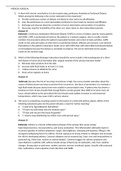
1. A client with chronic renal failure is to be treated using continuous Ambulatory Peritoneal Dialysis. Which among the following is the correct rationale for this treatment? A. Provide continuous contact of dialyzer and blood to clear toxins by ultrafiltration. B. Uses the peritoneum as a semi-permeable membrane to clear toxins by osmosis and diffusion. C. Exchange and cleanses the blood by correction of serum electrolytes and excretion of creatinine. D. Decreases the need for the immobility of the client as it clears toxins in short intermittent periods. Answer: B Rationale: Continuous Ambulatory Peritoneal Dialysis (CAPD) is a form of dialysis used for many patients with ESRD. CAPD is performed at home by the patient or a trained caregiver, who is usually a family member; the procedure allows the patient reasonable freedom and control of daily activities. CAPD works on the same principles as other forms of peritoneal dialysis: diffusion and osmosis. Less extreme fluctuations in the patient’s laboratory results occur with CAPD than with intermittent peritoneal dialysis or hemodialysis because the dialysis is constantly in progress. The serum electrolyte levels usually remain in the normal range.

Geschreven voor
- Instelling
- Axia University Of Phoenix
- Vak
- NURSING 101 (NURSING101)
Documentinformatie
- Geüpload op
- 3 augustus 2021
- Aantal pagina's
- 27
- Geschreven in
- 2020/2021
- Type
- Tentamen (uitwerkingen)
- Bevat
- Onbekend
Onderwerpen
-
nursing 101
-
medical surgical
-
medical surgical 100

Ook beschikbaar in voordeelbundel