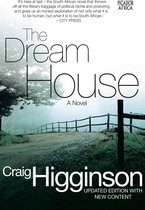
The Dream House
By Craig Higginson
Raphaela De Ascenção
28 April 2021
Grade 12
,Description
The Dream House tells the story of a farmhouse that has been created a dozen times in a
long and mysterious valley. Suddenly, two animals disappear. A farmer goes looking for
them when someone appears behind the farmer's back. When the farmer turns around,
he gets killed by the mysterious woman, setting off a chain of death and destruction and
strangeness. The Dream House is a story about the effects of violence, the strangeness of
the world, and ultimately, the mysteriousness of the valley.
Patricia and her husband, Richard, are supposed to pack their belongings to move to
Durban, South Africa. She peeps through the window of their house and notices a thick
smog in the valley. Their farm has been bought by property developers. As a result, they
are supposed to leave with immediate effect. The couple has employed a housemaid
named Beauty and a driver named Bheki. Richard has dementia and needs special care.
He is directed to the dining room by Beauty to take breakfast. In the dining room,
Richard appears disorderly and unsettled. Here, he explains about a weird dream he has
had the previous night.
The Structure
● 3 main structural elements
○ Novel is divided into 5 parts
○ Each chapter has the name of a character in the title
○ Non-Linear narrative (non-chronological)
● Themes are interlinked to structure
○ Subjective Truth - characters names help explore this theme
○ Memory and Loss - non-linear style
○ Novel as an allegory for South Africa
The Five Parts
➥ The 5 parts indicate the major shifts in the novel
● These shifts could indicate a shift in Time
OR
● Paradigm shift in terms of the character's thinking.
1 - Raphaela De Ascenção
,The Chapters
● Titled with a character's Name = shows individual perspectives and thoughts -
which emphasizes the subjective truth
● Higginson chooses to be an omniscient author (knows and sees everything) in the
third person - more trustworthy than first person as it takes away ambiguity
Non – Linear Narrative
● Time - Where are we? What is significant?
● Overlapping perspectives - Makes us the objective viewer
○ ie. Like a "Dream" from The "Dream" house creates a dream like quality
Untranslated Zulu
● Enhances the theme of language
● The theme of language can be seen as the vehicle through which truth can be
conveyed or obscured
○ If you understand Zulu: it makes you feel apart of certain characters thoughts
○ If you don't understand Zulu: it gives you a feeling of alienation
Genre: Subverting the 'Plaasroman'
● The Afrikaans Plaasroman - defined by J.M. Coetzee, as a genre of early 20th
century novels which “concerned itself almost exclusively with the farm and
platteland (rural society) and with the Afrikaner's painful transition from farmer
to townsman.”
● The plaasroman celebrates the farm as a patriarchal idyll, creates a mythology of
ancestral values and endeavours and marginalises black people, their labour and
any claims that they might have to land.
● The plaasroman genre (like The Dream House) reflects a time of transition in
South Africa.
● During the early years of the twentieth century, agriculture became more
commercialized, towns sprang up and urbanization increased.
○ All these factors were seen as threats to the immutable values of family
and land. They were forces undermining the plaas, '.. a separate kingdom
ruled over by a benign patriarch with, beneath him, a pyramid of
contented and industrious children, grandchildren and serfs' (Coetzee)
● It is a profoundly nostalgic genre which mourns a landscape and way of life which
is changing.
● The Dream House inverts the conventions of the plaasroman to 'ironise' or write
against the farm novel
2 - Raphaela De Ascenção
, Plaasroman The Dream House
Idyllic landscape. Dwaleni is rocky, wet, poor farming land.
A barren place permeated by unhappiness
and failure.
The farmhouse is a safe, nurturing, valued Patricia has always valued the Durban
space. house as her 'dream house'.
A conservative, retrospective genre. Higginson is looking to 'South Africa still
in the making'. 'We've all got these
pictures that we're moving towards, but I
think it's too early to settle.
Genre
Plaasroman The Dream House
Farm owned by English or Boer farmer. The 'settlers' are leaving.
The family farm is owned and ruled by a There was never a real family on Dwaleni.
dominant patriarchal figure who has Richard saw himself as the 'Big Baas' but
always presided over a prosperous rural the only successful enterprise on the farm
enterprise which will be a generous was Patricia's. Richard is now a pathetic,
inheritance. childlike figure. No descendent will
inherit the farm except Looksmart,
temporarily, in an ironic twist.
The farm is a place of tradition and The farm is seen to be a place of danger
simplicity while the city is a placę of and evil. It is now being taken over by a
progress and immorality. city-based capitalist company.
White landowners and black labourers The land is no longer owned by the white
with no access to power or land. History farmers but it is owned by a company
of black dispossession not acknowledged. which will protect privilege and maintain
exclusion. The inhumanity and
dispossession of the past is
acknowledged. Black characters have
some agency and power. Primary access
of hierarchy is class not race.
Dogs in a plaasroman guard and protect At the end of the novel, “The dog does
white people and property. They defend not understand how much the world has
white power and inequality. changed.” New political, social and
economic dimensions of power.
3 - Raphaela De Ascenção
By Craig Higginson
Raphaela De Ascenção
28 April 2021
Grade 12
,Description
The Dream House tells the story of a farmhouse that has been created a dozen times in a
long and mysterious valley. Suddenly, two animals disappear. A farmer goes looking for
them when someone appears behind the farmer's back. When the farmer turns around,
he gets killed by the mysterious woman, setting off a chain of death and destruction and
strangeness. The Dream House is a story about the effects of violence, the strangeness of
the world, and ultimately, the mysteriousness of the valley.
Patricia and her husband, Richard, are supposed to pack their belongings to move to
Durban, South Africa. She peeps through the window of their house and notices a thick
smog in the valley. Their farm has been bought by property developers. As a result, they
are supposed to leave with immediate effect. The couple has employed a housemaid
named Beauty and a driver named Bheki. Richard has dementia and needs special care.
He is directed to the dining room by Beauty to take breakfast. In the dining room,
Richard appears disorderly and unsettled. Here, he explains about a weird dream he has
had the previous night.
The Structure
● 3 main structural elements
○ Novel is divided into 5 parts
○ Each chapter has the name of a character in the title
○ Non-Linear narrative (non-chronological)
● Themes are interlinked to structure
○ Subjective Truth - characters names help explore this theme
○ Memory and Loss - non-linear style
○ Novel as an allegory for South Africa
The Five Parts
➥ The 5 parts indicate the major shifts in the novel
● These shifts could indicate a shift in Time
OR
● Paradigm shift in terms of the character's thinking.
1 - Raphaela De Ascenção
,The Chapters
● Titled with a character's Name = shows individual perspectives and thoughts -
which emphasizes the subjective truth
● Higginson chooses to be an omniscient author (knows and sees everything) in the
third person - more trustworthy than first person as it takes away ambiguity
Non – Linear Narrative
● Time - Where are we? What is significant?
● Overlapping perspectives - Makes us the objective viewer
○ ie. Like a "Dream" from The "Dream" house creates a dream like quality
Untranslated Zulu
● Enhances the theme of language
● The theme of language can be seen as the vehicle through which truth can be
conveyed or obscured
○ If you understand Zulu: it makes you feel apart of certain characters thoughts
○ If you don't understand Zulu: it gives you a feeling of alienation
Genre: Subverting the 'Plaasroman'
● The Afrikaans Plaasroman - defined by J.M. Coetzee, as a genre of early 20th
century novels which “concerned itself almost exclusively with the farm and
platteland (rural society) and with the Afrikaner's painful transition from farmer
to townsman.”
● The plaasroman celebrates the farm as a patriarchal idyll, creates a mythology of
ancestral values and endeavours and marginalises black people, their labour and
any claims that they might have to land.
● The plaasroman genre (like The Dream House) reflects a time of transition in
South Africa.
● During the early years of the twentieth century, agriculture became more
commercialized, towns sprang up and urbanization increased.
○ All these factors were seen as threats to the immutable values of family
and land. They were forces undermining the plaas, '.. a separate kingdom
ruled over by a benign patriarch with, beneath him, a pyramid of
contented and industrious children, grandchildren and serfs' (Coetzee)
● It is a profoundly nostalgic genre which mourns a landscape and way of life which
is changing.
● The Dream House inverts the conventions of the plaasroman to 'ironise' or write
against the farm novel
2 - Raphaela De Ascenção
, Plaasroman The Dream House
Idyllic landscape. Dwaleni is rocky, wet, poor farming land.
A barren place permeated by unhappiness
and failure.
The farmhouse is a safe, nurturing, valued Patricia has always valued the Durban
space. house as her 'dream house'.
A conservative, retrospective genre. Higginson is looking to 'South Africa still
in the making'. 'We've all got these
pictures that we're moving towards, but I
think it's too early to settle.
Genre
Plaasroman The Dream House
Farm owned by English or Boer farmer. The 'settlers' are leaving.
The family farm is owned and ruled by a There was never a real family on Dwaleni.
dominant patriarchal figure who has Richard saw himself as the 'Big Baas' but
always presided over a prosperous rural the only successful enterprise on the farm
enterprise which will be a generous was Patricia's. Richard is now a pathetic,
inheritance. childlike figure. No descendent will
inherit the farm except Looksmart,
temporarily, in an ironic twist.
The farm is a place of tradition and The farm is seen to be a place of danger
simplicity while the city is a placę of and evil. It is now being taken over by a
progress and immorality. city-based capitalist company.
White landowners and black labourers The land is no longer owned by the white
with no access to power or land. History farmers but it is owned by a company
of black dispossession not acknowledged. which will protect privilege and maintain
exclusion. The inhumanity and
dispossession of the past is
acknowledged. Black characters have
some agency and power. Primary access
of hierarchy is class not race.
Dogs in a plaasroman guard and protect At the end of the novel, “The dog does
white people and property. They defend not understand how much the world has
white power and inequality. changed.” New political, social and
economic dimensions of power.
3 - Raphaela De Ascenção