8.1 group 2
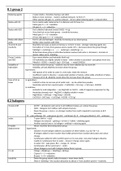
Reducing agents - 2 outer shell e-, therefore having s sub shell.
- Redox is most common – metal is oxidised losing 2e- to form 2+.
- Other species will gain 2 e- and be reduced – G2 are called reducing agent = reduced other.
Redox with O2 - Forms metal oxide, balanced as O is diatomic and G2 have 2 e-.
- Metal goes 0 -> +2 = oxidation.
- O2 goes 0 -> -2 = reduction
Redox with H2O - Form alkaline hydroxide [metal (OH)2] + H (g)
- Very slow but as you down group – reactivity increases.
- Metal goes 0 -> +2 = oxidation
- H from H2O goes +1 -> 0 = reduction
Redox with dilute - Form's salt and hydrogen, reactivity increasing as you down group.
acids - Similar redox reaction with H2O.
Trend in IE and - Reactivity increases as atoms of G2 lose e- to form +2 ions - stronger reducing agents too.
reactivity - Formation of +2 ions from gaseous atoms needs 2 IE’s - decreases down the group though.
- Metal(g)l -> metal+(g) + e- ---> metal+(g) + metal2+(g) + e-
- IE decrease down group as attraction between nucleus and outer e- decreases = increase in
atomic radius and e- shielding.
Group 2 oxides - Form metal alkaline and hydroxide (both aq)
and H2O - G2 hydroxides are slightly soluble in water - when solution is saturated = precipitate from ions.
- Metal(s) + H2O(l) -> metal2+ (aq) + 2OH (aq) -> metal (OH)2(s)
Solubility of - Increases down the group - solutions may be more alkaline due to more OH-.
hydroxides - Solubility, pH and alkalinity increases down the group.
Experiment;
- Add spatula of G2 oxide to water in a test tube, shake the mixture.
- Insufficient water to dissolve = unsaturated solution of metals, white solids at bottom of tubes.
- Measure pH of all, alkalinity would show the increase down the group.
Uses of G2 as In agriculture;
bases - Ca(OH)2 as lime to increase pH of acidic soils – can be white lime powder.
- Neutralise acid to form neutral water = Ca(OH)2(s) + 2H+ (aq) -> Ca2+(aq) + 2H2O(l)
In medicine;
- Antacids for acid indigestion -> use Mg(OH)2 or CaCO3 – milk of magnesia suspension for Mg.
- Neutralise stomach acid – Mg(OH)2 is slightly soluble in water.
- Mg(OH)2(s) + 2HCl(aq) -> MgCl2(aq) + 2H2O(l)
- CaCO3(s) + 2HCl (aq) -> CaCl2(aq) + H2O(l) + CO2 (g)
8.2 halogens
Trends in BP - At RTP – all diatomic and can be in all 3 different states, g-l-s down the group.
- Solid – halogens form lattices with simple structure.
- Down the group = more e- so stronger London force and E required to overcome so B.P
increases.
F2 – pale yellow(g), Cl2 – pale green (g), Br2 – red/brown (l), I2 – shiny grey/black (s), At2 – unknown.
redox - 7 outer shell e- = s2p5
- Halogen are reduced – gaining e- to form 1- halide = oxidising agent.
- Another species loses e- to halogen = oxidised = reducing agent.
H-halide - Shows reactivity decreasing down group.
displacement Experiment;
- Solution of each halogen added to aq solution of other halides, e.g. Cl2+ Br + I2.
- If halogen added is more reactive than halide present than reaction takes place and colour
change.
- Cyclohexane added to tell I2 and Br2 apart as it is non polar, non polar halogens dissolve
readily in cyclohexane than in water – shows I2 change colour again.
- In water; Cl2 – pale green, Br2 – orange, I2 – brown
- Cyclohexane; all the same but I2 – violet.
- Shows halogens react with halogens below them in group.
Cl + Br - Cl2(aq) + 2NaBr(aq) -> 2NaCl(aq) + Br2(aq)
- Cl goes 0-> -1 = reduction.
- Br goes –1->0 = oxidation.
reactivity - Down the group atomic radius increases = more inner shells.
- More e- shielding = less nuclear attraction to attract e- from another species = reactivity
Reducing agents - 2 outer shell e-, therefore having s sub shell.
- Redox is most common – metal is oxidised losing 2e- to form 2+.
- Other species will gain 2 e- and be reduced – G2 are called reducing agent = reduced other.
Redox with O2 - Forms metal oxide, balanced as O is diatomic and G2 have 2 e-.
- Metal goes 0 -> +2 = oxidation.
- O2 goes 0 -> -2 = reduction
Redox with H2O - Form alkaline hydroxide [metal (OH)2] + H (g)
- Very slow but as you down group – reactivity increases.
- Metal goes 0 -> +2 = oxidation
- H from H2O goes +1 -> 0 = reduction
Redox with dilute - Form's salt and hydrogen, reactivity increasing as you down group.
acids - Similar redox reaction with H2O.
Trend in IE and - Reactivity increases as atoms of G2 lose e- to form +2 ions - stronger reducing agents too.
reactivity - Formation of +2 ions from gaseous atoms needs 2 IE’s - decreases down the group though.
- Metal(g)l -> metal+(g) + e- ---> metal+(g) + metal2+(g) + e-
- IE decrease down group as attraction between nucleus and outer e- decreases = increase in
atomic radius and e- shielding.
Group 2 oxides - Form metal alkaline and hydroxide (both aq)
and H2O - G2 hydroxides are slightly soluble in water - when solution is saturated = precipitate from ions.
- Metal(s) + H2O(l) -> metal2+ (aq) + 2OH (aq) -> metal (OH)2(s)
Solubility of - Increases down the group - solutions may be more alkaline due to more OH-.
hydroxides - Solubility, pH and alkalinity increases down the group.
Experiment;
- Add spatula of G2 oxide to water in a test tube, shake the mixture.
- Insufficient water to dissolve = unsaturated solution of metals, white solids at bottom of tubes.
- Measure pH of all, alkalinity would show the increase down the group.
Uses of G2 as In agriculture;
bases - Ca(OH)2 as lime to increase pH of acidic soils – can be white lime powder.
- Neutralise acid to form neutral water = Ca(OH)2(s) + 2H+ (aq) -> Ca2+(aq) + 2H2O(l)
In medicine;
- Antacids for acid indigestion -> use Mg(OH)2 or CaCO3 – milk of magnesia suspension for Mg.
- Neutralise stomach acid – Mg(OH)2 is slightly soluble in water.
- Mg(OH)2(s) + 2HCl(aq) -> MgCl2(aq) + 2H2O(l)
- CaCO3(s) + 2HCl (aq) -> CaCl2(aq) + H2O(l) + CO2 (g)
8.2 halogens
Trends in BP - At RTP – all diatomic and can be in all 3 different states, g-l-s down the group.
- Solid – halogens form lattices with simple structure.
- Down the group = more e- so stronger London force and E required to overcome so B.P
increases.
F2 – pale yellow(g), Cl2 – pale green (g), Br2 – red/brown (l), I2 – shiny grey/black (s), At2 – unknown.
redox - 7 outer shell e- = s2p5
- Halogen are reduced – gaining e- to form 1- halide = oxidising agent.
- Another species loses e- to halogen = oxidised = reducing agent.
H-halide - Shows reactivity decreasing down group.
displacement Experiment;
- Solution of each halogen added to aq solution of other halides, e.g. Cl2+ Br + I2.
- If halogen added is more reactive than halide present than reaction takes place and colour
change.
- Cyclohexane added to tell I2 and Br2 apart as it is non polar, non polar halogens dissolve
readily in cyclohexane than in water – shows I2 change colour again.
- In water; Cl2 – pale green, Br2 – orange, I2 – brown
- Cyclohexane; all the same but I2 – violet.
- Shows halogens react with halogens below them in group.
Cl + Br - Cl2(aq) + 2NaBr(aq) -> 2NaCl(aq) + Br2(aq)
- Cl goes 0-> -1 = reduction.
- Br goes –1->0 = oxidation.
reactivity - Down the group atomic radius increases = more inner shells.
- More e- shielding = less nuclear attraction to attract e- from another species = reactivity