Microeconomics
Goolsebee - Levitt - Syverson
2nd edition
CHAPTER 1-3
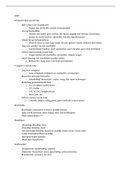
• Market is characterized by
- product or service being bought and sold
- Location
- point in time
• What are the supply and demand for a good?
- Supply: The combined amount of a good that all producers in a market are willing to
sell
- Demand: The combined amount of a good that all consumers are willing to buy
• What factors influence the demand for a good?
- Price, numbers of consumers, consumer wealth, consumer taste, price of others
• What factors influence the supply of a good?
- Price, number of sellers, production costs, sellers outside options
• Market Equilibrium
- Combining the descriptions of market supply and market demand => the point at
which these two curves cross is called the market equilibrium
• Equilibrium price = the only price at which the quantity demanded equals the quantity supplied
• Steep curves: large chains in price and small changes in quantity, all else equal
• Shallow curves: small changes in price and large changes in quantity, all else equal
• Elasticity:
Chapter 3: Using Supply and Demand to Analyze Markets:
Who benefits in a market?
• Consumer Surplus: The difference between the amount consumers
would be willing to pay for a good or service and the amount they
actually pay.
• Producer Surplus: The difference between the amount producers
are willing to sell goods for and what they actually receive.
, Price Regulations
• Price Ceiling - a regulation that sets the maximum price for a good or service
• Price floor - a regulation that sets the minimum price for a good or service (often called a price
support)
• Nonbinding - Means that a price ceiling or floor is not effective
• demand choke price = Price kills demand (demand is zero)
• elasticity = describes the sensitivity of quantity demanded or supplied; Percentage change in
one variable (e.g. quantity) divided by the percentage change in another (e.g. price)
Goolsebee - Levitt - Syverson
2nd edition
CHAPTER 1-3
• Market is characterized by
- product or service being bought and sold
- Location
- point in time
• What are the supply and demand for a good?
- Supply: The combined amount of a good that all producers in a market are willing to
sell
- Demand: The combined amount of a good that all consumers are willing to buy
• What factors influence the demand for a good?
- Price, numbers of consumers, consumer wealth, consumer taste, price of others
• What factors influence the supply of a good?
- Price, number of sellers, production costs, sellers outside options
• Market Equilibrium
- Combining the descriptions of market supply and market demand => the point at
which these two curves cross is called the market equilibrium
• Equilibrium price = the only price at which the quantity demanded equals the quantity supplied
• Steep curves: large chains in price and small changes in quantity, all else equal
• Shallow curves: small changes in price and large changes in quantity, all else equal
• Elasticity:
Chapter 3: Using Supply and Demand to Analyze Markets:
Who benefits in a market?
• Consumer Surplus: The difference between the amount consumers
would be willing to pay for a good or service and the amount they
actually pay.
• Producer Surplus: The difference between the amount producers
are willing to sell goods for and what they actually receive.
, Price Regulations
• Price Ceiling - a regulation that sets the maximum price for a good or service
• Price floor - a regulation that sets the minimum price for a good or service (often called a price
support)
• Nonbinding - Means that a price ceiling or floor is not effective
• demand choke price = Price kills demand (demand is zero)
• elasticity = describes the sensitivity of quantity demanded or supplied; Percentage change in
one variable (e.g. quantity) divided by the percentage change in another (e.g. price)