

Geschreven door studenten die geslaagd zijn Direct beschikbaar na je betaling Online lezen of als PDF Verkeerd document? Gratis ruilen 4,6 TrustPilot
logo-home
Document preview thumbnail
Voorbeeld 3 van de 18 pagina's
Tentamen (uitwerkingen)

PPCT Instructor Course 2026/2027 | 100+ Questions & Answers | Use of Force, Survival Stress, Reaction Time & Instructor Training

Document preview thumbnail
Voorbeeld 3 van de 18 pagina's

This PPCT Instructor Course 2026/2027 exam study guide contains 100+ questions, answers, definitions and instructor-training concepts across 18 pages. It provides concentrated preparation in PPCT defensive tactics instruction, survival stress, autonomic nervous system responses, reaction time, use-of-force theory, resistance and control levels, tactical handcuffing, human factors, Canadian Criminal Code provisions, learning stages and instructor certification requirements. The first page identifies the resource specifically as a PPCT Instructor Course 2026/2027 exam question-and-answer document, making it suitable for candidates reviewing both defensive-tactics theory and instructional methodology. The opening section examines the physiological and psychological effects of high-stress events. Topics include tactical anxiety, survival stress, tactical stress, the Inverted-U Law, homeostasis, sympathetic nervous system (SNS) activation and parasympathetic nervous system (PNS) backlash. The document reviews objective threat and fear perceptions, physical exhaustion, adrenal and vascular activity, perceptual narrowing, auditory exclusion and the relationship between elevated heart rate and performance. Fine, complex and gross motor skills are also differentiated in relation to stress and tactical performance. The guide further covers memory, incident reporting and survival reaction time. Students review short-term sensory processing, short- and long-term memory, post-incident reporting after sleep periods, and the stages involved in perceiving a threat, analyzing information, formulating a response and initiating motor action. Combat-performance variables include mindset, nutrition and hydration, fitness and belief systems, while survival-stress management includes confidence development, motor-skill selection, tactical breathing and visualization. A substantial section focuses on PPCT use-of-force theory and decision-making. The material covers Total Control Theory, One-Plus-One Theory, escalation and de-escalation, reactionary distance and variables affecting force decisions. Students distinguish resistance categories from corresponding levels of control and review reporting considerations involving officer arrival, observations, subject actions, officer actions, de-escalation, restraint and transport. The course also examines Canadian legal principles governing the use of force. The study material references Criminal Code sections 25(1), 25(3), 25(4), 26, 27, 31, 32, 34, 494 and 495, addressing concepts such as reasonable and necessary force, excessive force, prevention of offences, breach of the peace, suppression of riots, defence of a person and arrest authority. It additionally references R. v. Nasogaluak in connection with proportionality, necessity and reasonableness. These legal references make the document particularly relevant to Canadian PPCT instructor candidates. Another important component is the PPCT framework for tactical, medical and legal acceptability and human factors. The document considers whether techniques fit the operational environment, can be learned effectively and account for human capabilities and limitations. Related topics include Hick's Law, gross-motor-skill selection, proportionality between resistance and force, injury considerations and whether force was applied in good faith. The material also reviews tactical handcuffing and defensive-control concepts, including subject classifications, approach to contact, control upon touch, speed of application and double-locking when tactically safe. Additional sections discuss pain compliance, stunning, distraction, balance displacement and motor dysfunction as concepts within the PPCT curriculum. Higher-risk physical techniques appearing in the source are best treated as written-exam topics; practical instruction should follow current agency policy and qualified instructor supervision. Importantly for instructor candidates, the final section moves beyond defensive-tactics knowledge into training methodology and certification. It covers factors affecting training, motivational considerations and the progression through static, fluid and dynamic learning stages. The document states certification periods for instructors and instructor trainers, a recertification-extension period, and administrative requirements involving training paperwork, injury reports and course rosters. This instructor-development content distinguishes the resource from a standard PPCT Defensive Tactics question bank. Relevant students: This document is most relevant for PPCT instructor candidates, defensive tactics instructors, authorized law-enforcement trainers, police academy instructors, corrections trainers, public-safety instructors and personnel completing approved PPCT instructor certification or recertification training. It is especially useful for candidates studying survival stress, reaction time, human factors, use-of-force principles, Canadian legal authorities, resistance and control classifications, tactical handcuffing, training methodology, learning stages and PPCT instructor certification requirements. The uploaded document does not identify a formal course code, university, academy or training institution, so Institution Not Specified is used rather than inventing an affiliation. Keywords: PPCT Instructor Course 2026, PPCT Instructor Course 2027, PPCT Instructor exam, PPCT Instructor questions and answers, PPCT Instructor certification, PPCT Instructor study guide, PPCT Instructor training, defensive tactics instructor course, defensive tactics instructor exam, PPCT defensive tactics, use of force training, use of force instructor, survival stress, tactical stress, tactical anxiety, sympathetic nervous system, parasympathetic nervous system, Inverted U Law, motor skills, survival reaction time, reactionary gap, Total Control Theory, One Plus One Theory, levels of resistance, levels of control, escalation and de escalation, tactical handcuffing, human factors, Canadian Criminal Code use of force, Criminal Code Section 25, Criminal Code Section 26, Criminal Code Section 27, Criminal Code Section 34, R v Nasogaluak, reasonable force, proportionality, pain compliance, motor dysfunction, PPCT learning stages, static training, fluid training, dynamic training, PPCT instructor recertification, law enforcement instructor training, police defensive tactics instructor

Voorbeeld van de inhoud

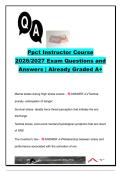
Ppct Instructor Course
2026/2027 Exam Questions and
Answers | Already Graded A+


Mental states during High stress events - ANSWER ✔✔Tactical

anxiety -anticipation of danger

Survival stress- deadly force threat perception that initiates the sns

discharge

Tactical stress- post event mental physiological symptoms that are result

of SNS


The inverted U law - ANSWER ✔✔Relationship between stress and

performance associated with the activation of sns

,Homeostasis - ANSWER ✔✔The balance between sns fight or flight

and pns rest and digest


PNS Backlash - ANSWER ✔✔may distort the memory - deals with

the sudeden treturn to the PNS after the result of SNS activation


symptoms of PNS backlash - ANSWER ✔✔dizziness, excessive

bleeding, and symptoms of shock including paleness nausea excessive

sweating and clammy skin


SNS Triggers - ANSWER ✔✔Objective threat perceptions, objective

fear perceptions, physical exhaustion and startle response


Objective Threat Perception - ANSWER ✔✔the close proximity,


the time needed to control the threat limited

the person isn't confident in their abilities,

is a new threat experience


Objective Fear Perceptions - ANSWER ✔✔fear of death, injury,

incorrect decision making fear of killing, fear of itself


physical exhaustion - ANSWER ✔✔caused by either depletion of the

adenosine triphosphotel (ATP) fuel system or inadequate nutrition, can

, activate SNS - many officers will escalate use of force upon coming

exhausted


Physiological changes caused by sns - ANSWER ✔✔Adrenal activity


Vascular activity


Adrenal Activity - ANSWER ✔✔drives the heart rate from 60-80 beats

per minute to over 200 beats per minute causing respiration to increase.

Two hormones epinephrine and nor epinephrine


Vascular Activity - ANSWER ✔✔vassal constriction, which is a lack of

circulation, causes cold hands


SNS activation and combat performance - ANSWER ✔✔Perceptual

narrowing - sight sound touch taste smell .

Sight alignment

Cognitive processing

Auditory exclusion

Binocular vision


Heart rate escalation and performance determination - ANSWER

✔✔115 - 145


COPYRIGHT©NINJANERD 2025/2026. YEAR PUBLISHED 2026. COMPANY REGISTRATION NUMBER: 619652435. TERMS OF USE. PRIVACY
STATEMENT. ALL RIGHTS RESERVED
3


Documentinformatie

Geüpload op
12 augustus 2026
Aantal pagina's
18
Geschreven in
2026/2027
Type
Tentamen (uitwerkingen)
Bevat
Vragen en antwoorden
€16,93

Verkeerd document? Gratis ruilen Binnen 14 dagen na aankoop en voor het downloaden kun je een ander document kiezen. Je kunt het bedrag gewoon opnieuw besteden.
Geschreven door studenten die geslaagd zijn
Direct beschikbaar na je betaling
Online lezen of als PDF

Seller avatar
De reputatie van een verkoper is gebaseerd op het aantal documenten dat iemand tegen betaling verkocht heeft en de beoordelingen die voor die items ontvangen zijn. Er zijn drie niveau’s te onderscheiden: brons, zilver en goud. Hoe beter de reputatie, hoe meer de kwaliteit van zijn of haar werk te vertrouwen is.
NinjaNerd
3,4
(76)
Verkocht
397
Volgers
6
Items
15334
Laatst verkocht
10 uur geleden


Echte notities, van echte studenten
Elk document op Stuvia is geschreven door een medestudent die hetzelfde vak deed. Zo leer je van iemand die het al heeft gehaald.


Waarom studenten kiezen voor Stuvia

Gemaakt door medestudenten, geverifieerd door reviews

Kwaliteit die je kunt vertrouwen: geschreven door studenten die slaagden en beoordeeld door anderen die dit document gebruikten.

Niet tevreden? Kies een ander document

Geen zorgen! Je kunt voor hetzelfde geld direct een ander document kiezen dat beter past bij wat je zoekt.

Betaal zoals je wilt, start meteen met leren

Geen abonnement, geen verplichtingen. Betaal zoals je gewend bent via iDeal of creditcard en download je PDF-document meteen.

Student with book image

“Gekocht, gedownload en geslaagd. Zo makkelijk kan het dus zijn.”

Alisha Student

Bezig met je bronvermelding?

Maak nauwkeurige citaten in APA, MLA en Harvard met onze gratis bronnengenerator.

Bezig met je bronvermelding?

Veelgestelde vragen

