

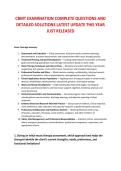
CBMT EXAMINATION COMPLETE QUESTIONS AND
DETAILED SOLUTIONS LATEST UPDATE THIS YEAR
JUST RELEASED
Exam Coverage Summary
1. Assessment and Evaluation — Client assessment, functional needs, treatment planning,
documentation, outcome measurement, and reassessment within music therapy practice.
2. Treatment Planning and Goal Development — Creating individualized, measurable, achievable
goals and selecting appropriate music therapy interventions based on client needs.
3. Music Therapy Techniques and Interventions — Receptive and active methods, improvisation,
songwriting, lyric analysis, music performance, movement, and relaxation techniques.
4. Professional Practice and Ethics — Ethical decision-making, confidentiality, informed consent,
professional boundaries, cultural responsiveness, and appropriate scope of practice.
5. Clinical Applications Across Populations — Applying music therapy principles in mental health,
medical, rehabilitation, developmental, educational, geriatric, and hospice settings.
6. Music and Human Development — Understanding developmental stages, neurological
processes, psychosocial factors, and how music supports cognitive, emotional, physical, and
social functioning.
7. Clinical Documentation and Communication — Accurate progress notes, treatment records,
interdisciplinary communication, discharge planning, and objective reporting of client
responses.
8. Evidence-Based and Research-Informed Practice — Using research evidence, clinical expertise,
client preferences, data collection, and outcome measures to guide therapeutic decisions.
9. Professional Collaboration and Healthcare Systems — Working effectively with nurses,
physicians, educators, therapists, social workers, caregivers, and other members of
interdisciplinary teams.
10. Safety, Risk Management, and Professional Responsibilities — Infection control, environmental
safety, emergency awareness, contraindications, professional competence, supervision, and
appropriate referral.
1. During an initial music therapy assessment, which approach best helps the
therapist identify the client's current strengths, needs, preferences, and
functional limitations?
,A. Selecting interventions based only on the therapist's preferred musical style
B. Conducting a comprehensive assessment using observation, interviews,
records, and appropriate assessment methods
C. Beginning treatment immediately without collecting baseline information
D. Asking only about the client's favorite recording artist
Answer: B
Rationale: A comprehensive assessment combines multiple sources of
information to establish baseline functioning, identify therapeutic needs, and
support individualized treatment planning.
2. When developing a music therapy goal for a client with impaired social
communication, which statement is most appropriately written as measurable?
A. Client will enjoy music more during every therapy session.
B. Client will become a better communicator through preferred musical activities.
C. Client will initiate three appropriate verbal interactions with peers during
structured music activities.
D. Client will appreciate the importance of interpersonal relationships.
Answer: C
Rationale: The goal specifies an observable behavior, measurable frequency, and
therapeutic context, making progress easier to evaluate objectively.
3. A music therapist notices that a client's responses during sessions differ
significantly from information contained in previous clinical records. What
should happen first?
A. Ignore the discrepancy because historical records are always more reliable.
B. Document the discrepancy and gather additional information before making
clinical conclusions.
,C. Immediately change all treatment goals without further assessment.
D. Inform other clients about the discrepancy to obtain their opinions.
Answer: B
Rationale: Conflicting information should prompt further assessment and
verification rather than premature conclusions or unsupported treatment
changes.
4. Which intervention would generally be classified as an active music therapy
technique because the client directly participates in music-making?
A. Listening to recorded instrumental music while resting quietly
B. Listening to a therapist-selected song without responding
C. Guided relaxation accompanied by prerecorded music
D. Improvising rhythmic patterns on percussion instruments with therapeutic
guidance
Answer: D
Rationale: Active music therapy involves direct client participation in music-
making, including improvisation, singing, playing instruments, or creating music.
5. A therapist uses songwriting with a client experiencing grief to facilitate
emotional expression and personal meaning. What is the primary therapeutic
mechanism?
A. Increasing emotional expression and supporting exploration of personal
experiences
B. Eliminating grief immediately through distraction
C. Replacing psychotherapy with recreational entertainment
D. Preventing the client from discussing difficult emotions
Answer: A
, Rationale: Songwriting can provide a structured, creative medium for expressing
emotions, processing experiences, and developing personal meaning.
6. Which documentation statement most appropriately describes an objective
observation following a music therapy intervention?
A. Client had a wonderful session and seemed much happier than usual.
B. Client appeared to enjoy the intervention because the therapist selected
excellent music.
C. Client smiled, maintained eye contact, and initiated two verbal responses
during singing activity.
D. Client's emotional state was completely improved following today's
intervention.
Answer: C
Rationale: The statement identifies observable behaviors without relying on
unsupported assumptions about internal emotional states or treatment
effectiveness.
7. A client refuses to participate in a planned music therapy activity after
previously agreeing to treatment. What is the therapist's most appropriate
response?
A. Force participation because the client previously provided consent.
B. Respect the refusal, explore possible reasons, and offer appropriate
alternatives when clinically indicated.
C. Terminate therapy immediately without discussing the client's concerns.
D. Tell the client that refusal demonstrates lack of motivation.
Answer: B
Rationale: Clients retain the right to refuse participation. The therapist should
respect autonomy while exploring barriers and maintaining therapeutic rapport.
DETAILED SOLUTIONS LATEST UPDATE THIS YEAR
JUST RELEASED
Exam Coverage Summary
1. Assessment and Evaluation — Client assessment, functional needs, treatment planning,
documentation, outcome measurement, and reassessment within music therapy practice.
2. Treatment Planning and Goal Development — Creating individualized, measurable, achievable
goals and selecting appropriate music therapy interventions based on client needs.
3. Music Therapy Techniques and Interventions — Receptive and active methods, improvisation,
songwriting, lyric analysis, music performance, movement, and relaxation techniques.
4. Professional Practice and Ethics — Ethical decision-making, confidentiality, informed consent,
professional boundaries, cultural responsiveness, and appropriate scope of practice.
5. Clinical Applications Across Populations — Applying music therapy principles in mental health,
medical, rehabilitation, developmental, educational, geriatric, and hospice settings.
6. Music and Human Development — Understanding developmental stages, neurological
processes, psychosocial factors, and how music supports cognitive, emotional, physical, and
social functioning.
7. Clinical Documentation and Communication — Accurate progress notes, treatment records,
interdisciplinary communication, discharge planning, and objective reporting of client
responses.
8. Evidence-Based and Research-Informed Practice — Using research evidence, clinical expertise,
client preferences, data collection, and outcome measures to guide therapeutic decisions.
9. Professional Collaboration and Healthcare Systems — Working effectively with nurses,
physicians, educators, therapists, social workers, caregivers, and other members of
interdisciplinary teams.
10. Safety, Risk Management, and Professional Responsibilities — Infection control, environmental
safety, emergency awareness, contraindications, professional competence, supervision, and
appropriate referral.
1. During an initial music therapy assessment, which approach best helps the
therapist identify the client's current strengths, needs, preferences, and
functional limitations?
,A. Selecting interventions based only on the therapist's preferred musical style
B. Conducting a comprehensive assessment using observation, interviews,
records, and appropriate assessment methods
C. Beginning treatment immediately without collecting baseline information
D. Asking only about the client's favorite recording artist
Answer: B
Rationale: A comprehensive assessment combines multiple sources of
information to establish baseline functioning, identify therapeutic needs, and
support individualized treatment planning.
2. When developing a music therapy goal for a client with impaired social
communication, which statement is most appropriately written as measurable?
A. Client will enjoy music more during every therapy session.
B. Client will become a better communicator through preferred musical activities.
C. Client will initiate three appropriate verbal interactions with peers during
structured music activities.
D. Client will appreciate the importance of interpersonal relationships.
Answer: C
Rationale: The goal specifies an observable behavior, measurable frequency, and
therapeutic context, making progress easier to evaluate objectively.
3. A music therapist notices that a client's responses during sessions differ
significantly from information contained in previous clinical records. What
should happen first?
A. Ignore the discrepancy because historical records are always more reliable.
B. Document the discrepancy and gather additional information before making
clinical conclusions.
,C. Immediately change all treatment goals without further assessment.
D. Inform other clients about the discrepancy to obtain their opinions.
Answer: B
Rationale: Conflicting information should prompt further assessment and
verification rather than premature conclusions or unsupported treatment
changes.
4. Which intervention would generally be classified as an active music therapy
technique because the client directly participates in music-making?
A. Listening to recorded instrumental music while resting quietly
B. Listening to a therapist-selected song without responding
C. Guided relaxation accompanied by prerecorded music
D. Improvising rhythmic patterns on percussion instruments with therapeutic
guidance
Answer: D
Rationale: Active music therapy involves direct client participation in music-
making, including improvisation, singing, playing instruments, or creating music.
5. A therapist uses songwriting with a client experiencing grief to facilitate
emotional expression and personal meaning. What is the primary therapeutic
mechanism?
A. Increasing emotional expression and supporting exploration of personal
experiences
B. Eliminating grief immediately through distraction
C. Replacing psychotherapy with recreational entertainment
D. Preventing the client from discussing difficult emotions
Answer: A
, Rationale: Songwriting can provide a structured, creative medium for expressing
emotions, processing experiences, and developing personal meaning.
6. Which documentation statement most appropriately describes an objective
observation following a music therapy intervention?
A. Client had a wonderful session and seemed much happier than usual.
B. Client appeared to enjoy the intervention because the therapist selected
excellent music.
C. Client smiled, maintained eye contact, and initiated two verbal responses
during singing activity.
D. Client's emotional state was completely improved following today's
intervention.
Answer: C
Rationale: The statement identifies observable behaviors without relying on
unsupported assumptions about internal emotional states or treatment
effectiveness.
7. A client refuses to participate in a planned music therapy activity after
previously agreeing to treatment. What is the therapist's most appropriate
response?
A. Force participation because the client previously provided consent.
B. Respect the refusal, explore possible reasons, and offer appropriate
alternatives when clinically indicated.
C. Terminate therapy immediately without discussing the client's concerns.
D. Tell the client that refusal demonstrates lack of motivation.
Answer: B
Rationale: Clients retain the right to refuse participation. The therapist should
respect autonomy while exploring barriers and maintaining therapeutic rapport.



