OneNote 16/06/2020, 17)18
Embryology
Friday, 5 June 2020 10:48
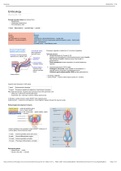
Gonads (ovaries/ testes) are derived from :
• Mesothelium
• Underlying mesenchyme
• Primordial germ cells
5 week Mesonephros → gonadal ridge → gonads
♀ ♂
Cortex Medulla
12 week 7 week
Not dependent on hormones Testosterone, dihydrotestosterone ~ Leydig cells
Mullerian = paramesonephric Antimullerian hormone (suppresses paramesonephric ducts) ~ Sertoli cells
Wolf = mesonephric
Gonadal cords → seminiferous cords
Processus vaginalis is visible form 2-3 months of gestation
Testicular descent
1. Abdominal phase (8-15 week /9-12)
Swelling and strengthening of distal gubernaculum due to insulin-
like hormone 3 (insl3). Swelling causes fixed length of
gubernaculum.
Fetal testosterone causes regression of cranial suspensory
ligament.
2. Inguinoscrotal phase (25-35 week)
Androgenic hormones cause release of neurotrophins =>
regulate sensory branches of genitofemoral nerve .
Calcitonin gene-related peptide CGRP guides gubernaculum.
♂ processus vaginalis
♀ canal of Nuck → leads to labia majora (closes at 7 months)
Inguinal canal develops in both sexes
7 week Gubernaculum develops
12 week Processus vaginalis (invagination of peritoneum) develops
After testicular descent, inguinal canal contracts around the spermatic cord
• Deep ring = opening in transversalis fascia
• Superficial ring = opening in external oblique aponeurosis
In females, ovaries remain in pelvis DON"T enter inguinal canal
Gubernaculum = ovarian & round ligament (round ligament passes through the inguinal canal)
Embryological development of penis
Genital tubercle → external genitalia, glans
Lateral tubercle → body of penis (shaft)
Urogenital folds fuse on the ventral side → penile urethra, raphe
Labioscrotal swelling → scrotum
Urethra epithelium has endoderm origin EXCEPT, distal part of
urethra (glans) has ectodermal origin!
7 week External genitalia same both sexes
9 week Sexual differentiation begins
12 week External genitalia complete
16 week Phenotypic differentiation complete
Suprarenal glands
• Mesenchyme → cortex
• Neural crest cells → medulla
https://onenote.officeapps.live.com/o/onenoteframe.aspx?ui=en-US&rs=en-U…-46bd-ab97-12c1bcad30aa&sftc=1&wdredirectionreason=Force_SingleStepBoot Page 1 of 1
Embryology
Friday, 5 June 2020 10:48
Gonads (ovaries/ testes) are derived from :
• Mesothelium
• Underlying mesenchyme
• Primordial germ cells
5 week Mesonephros → gonadal ridge → gonads
♀ ♂
Cortex Medulla
12 week 7 week
Not dependent on hormones Testosterone, dihydrotestosterone ~ Leydig cells
Mullerian = paramesonephric Antimullerian hormone (suppresses paramesonephric ducts) ~ Sertoli cells
Wolf = mesonephric
Gonadal cords → seminiferous cords
Processus vaginalis is visible form 2-3 months of gestation
Testicular descent
1. Abdominal phase (8-15 week /9-12)
Swelling and strengthening of distal gubernaculum due to insulin-
like hormone 3 (insl3). Swelling causes fixed length of
gubernaculum.
Fetal testosterone causes regression of cranial suspensory
ligament.
2. Inguinoscrotal phase (25-35 week)
Androgenic hormones cause release of neurotrophins =>
regulate sensory branches of genitofemoral nerve .
Calcitonin gene-related peptide CGRP guides gubernaculum.
♂ processus vaginalis
♀ canal of Nuck → leads to labia majora (closes at 7 months)
Inguinal canal develops in both sexes
7 week Gubernaculum develops
12 week Processus vaginalis (invagination of peritoneum) develops
After testicular descent, inguinal canal contracts around the spermatic cord
• Deep ring = opening in transversalis fascia
• Superficial ring = opening in external oblique aponeurosis
In females, ovaries remain in pelvis DON"T enter inguinal canal
Gubernaculum = ovarian & round ligament (round ligament passes through the inguinal canal)
Embryological development of penis
Genital tubercle → external genitalia, glans
Lateral tubercle → body of penis (shaft)
Urogenital folds fuse on the ventral side → penile urethra, raphe
Labioscrotal swelling → scrotum
Urethra epithelium has endoderm origin EXCEPT, distal part of
urethra (glans) has ectodermal origin!
7 week External genitalia same both sexes
9 week Sexual differentiation begins
12 week External genitalia complete
16 week Phenotypic differentiation complete
Suprarenal glands
• Mesenchyme → cortex
• Neural crest cells → medulla
https://onenote.officeapps.live.com/o/onenoteframe.aspx?ui=en-US&rs=en-U…-46bd-ab97-12c1bcad30aa&sftc=1&wdredirectionreason=Force_SingleStepBoot Page 1 of 1