Section B: Acting
Le-Anne Goliath
16688627
Assignment 2: Acting
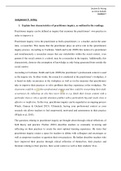
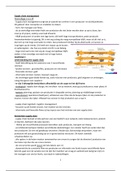
1. Explain four characteristics of practitioner inquiry, as outlined in the readings.
Practitioner inquiry can be defined as inquiry that examines the practitioners’ own practice in
order to improve it.
Practitioner inquiry views the practitioner as both a practitioner, i.e. a teacher, and at the same
time, a researcher. This means that the practitioner plays an active role in the (practitioner)
inquiry process. According to Cochrane- Smith and Lytle (2009) this notion of a practitioner
and simultaneously a researcher means that any stakeholder within the social context, even
parents if the social context is a school, may be a researcher in the inquiry. Additionally, this
characteristic, destroys the assumption of knowledge as only being generated from outside the
social context.
According to Cochrane- Smith and Lytle (2009) the practitioner’s professional context is used
as the inquiry site. In other words, the research is conducted at the practitioner’s workplace, it
is based on daily occurrences at the workplace as well as on the measures that practitioners
take to improve their practices or solve problems that they experience at the workplace. The
classroom could be a teachers
1.1 professional context and they could be researching their daily
1.2
occurrences by reflecting on why they never seem to e.g. finish their lesson content with a
particular class or why a specific attention grabber with a particularly big and rowdy class is
effective or ineffective. In this way, practitioner inquiry can be regarded as an ongoing process
Winch, Oancea & Orchard 2015). Ultimately, having your professional context as your
research site allows teachers to feel empowered, motivated and autonomous in their practice
(Winch et al, 2015).
The questions relating to practitioner inquiry are brought about through critical reflections of
both theory and practice. Fischer (2001) describes teachers as constantly reviewing and
reflecting on their practices to create the most optimal learning experience. He states that
practitioner inquiry creates a space for teachers to debate with colleagues and encourages as
well as empowers teachers to question their own practices. He further describes teachers who
have improved their practice through critical reflection of themselves, their practice and
literature relating to their practice, their social context as well as their students’ lives.
, Section B: Acting
Le-Anne Goliath
16688627
Finally, practitioner inquiry exists on a continuum between reflective practice and systematic
research. Some practitioner inquirers may research social problems. In Robinson (2009)
practitioner inquirers can and do improve the life chances of their learners by attempting to
level the playing field of access. Social problems include, how to deal with learners’ social
problems, curriculum changes and curriculum dissemination. Here, teachers are dealing with
broader social issues that need more structured questions, analysis, dynamic group work and
theory building in order to solve or improve such an issue. Other researchers simply use
reflective practice daily. Ultimately teachers would be “heard” if more of them took part in
practitioner inquiry of this kind.
(440 words)
2. Consider the following quote: “Teacher researchers are finding that as they try
out new ideas and reflect on their work, they are able to see themselves as creators
of meaning and as theory builders in their own right” (Fisher, 2001: 47).
What do you understand by teacher researchers seeing themselves as “theory
builders in their own right”? [10]
Teacher research is a form of practitioner inquiry in which the inquiries of K-12 teachers and
prospective teachers are researched. It is a way to investigate the assumptions that define
teaching, i.e. the over emphasis on test scores at the expense of other educational purposes, the
prescriptive nature of curricula, the pastoral role of the teacher and the increased surveillance
on the teaching and learning site ( Cochrane – Smith & Lytle, 2009).
Theorizing is a process that requires abstract thought of data. Theory- builders, who are teacher
researchers, theorize when they think about e.g. what has happened in their classrooms that
they would like to improve on, how to improve learners life chances or how they would like to
go about teaching a topic in the future.
2.1
Teacher researchers are theory builders as they use their educational context as a basis for their
inquiry and base their research on their own experiences. Therefore, when they are inquiring,
they must theorize, meaning they question and reflect. Their research topics are based on their
reflective practice, which is personal and individualistic.
In being a teacher, you are helping yourself as well as your students reach higher levels of
intellectual capacity as you critically analyse your practice in relation to theory. Teacher
Le-Anne Goliath
16688627
Assignment 2: Acting
1. Explain four characteristics of practitioner inquiry, as outlined in the readings.
Practitioner inquiry can be defined as inquiry that examines the practitioners’ own practice in
order to improve it.
Practitioner inquiry views the practitioner as both a practitioner, i.e. a teacher, and at the same
time, a researcher. This means that the practitioner plays an active role in the (practitioner)
inquiry process. According to Cochrane- Smith and Lytle (2009) this notion of a practitioner
and simultaneously a researcher means that any stakeholder within the social context, even
parents if the social context is a school, may be a researcher in the inquiry. Additionally, this
characteristic, destroys the assumption of knowledge as only being generated from outside the
social context.
According to Cochrane- Smith and Lytle (2009) the practitioner’s professional context is used
as the inquiry site. In other words, the research is conducted at the practitioner’s workplace, it
is based on daily occurrences at the workplace as well as on the measures that practitioners
take to improve their practices or solve problems that they experience at the workplace. The
classroom could be a teachers
1.1 professional context and they could be researching their daily
1.2
occurrences by reflecting on why they never seem to e.g. finish their lesson content with a
particular class or why a specific attention grabber with a particularly big and rowdy class is
effective or ineffective. In this way, practitioner inquiry can be regarded as an ongoing process
Winch, Oancea & Orchard 2015). Ultimately, having your professional context as your
research site allows teachers to feel empowered, motivated and autonomous in their practice
(Winch et al, 2015).
The questions relating to practitioner inquiry are brought about through critical reflections of
both theory and practice. Fischer (2001) describes teachers as constantly reviewing and
reflecting on their practices to create the most optimal learning experience. He states that
practitioner inquiry creates a space for teachers to debate with colleagues and encourages as
well as empowers teachers to question their own practices. He further describes teachers who
have improved their practice through critical reflection of themselves, their practice and
literature relating to their practice, their social context as well as their students’ lives.
, Section B: Acting
Le-Anne Goliath
16688627
Finally, practitioner inquiry exists on a continuum between reflective practice and systematic
research. Some practitioner inquirers may research social problems. In Robinson (2009)
practitioner inquirers can and do improve the life chances of their learners by attempting to
level the playing field of access. Social problems include, how to deal with learners’ social
problems, curriculum changes and curriculum dissemination. Here, teachers are dealing with
broader social issues that need more structured questions, analysis, dynamic group work and
theory building in order to solve or improve such an issue. Other researchers simply use
reflective practice daily. Ultimately teachers would be “heard” if more of them took part in
practitioner inquiry of this kind.
(440 words)
2. Consider the following quote: “Teacher researchers are finding that as they try
out new ideas and reflect on their work, they are able to see themselves as creators
of meaning and as theory builders in their own right” (Fisher, 2001: 47).
What do you understand by teacher researchers seeing themselves as “theory
builders in their own right”? [10]
Teacher research is a form of practitioner inquiry in which the inquiries of K-12 teachers and
prospective teachers are researched. It is a way to investigate the assumptions that define
teaching, i.e. the over emphasis on test scores at the expense of other educational purposes, the
prescriptive nature of curricula, the pastoral role of the teacher and the increased surveillance
on the teaching and learning site ( Cochrane – Smith & Lytle, 2009).
Theorizing is a process that requires abstract thought of data. Theory- builders, who are teacher
researchers, theorize when they think about e.g. what has happened in their classrooms that
they would like to improve on, how to improve learners life chances or how they would like to
go about teaching a topic in the future.
2.1
Teacher researchers are theory builders as they use their educational context as a basis for their
inquiry and base their research on their own experiences. Therefore, when they are inquiring,
they must theorize, meaning they question and reflect. Their research topics are based on their
reflective practice, which is personal and individualistic.
In being a teacher, you are helping yourself as well as your students reach higher levels of
intellectual capacity as you critically analyse your practice in relation to theory. Teacher