Monism:
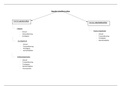
Monism holds that international law and national law essentially forms a single legal
order or a set of mutually intertwined legal orders that are presumed to be coherent. It
is one system, international law and national law. International law can directly be
applied in national law.
Dualism:
International law and national law are 2 separate legal systems that operate
independently.
Article 38 of the ICJ Statute, listing the sources of international law:
1. International conventions, whether general or particular, establishing rules expressly
recognized by the contesting states;
2. International custom, as evidence of a general practice accepted as law;
3. The general principles of law recognized by civilized nations;
4. Subject to provisions of article 9, judicial decisions and the teaching of the most highly
qualified publicists of the various nations, as subsidiary means for the determination of
rules of law.
1,2,3 are primary law
4 is secondary law
Requirements custom law
1. The objective element (state practice): it must be the way things are done.
a. Consistency: the practice should be reasonably uniform. In the Nicaragua
case the Court stated that it is not to be expected that states act 'with
complete consistency'. (North Sea, para. 74)
b. Duration: practice evolves slowly and gradually over time, often through
years of repeated behaviour. In the North Sea Continental Shelf Cases
the Court held that 'the passage of only a short period of time is not
necessarily, in itself, a bar to the formation of a new rule of customary
law'. (North Sea, para. 74)
c. Generality: Unanimity is not required, but the practice should include
the majority of states. In the North Sea Continental Shelf Cases, The ICJ
stated that the practice by states 'whose interests are specially affected'
was of particular relevance. (North Sea, para. 73)
2. The objective requirement (opinion juris): the custom is legally binding when it is
accepted as law. The purpose is to differentiate between acts motivated by a desire to
honour or create a legal obligation and those that are not. The subjective elements is
also important when a state acts contrary to a customary law. (para 77)
--> when talking about customs as a source of international law, use the Nicaragua Case and the
North Sea Continental Shelf Cases.
The Vienna Convention on the law of Treaties is about customary international law.
Important articles about treaties:
Article 34 of the VCLT
Article 26 of the VCLT
Article 27 of the VCLT
Article 3 of the VCLT
, Rules on exceptions of reservations can be found in article 19 of the VCLT:
1. When it is not permitted
2. Certain reservations
3. Object and purpose
The possible responses of a party to the reservations made by another state are mentioned in article
20 of the VCLT:
1. A state can accept the reservation
2. A state can object the reservations and express an intention that the treaty as a whole
should not enter into force between the states.
3. A state can express their disagreement, but decide that the treaty relations are more
important.
The effects of recognition of states can be divided into two different approaches:
1. Declaratory view of recognition of states:
The creation of states is first and foremost a matter of law and fulfilment of legal criteria. The
relevant criterion for acquiring statehood is essentially one of effectiveness.
2. Constitutive view of recognitions of states:
Recognition by other states is a precondition for statehood. Unless an entity appears to bear all
the hallmarks of a 'state; is recognized as such by other states, it is not a state for the purpose
of international law.
Criteria for being a state, Montevideo Convention article 1.
1. Permanent populations: there has to be a permanent populations, size does not
matter. It must be someone's home.
2. Defined territory: a state should have a territory. It does not necessarily require that
the territory is completely fixed or that the boundaries are undisputed.
3. Government: the government doesn't need to be elected democratically.
4. Capacity to enter into relations with states: we are talking about legal independence.
To be a state the entity must have the ability to act without legal interference from
other states.
States can acquire title to new territory in a number of ways:
1. Cession: cession was the primary method by which European states acquired territory
in Africa and Asia during the period of colorization. It is governed by some basic
principles:
The state that acquired the territory cannot obtain more right to the
territory than those possessed by the ceding state.
The acquiring state must respect the potential rights of third states.
2. Accretion: the situation where new land is gradually created naturally.
Artificial accretion: this type is man-made and will only be accepted as
new territory if it does not infringe the rights of other states or if those
states have given their consent.
Avulsion: new land is acquired by very sudden or violent charges. For
instance, due to the results of storms or natural disasters.
Erosion: erosion refers to the gradual disappearance of territory caused
by natural forces.
3. Occupation: a state can obtain title to territory that has never been the subject of any
state, also known as terra nullius.
4. Prescription: a state may gain title to territory previously under the sovereignty of
another state.
Monism holds that international law and national law essentially forms a single legal
order or a set of mutually intertwined legal orders that are presumed to be coherent. It
is one system, international law and national law. International law can directly be
applied in national law.
Dualism:
International law and national law are 2 separate legal systems that operate
independently.
Article 38 of the ICJ Statute, listing the sources of international law:
1. International conventions, whether general or particular, establishing rules expressly
recognized by the contesting states;
2. International custom, as evidence of a general practice accepted as law;
3. The general principles of law recognized by civilized nations;
4. Subject to provisions of article 9, judicial decisions and the teaching of the most highly
qualified publicists of the various nations, as subsidiary means for the determination of
rules of law.
1,2,3 are primary law
4 is secondary law
Requirements custom law
1. The objective element (state practice): it must be the way things are done.
a. Consistency: the practice should be reasonably uniform. In the Nicaragua
case the Court stated that it is not to be expected that states act 'with
complete consistency'. (North Sea, para. 74)
b. Duration: practice evolves slowly and gradually over time, often through
years of repeated behaviour. In the North Sea Continental Shelf Cases
the Court held that 'the passage of only a short period of time is not
necessarily, in itself, a bar to the formation of a new rule of customary
law'. (North Sea, para. 74)
c. Generality: Unanimity is not required, but the practice should include
the majority of states. In the North Sea Continental Shelf Cases, The ICJ
stated that the practice by states 'whose interests are specially affected'
was of particular relevance. (North Sea, para. 73)
2. The objective requirement (opinion juris): the custom is legally binding when it is
accepted as law. The purpose is to differentiate between acts motivated by a desire to
honour or create a legal obligation and those that are not. The subjective elements is
also important when a state acts contrary to a customary law. (para 77)
--> when talking about customs as a source of international law, use the Nicaragua Case and the
North Sea Continental Shelf Cases.
The Vienna Convention on the law of Treaties is about customary international law.
Important articles about treaties:
Article 34 of the VCLT
Article 26 of the VCLT
Article 27 of the VCLT
Article 3 of the VCLT
, Rules on exceptions of reservations can be found in article 19 of the VCLT:
1. When it is not permitted
2. Certain reservations
3. Object and purpose
The possible responses of a party to the reservations made by another state are mentioned in article
20 of the VCLT:
1. A state can accept the reservation
2. A state can object the reservations and express an intention that the treaty as a whole
should not enter into force between the states.
3. A state can express their disagreement, but decide that the treaty relations are more
important.
The effects of recognition of states can be divided into two different approaches:
1. Declaratory view of recognition of states:
The creation of states is first and foremost a matter of law and fulfilment of legal criteria. The
relevant criterion for acquiring statehood is essentially one of effectiveness.
2. Constitutive view of recognitions of states:
Recognition by other states is a precondition for statehood. Unless an entity appears to bear all
the hallmarks of a 'state; is recognized as such by other states, it is not a state for the purpose
of international law.
Criteria for being a state, Montevideo Convention article 1.
1. Permanent populations: there has to be a permanent populations, size does not
matter. It must be someone's home.
2. Defined territory: a state should have a territory. It does not necessarily require that
the territory is completely fixed or that the boundaries are undisputed.
3. Government: the government doesn't need to be elected democratically.
4. Capacity to enter into relations with states: we are talking about legal independence.
To be a state the entity must have the ability to act without legal interference from
other states.
States can acquire title to new territory in a number of ways:
1. Cession: cession was the primary method by which European states acquired territory
in Africa and Asia during the period of colorization. It is governed by some basic
principles:
The state that acquired the territory cannot obtain more right to the
territory than those possessed by the ceding state.
The acquiring state must respect the potential rights of third states.
2. Accretion: the situation where new land is gradually created naturally.
Artificial accretion: this type is man-made and will only be accepted as
new territory if it does not infringe the rights of other states or if those
states have given their consent.
Avulsion: new land is acquired by very sudden or violent charges. For
instance, due to the results of storms or natural disasters.
Erosion: erosion refers to the gradual disappearance of territory caused
by natural forces.
3. Occupation: a state can obtain title to territory that has never been the subject of any
state, also known as terra nullius.
4. Prescription: a state may gain title to territory previously under the sovereignty of
another state.