RN speak asthma careplan,100% CORRECT
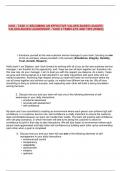
Nursing Diagnosis: Ineffective Airway Clearance Possible Etiologies: (Related to) • Bronchospasm • Increased production of secretions; retained secretions; thick, viscous secretions • Decreased energy/ fatigue Defining characteristics: (Evidenced by) • Statement of difficulty in breathing • Feeling of chest constriction • Changes in depth/ rate of respiration; tachypnea • Tachycardia • Use of accessory muscles or marked respiratory effort • Abnormal breath sound, inspiratory and expiratory wheezing • Cough (persistent), without sputum production • Prolonged expiration Goals/ Objectives: Short term goal: Client will demonstrate signs of patent airway and adequate oxygen exchange within 3 days. Long term goal: Client will demonstrate behaviours to improve or maintain airway clearance and identify potential complications and initiate appropriate actions. Nursing Actions 1. Assess respiratory status every hour during acute phase: lung sounds, respiratory rate and depth, presence and severity of wheezing, breathing pattern, use of accessory muscles. 2. Assist patient to assume to comfortable position, i.e. elevate head of bed, have client lean on over bed table or sit on the edge of bed. 3. Keep environmental pollution to a minimum according to individual situation. 4. Encourage and assist abdominal and pursed – lip breathing exercises. 5. Increase fluid intake to 3000ml/ day within cardiac tolerance. 6. Provide warm liquids and recommend intake of fluids between meals, instead of during meals. 7. Administer medications as indicated. 8. Monitor side effects of bronchodilator (tremors/ tachycardia). 9. Provide supplemental humidification, e.g., neutralizer in respiratory 1. Some degree in bronchospasm is present with obstruction in airway and may be manifested with wheezing or absent breath sounds in severe asthma. Tachypnea is usually present to some degree and respiratory dysfunction is variable depending on underlying process such as allergic reaction. 2. Elevation of head of the bed facilitates respiratory function by use of gravity, however client in distress may seek position that most eases breathing. 3. Precipitators of allergic type of respiratory reactions that can trigger or exacerbate onset of acute episode. 4. Provides some means to cope with or control dyspnea and reduce air trapping. 5. Hydration helps thin secretions, facilitating expectoration and using warm liquids may decrease bronchospasm. Outcome Criteria: Client will verbalize reduction or absence in difficulty in breathing and feeling of chest constriction, respiration and cardiac rate within normal range, absence or reduction of inspiratory and expiratory wheezing, and ability to resume to activities. Client will be able to identify and avoid potential allergens or stimuli that would trigger asthma attack and be able to handle symptoms if recurrence comes, prompt follow up checkup and to always bring or have the prescribed

Geschreven voor
- Instelling
- Connecticut School Of Professional Studies
- Vak
- HISTORY 101 (HISTORY101)
Documentinformatie
- Geüpload op
- 13 april 2021
- Aantal pagina's
- 3
- Geschreven in
- 2020/2021
- Type
- Tentamen (uitwerkingen)
- Bevat
- Vragen en antwoorden
Onderwerpen
-
rn speak asthma careplan