People & Organisation
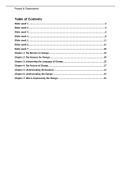
Table of Contents
Slides week 1......................................................................................................................2
Slides week 2......................................................................................................................3
Slides week 3......................................................................................................................6
Slides week 4......................................................................................................................8
Slides week 5....................................................................................................................11
Slides week 6....................................................................................................................15
Slides week 7....................................................................................................................20
Chapter 1: The Barriers to Change....................................................................................24
Chapter 2: The Reasons for Change...................................................................................30
Chapter 3: Interpreting the Language of Change..............................................................32
Chapter 4: The Process of Change.....................................................................................37
Chapter 5: Understanding the Business.............................................................................41
Chapter 6: Understanding the Change..............................................................................49
Chapter 7: Who Is Impacted by the Change......................................................................52
,People & Organisation
Slides week 1
Learning objectives
Define change management and show understanding of what makes change
management necessary and successful.
Be able to describe three change management models (Lewin, Kotter,
ADKAR).
Understand change related organizational human behavior: resistance to
change, overcoming resistance to change, group dynamics.
Map a SWOT for one business situation, provided by the teacher, in a specific
business situation.
Outline a basic understanding of one major process, in HRM, of an
organization and how this is linked to the strategic choices of an organization.
,People & Organisation
Slides week 2
Change management= The process of preparing for, planning, and leading change
Change management goals
Understanding
Engagement
Collaboration
Acceptance
Adoption
Who is involved in change management
Process of change
Change begins on an individual level
Individual changes then spread throughout
the organization and can either help or hurt
the change process.
Reasons for change
Burning platform= threatens the health and
life of the organisation
Continuous improvement = Organizations
striving for improvement of an organization
Scaling back operations
Facilitate growth= Growth = change
Mergers and acquisitions
,People & Organisation
Barriers to change
8 5
Why address barriers?
You want the majority of the people to move in the same direction, at the same pace.
Internal barriers
1. Fear
Fear of the Unknown.
Time to get used to the new situation Vision of the future
2. Trust
Leaders
Direction
3. Control
Over daily activities
4. Insecurity
Self Doubt
5. Motivation
Internal drive
6. Learned helplessness
Indifference (learned)
7. Apathy
Indifference
8. Change fatigue
Mental
Emotional
Too much change
,People & Organisation
External barriers
1. Complexity of the change:
Strategy
2. Lack of clear vision:
What
3. Lack of clear direction:
How
4. Mismanaged expectations:
Implicit
5. Lack of organizational capability and capacity:
Skills and know-how
Breath of skills and know-how
Bridge to change
Pareto principle
, People & Organisation
Slides week 3
Parties of communication during change
1. Change managers – what are they talking about?
2. Those being managed – what are they expressing?
Importance of language
Impact of language on change management
It is the words that we use in describing the changes and the expectations
for adoption.
In return, the language we hear from those impacted shows their feelings
about the proposed change.
What does language help you assess?
Management's understanding of their employees and customers +
attitudes towards them
Components of language & communication
1. Verbal
2. Non-Verbal
3. Listening
LISTENING
Listening is NOT the same as hearing
What is the impact of active listening on implementing change?
Supports open communication
Builds trust and helps to roll out the change, as people feel they are a part of
the change
Table of Contents
Slides week 1......................................................................................................................2
Slides week 2......................................................................................................................3
Slides week 3......................................................................................................................6
Slides week 4......................................................................................................................8
Slides week 5....................................................................................................................11
Slides week 6....................................................................................................................15
Slides week 7....................................................................................................................20
Chapter 1: The Barriers to Change....................................................................................24
Chapter 2: The Reasons for Change...................................................................................30
Chapter 3: Interpreting the Language of Change..............................................................32
Chapter 4: The Process of Change.....................................................................................37
Chapter 5: Understanding the Business.............................................................................41
Chapter 6: Understanding the Change..............................................................................49
Chapter 7: Who Is Impacted by the Change......................................................................52
,People & Organisation
Slides week 1
Learning objectives
Define change management and show understanding of what makes change
management necessary and successful.
Be able to describe three change management models (Lewin, Kotter,
ADKAR).
Understand change related organizational human behavior: resistance to
change, overcoming resistance to change, group dynamics.
Map a SWOT for one business situation, provided by the teacher, in a specific
business situation.
Outline a basic understanding of one major process, in HRM, of an
organization and how this is linked to the strategic choices of an organization.
,People & Organisation
Slides week 2
Change management= The process of preparing for, planning, and leading change
Change management goals
Understanding
Engagement
Collaboration
Acceptance
Adoption
Who is involved in change management
Process of change
Change begins on an individual level
Individual changes then spread throughout
the organization and can either help or hurt
the change process.
Reasons for change
Burning platform= threatens the health and
life of the organisation
Continuous improvement = Organizations
striving for improvement of an organization
Scaling back operations
Facilitate growth= Growth = change
Mergers and acquisitions
,People & Organisation
Barriers to change
8 5
Why address barriers?
You want the majority of the people to move in the same direction, at the same pace.
Internal barriers
1. Fear
Fear of the Unknown.
Time to get used to the new situation Vision of the future
2. Trust
Leaders
Direction
3. Control
Over daily activities
4. Insecurity
Self Doubt
5. Motivation
Internal drive
6. Learned helplessness
Indifference (learned)
7. Apathy
Indifference
8. Change fatigue
Mental
Emotional
Too much change
,People & Organisation
External barriers
1. Complexity of the change:
Strategy
2. Lack of clear vision:
What
3. Lack of clear direction:
How
4. Mismanaged expectations:
Implicit
5. Lack of organizational capability and capacity:
Skills and know-how
Breath of skills and know-how
Bridge to change
Pareto principle
, People & Organisation
Slides week 3
Parties of communication during change
1. Change managers – what are they talking about?
2. Those being managed – what are they expressing?
Importance of language
Impact of language on change management
It is the words that we use in describing the changes and the expectations
for adoption.
In return, the language we hear from those impacted shows their feelings
about the proposed change.
What does language help you assess?
Management's understanding of their employees and customers +
attitudes towards them
Components of language & communication
1. Verbal
2. Non-Verbal
3. Listening
LISTENING
Listening is NOT the same as hearing
What is the impact of active listening on implementing change?
Supports open communication
Builds trust and helps to roll out the change, as people feel they are a part of
the change