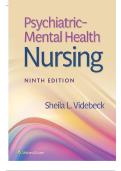
Test ssbank ssfor s s Psychiatric s s Mental s s Health s s Nursing s s 9th s s Edition
,Chapter s s 1
1. The s s nurse s s is s s assessing s s the s s factors s s contributing
s s to s s the sswell- being s s of s s a s s newly s s admitted s s client.
oo
s s Which s s of s s the ssfollowing s s would s s the ssnurse
ssidentify ssas sshaving ssa sspositive s s impact
ssontheindividual's s s mental s s health?
A) Not ss needing s s others s s for s s companionship
B) The ss ability s s to s s effectively s s manage s s stress
C) A s s family s s history s s of s s mental s s illness
D) Striving s s for s s total
s s self- ssrelianceAns: B
Feedback:
Individual s s factors s s influencing s s mental s s health
s s include ssbiologic s s makeup, s s autonomy, s s independence,
s s self-esteem, sscapacity s s for s s growth, s s vitality, s s ability
s s to s s find s s meaning s s in sslife,emotional s s resilience s s or
s s hardiness, s s sense s s of ssbelonging, s s reality s s orientation,
s s and s s coping s s or s s stress ssmanagement s s abilities.
s s Interpersonal s s factors s s such s s as ssintimacy s s and s s a
s s balance ssof ssseparateness s s and ssconnectedness s s are ssboth
ssneeded
for s s good s s mental s s health, s s and s s therefore s s ahealthy s s person s s would s s need
s s others s s for sscompanionship. s s A s s family s s history s s of s s mental s s illnesscould
s s relate s s to s s the s s biologic ssmakeup s s of s s an s s individual, s s which s s may s s have s s a
s s negative s s impacton s s an s s individual's ssmental s s health, s s aswell s s as s s a s s negative
s s impact s s on s s an s s individual's s s interpersonal s s and sssocialñcultural s s factors
s s ofhealth. s s Total s s self-reliance s s is s s not s s possible, s s and s s a s s positive
sssocial/cultural s s factor s s is s s access s s to s s adequate s s resources.
2. Which s s of s s the s s following s s statements s s about s s mental s s illness s s are s s true? s s Select s s all s s that
s s apply.
A) Mental s s illness s s can s s cause s s significant s s distress, s s impaired s s functioning, s s or s s both.
B) Mental s s illness s s is s s only s s due s s to s s social/cultural s s factors.
C) Social/cultural s s factors ssthat ssrelate ssto ssmental ssillness ssinclude
ssexcessive ssdependencyon s s or s s withdrawal s s from s s relationships.
D) Individuals s s suffering ssfrom ssmental s s illness ssare ssusually ssable ssto s s cope
s s effectively sswithdaily sslife.
E) Individuals sssuffering ssfrom ssmental ssillness ssmay ssexperience
ssdissatisfaction sswith relationships s s and s s self.
oo
Ans: s s A, s s D, s s E
Feedback:
Mental s s illness s s can s s cause s s significant s s distress, s s impaired s s functioning, s s or
s s both. s s Mental ssillness s s may s s be s s related s s to s s individual, s s interpersonal, s s or
s s social/cultural s s factors.
Excessive s s dependency s s on s s or s s withdrawal s s from s s relationships s s are
s s interpersonal ssfactors s s that s s relate s s to s s mental s s illness. s s Individuals s s suffering
s s from s s mental s s illness s s can ssfeel s s overwhelmed s s with s s daily sslife. s s Individuals
s s suffering ssfrom ssmental ssillness ssmay ssexperience ssdissatisfaction s s with relationships
oo
s s and s s self.
,3. Which s s of s s the s s following s s are s s true s s regarding s s mental s s health s s and s s mental s s illness?
A) Behavior ssthat s s may ssbe s s viewed s s as ssacceptable s s in s s one ssculture ssis
ssalways ssunacceptable in s s other s s cultures.
oo
B) It s s is s s easy s s to s s determine s s if s s a s s person s s is s s mentally s s healthy s s or s s mentally s s ill.
C) In s s most s s cases, s s mental s s health s s is s s a s s state s s of s s emotional,
s s psychological, s s and sssocial s s wellness ssevidenced ssby sssatisfying
ssinterpersonal ssrelationships, sseffective ssbehaviorand s s coping, s s positive s s self-
concept, s s and s s emotional s s stability.
D) Persons sswho s s engage ssin s s fantasies s s are
ssmentally ssill.Ans: C
Feedback:
What ssone s s society ssmay ssview s s as s s acceptable s s and s s appropriate s s behavior,
s s another sssociety ssmaysee s s that s s as s s maladaptive, s s and s s inappropriate. s s Mental
s s health s s and s s mental s s illness ssare s s difficult to s s define s s precisely. s s In s s most
oo
s s cases, s s mental s s health s s is s s a s s state s s of ssemotional, s s psychological, s s and s s social
s s wellness s s evidenced s s by s s satisfying s s interpersonal ssrelationships, s s effective
s s behavior s s and s s coping, s s positive s s self-concept, s s and s s emotional ssstability.
s s Persons s s who s s engage in s s fantasies s s may s s be s s mentally s s healthy, s s but s s the
oo
ssinability s s to s s distinguish s s reality s s from s s fantasyis s s an s s individual s s factor s s that
s s may sscontribute s s to s s mental s s illness.
4. A s s client s s grieving s s the s s recent s s loss s s of s s her s s husband s s asks s s if s s she
s s is s s becoming ssmentally ssill because s s she s s is s s so s s sad. s s The s s nurse's
oo
s s best s s response s s would s s be,
A) ìYou ssmay sshave ssa sstemporary ssmental s s illness ssbecause s s you s s are
ssexperiencing ssso ssmuchpain.î
B) ìYou ssare ssnot s s mentally ssill. s s This s s is s s an s s expected ssreaction s s to s s the
s s loss s s you sshave experienced.î
oo
C) ìWere ssyou ssgenerally ssdissatisfied sswith s s your ssrelationship ssbefore
ssyour sshusband'sdeath?î
D) ìTry ssnot s s to ssworry ssabout ssthat s s right s s now. ssYou ssnever s s know sswhat
s s the s s future ssbrings.î Ans:
oo B
Feedback:
Mental ssillness ssincludes ssgeneral ssdissatisfaction sswith ssself, ssineffective
ssrelationships, ssineffective sscoping, s s and sslack ssof sspersonal s s growth. ssAdditionally
ssthe ssbehavior ssmust s s not ssbe ssculturally ssexpected. ssAcute ssgrief ssreactions ssare
ssexpected ssand sstherefore ssnot ssconsidered ssmental ssillness. ssFalse ssreassurance ssor
ssoveranalysis ssdoes ssnot ssaccurately ssaddress s s the s s client'sconcerns.
, 5. s s s s s s The nurse consults the DSM for which of the following
o o oo oo oo oo oo oo oo oo oo
A) To s s devise s s a s s plan s s of s s care s s for s s a s s newly s s admitted s s client
B) To sspredict s s the s s client's s s prognosis s s of s s treatment s s outcomes
C) To s s document s s the s s appropriate s s diagnostic s s code s s in s s the s s client's s s medical
oorecordTD o)serve as a guide for client
o oo oo oo oo oo oo
Ans: s s D
Feedback:
The s s DSM s s provides s s standard s s nomenclature, s s presents s s defining
s s characteristics, s s and ssidentifies s s underlying s s causes s s of s s mental s s disorders. s s It
s s does s s not s s provide s s care s s plans s s or ssprognostic s s outcomes s s of s s treatment.
s s Diagnosis s s of s s mental s s illness s s is s s not s s within s s the ssgeneralist s s RN's s s scope
s s of s s practice, s s so s s documenting s s the s s code ssin s s the s s medical s s record sswould be oo
ssinappropriate.
6. s s s s s s Which would be a reasons for a student nurse to
o o oo oo oo oo oo oo oo oo oo
useA)the Identifying s s the s s medical s s diagnosis
B) Treat ssclients
C) Evaluate
ootreatmUendtseD rs)tand the reason for the admission and the nature of psychiatric
o oo oo oo oo oo oo oo oo oo oo
Ans: s s D
Feedback:
Although s s student s s nurses s s do s s not s s use s s the s s DSM s s to s s diagnose s s clients,
s s they s s will s s find ssit s s a s s helpful s s resource s s to s s understand s s the s s reason s s for
s s the s s admission s s and s s to s s begin ssbuilding s s knowledge s s about s s the s s nature ssof
s s psychiatric ssillnesses. s s Identifying ssthe ssmedical s s diagnosis,treating, s s and
s s evaluating s s treatments s s are s s not s s a s s part s s of s s the ssnursing ssprocess.
7. The sslegislation s s enacted s s in s s 1963 s s was s s largely ssresponsible s s for sswhich s s of s s the
s s following ssshifts in s s care ssfor s s the s s mentally ssill?
oo
A) The sswidespread s s use s s of s s community-based s s services
B) The ssadvancement ssin ss pharmacotherapies
C) Increased ssaccess s s to sshospitalization
D) Improved s s rights s s for s s clients s s in s s long-term
s s institutional sscareAns: A
Feedback:
The ssCommunity ssMental s s Health s s Centers s s Construction s s Act s s of s s 1963
s s accomplished ssthe release s s of s s individuals s s from s s long-term s s stays s s in
oo
s s state s s institutions, s s the ssdecrease s s in s s admissions s s to s s hospitals, s s and s s the
s s development s s of s s community-based ssservices s s as s s an s s alternative s s to
s s hospital s s care.
,Chapter s s 1
1. The s s nurse s s is s s assessing s s the s s factors s s contributing
s s to s s the sswell- being s s of s s a s s newly s s admitted s s client.
oo
s s Which s s of s s the ssfollowing s s would s s the ssnurse
ssidentify ssas sshaving ssa sspositive s s impact
ssontheindividual's s s mental s s health?
A) Not ss needing s s others s s for s s companionship
B) The ss ability s s to s s effectively s s manage s s stress
C) A s s family s s history s s of s s mental s s illness
D) Striving s s for s s total
s s self- ssrelianceAns: B
Feedback:
Individual s s factors s s influencing s s mental s s health
s s include ssbiologic s s makeup, s s autonomy, s s independence,
s s self-esteem, sscapacity s s for s s growth, s s vitality, s s ability
s s to s s find s s meaning s s in sslife,emotional s s resilience s s or
s s hardiness, s s sense s s of ssbelonging, s s reality s s orientation,
s s and s s coping s s or s s stress ssmanagement s s abilities.
s s Interpersonal s s factors s s such s s as ssintimacy s s and s s a
s s balance ssof ssseparateness s s and ssconnectedness s s are ssboth
ssneeded
for s s good s s mental s s health, s s and s s therefore s s ahealthy s s person s s would s s need
s s others s s for sscompanionship. s s A s s family s s history s s of s s mental s s illnesscould
s s relate s s to s s the s s biologic ssmakeup s s of s s an s s individual, s s which s s may s s have s s a
s s negative s s impacton s s an s s individual's ssmental s s health, s s aswell s s as s s a s s negative
s s impact s s on s s an s s individual's s s interpersonal s s and sssocialñcultural s s factors
s s ofhealth. s s Total s s self-reliance s s is s s not s s possible, s s and s s a s s positive
sssocial/cultural s s factor s s is s s access s s to s s adequate s s resources.
2. Which s s of s s the s s following s s statements s s about s s mental s s illness s s are s s true? s s Select s s all s s that
s s apply.
A) Mental s s illness s s can s s cause s s significant s s distress, s s impaired s s functioning, s s or s s both.
B) Mental s s illness s s is s s only s s due s s to s s social/cultural s s factors.
C) Social/cultural s s factors ssthat ssrelate ssto ssmental ssillness ssinclude
ssexcessive ssdependencyon s s or s s withdrawal s s from s s relationships.
D) Individuals s s suffering ssfrom ssmental s s illness ssare ssusually ssable ssto s s cope
s s effectively sswithdaily sslife.
E) Individuals sssuffering ssfrom ssmental ssillness ssmay ssexperience
ssdissatisfaction sswith relationships s s and s s self.
oo
Ans: s s A, s s D, s s E
Feedback:
Mental s s illness s s can s s cause s s significant s s distress, s s impaired s s functioning, s s or
s s both. s s Mental ssillness s s may s s be s s related s s to s s individual, s s interpersonal, s s or
s s social/cultural s s factors.
Excessive s s dependency s s on s s or s s withdrawal s s from s s relationships s s are
s s interpersonal ssfactors s s that s s relate s s to s s mental s s illness. s s Individuals s s suffering
s s from s s mental s s illness s s can ssfeel s s overwhelmed s s with s s daily sslife. s s Individuals
s s suffering ssfrom ssmental ssillness ssmay ssexperience ssdissatisfaction s s with relationships
oo
s s and s s self.
,3. Which s s of s s the s s following s s are s s true s s regarding s s mental s s health s s and s s mental s s illness?
A) Behavior ssthat s s may ssbe s s viewed s s as ssacceptable s s in s s one ssculture ssis
ssalways ssunacceptable in s s other s s cultures.
oo
B) It s s is s s easy s s to s s determine s s if s s a s s person s s is s s mentally s s healthy s s or s s mentally s s ill.
C) In s s most s s cases, s s mental s s health s s is s s a s s state s s of s s emotional,
s s psychological, s s and sssocial s s wellness ssevidenced ssby sssatisfying
ssinterpersonal ssrelationships, sseffective ssbehaviorand s s coping, s s positive s s self-
concept, s s and s s emotional s s stability.
D) Persons sswho s s engage ssin s s fantasies s s are
ssmentally ssill.Ans: C
Feedback:
What ssone s s society ssmay ssview s s as s s acceptable s s and s s appropriate s s behavior,
s s another sssociety ssmaysee s s that s s as s s maladaptive, s s and s s inappropriate. s s Mental
s s health s s and s s mental s s illness ssare s s difficult to s s define s s precisely. s s In s s most
oo
s s cases, s s mental s s health s s is s s a s s state s s of ssemotional, s s psychological, s s and s s social
s s wellness s s evidenced s s by s s satisfying s s interpersonal ssrelationships, s s effective
s s behavior s s and s s coping, s s positive s s self-concept, s s and s s emotional ssstability.
s s Persons s s who s s engage in s s fantasies s s may s s be s s mentally s s healthy, s s but s s the
oo
ssinability s s to s s distinguish s s reality s s from s s fantasyis s s an s s individual s s factor s s that
s s may sscontribute s s to s s mental s s illness.
4. A s s client s s grieving s s the s s recent s s loss s s of s s her s s husband s s asks s s if s s she
s s is s s becoming ssmentally ssill because s s she s s is s s so s s sad. s s The s s nurse's
oo
s s best s s response s s would s s be,
A) ìYou ssmay sshave ssa sstemporary ssmental s s illness ssbecause s s you s s are
ssexperiencing ssso ssmuchpain.î
B) ìYou ssare ssnot s s mentally ssill. s s This s s is s s an s s expected ssreaction s s to s s the
s s loss s s you sshave experienced.î
oo
C) ìWere ssyou ssgenerally ssdissatisfied sswith s s your ssrelationship ssbefore
ssyour sshusband'sdeath?î
D) ìTry ssnot s s to ssworry ssabout ssthat s s right s s now. ssYou ssnever s s know sswhat
s s the s s future ssbrings.î Ans:
oo B
Feedback:
Mental ssillness ssincludes ssgeneral ssdissatisfaction sswith ssself, ssineffective
ssrelationships, ssineffective sscoping, s s and sslack ssof sspersonal s s growth. ssAdditionally
ssthe ssbehavior ssmust s s not ssbe ssculturally ssexpected. ssAcute ssgrief ssreactions ssare
ssexpected ssand sstherefore ssnot ssconsidered ssmental ssillness. ssFalse ssreassurance ssor
ssoveranalysis ssdoes ssnot ssaccurately ssaddress s s the s s client'sconcerns.
, 5. s s s s s s The nurse consults the DSM for which of the following
o o oo oo oo oo oo oo oo oo oo
A) To s s devise s s a s s plan s s of s s care s s for s s a s s newly s s admitted s s client
B) To sspredict s s the s s client's s s prognosis s s of s s treatment s s outcomes
C) To s s document s s the s s appropriate s s diagnostic s s code s s in s s the s s client's s s medical
oorecordTD o)serve as a guide for client
o oo oo oo oo oo oo
Ans: s s D
Feedback:
The s s DSM s s provides s s standard s s nomenclature, s s presents s s defining
s s characteristics, s s and ssidentifies s s underlying s s causes s s of s s mental s s disorders. s s It
s s does s s not s s provide s s care s s plans s s or ssprognostic s s outcomes s s of s s treatment.
s s Diagnosis s s of s s mental s s illness s s is s s not s s within s s the ssgeneralist s s RN's s s scope
s s of s s practice, s s so s s documenting s s the s s code ssin s s the s s medical s s record sswould be oo
ssinappropriate.
6. s s s s s s Which would be a reasons for a student nurse to
o o oo oo oo oo oo oo oo oo oo
useA)the Identifying s s the s s medical s s diagnosis
B) Treat ssclients
C) Evaluate
ootreatmUendtseD rs)tand the reason for the admission and the nature of psychiatric
o oo oo oo oo oo oo oo oo oo oo
Ans: s s D
Feedback:
Although s s student s s nurses s s do s s not s s use s s the s s DSM s s to s s diagnose s s clients,
s s they s s will s s find ssit s s a s s helpful s s resource s s to s s understand s s the s s reason s s for
s s the s s admission s s and s s to s s begin ssbuilding s s knowledge s s about s s the s s nature ssof
s s psychiatric ssillnesses. s s Identifying ssthe ssmedical s s diagnosis,treating, s s and
s s evaluating s s treatments s s are s s not s s a s s part s s of s s the ssnursing ssprocess.
7. The sslegislation s s enacted s s in s s 1963 s s was s s largely ssresponsible s s for sswhich s s of s s the
s s following ssshifts in s s care ssfor s s the s s mentally ssill?
oo
A) The sswidespread s s use s s of s s community-based s s services
B) The ssadvancement ssin ss pharmacotherapies
C) Increased ssaccess s s to sshospitalization
D) Improved s s rights s s for s s clients s s in s s long-term
s s institutional sscareAns: A
Feedback:
The ssCommunity ssMental s s Health s s Centers s s Construction s s Act s s of s s 1963
s s accomplished ssthe release s s of s s individuals s s from s s long-term s s stays s s in
oo
s s state s s institutions, s s the ssdecrease s s in s s admissions s s to s s hospitals, s s and s s the
s s development s s of s s community-based ssservices s s as s s an s s alternative s s to
s s hospital s s care.