MDC 3 Study Guide 2
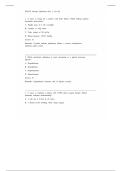
The nurse is assessing a client admitted with status asthmaticus. Initially, the
nurse heard wheezes in the lungs, but now the lung sounds are inaudible.
What is the priority intervention?
A. Measures to reduce anxiety
B. Activation of the rapid response team to secure an airway
C. Education to prevent future exacerbations
D. Administration of a long-acting bronchodilator
A client presented to the emergency room with difÏculty breathing. Upon
examination, the client has pus behind the tonsils and swelling on the right
side of her neck. She is diagnosed with a peritonsillar abscess. Which of the
following is a treatment priority for the client?
A. Oxygen therapy
B. Analgesics
C. Maintain a patent airway
D. Antibiotics
The nurse is caring for a client who was recently diagnosed with cystic
fibrosis. Which of the following is a treatment option for this disorder?
A. Pain management
B. Tracheostomy
C. Weight reduction
, D. Chest Physiotherapy
A client with chronic bronchitis of ten shows signs of hypoxia. Which of the
following is the priority to monitor for in this client?
A. Large amounts of thick mucus
B. Barrel chest
C. Clubbing of fingers
D. Nutritional status
The nurse teaches a client with asthma to monitor for which problem while
exercising?
A. Swelling in the feet and ankles
B. Wheezing from bronchospasm
C. Increased peak expiratory flow rates
D. Muscle fatigue
The nurse is assessing a client who reports being struck in the face and head
several times. During the assessment, the nurse observes pink tinged
drainage from the clients. What nursing action provides relevant assessment
data?
A. Place a drop of the drainage on filter paper and look for a yellow ring.
B. Test the drainage with a reagent to check the pH.
C. Ask the client to describe the appearance of the face before the injury.
D. Have the client gently blow their nose and observe for bloody mucus.
, A client was recently diagnosed with laryngeal cancer. When the nurse
begins taking the clients history, the client asks. “Did you know that I have
throat cancer and may not survive?” What is the appropriate nursing
response?
A. “Tell me more about your concerns.”
B. “Are you having difÏculty swallowing?”
C. “Have you told your family yet?”
D. “Why are you so worried about not surviving?”
The nurse is caring for a 60-year-old female client who presented to the
emergency room status-post motor vehicle accident. The client was an
unrestrained passenger who hit the windshield and has multiple facial
lacerations and dyspnea. Which is a priority nursing intervention for this
client?
A. Evaluate the pulse and blood pressure.
B. Insert an intravenous catheter
C. Assess and maintain the airway
D. Assess the client’s breathing pattern
A nurse is preparing to administer 250 mg of ceftriaxone IM stat. Available is
ceftriaxone 1 gram/5ml. How many ml should the nurse administer per dose?
(Record the answer to the nearest hundredth, or tow decimal places. Use al
leading zero if it applies. Do not use a trailing zero. Answer numerically only,
do not label.)
The nurse is assessing a client admitted with status asthmaticus. Initially, the
nurse heard wheezes in the lungs, but now the lung sounds are inaudible.
What is the priority intervention?
A. Measures to reduce anxiety
B. Activation of the rapid response team to secure an airway
C. Education to prevent future exacerbations
D. Administration of a long-acting bronchodilator
A client presented to the emergency room with difÏculty breathing. Upon
examination, the client has pus behind the tonsils and swelling on the right
side of her neck. She is diagnosed with a peritonsillar abscess. Which of the
following is a treatment priority for the client?
A. Oxygen therapy
B. Analgesics
C. Maintain a patent airway
D. Antibiotics
The nurse is caring for a client who was recently diagnosed with cystic
fibrosis. Which of the following is a treatment option for this disorder?
A. Pain management
B. Tracheostomy
C. Weight reduction
, D. Chest Physiotherapy
A client with chronic bronchitis of ten shows signs of hypoxia. Which of the
following is the priority to monitor for in this client?
A. Large amounts of thick mucus
B. Barrel chest
C. Clubbing of fingers
D. Nutritional status
The nurse teaches a client with asthma to monitor for which problem while
exercising?
A. Swelling in the feet and ankles
B. Wheezing from bronchospasm
C. Increased peak expiratory flow rates
D. Muscle fatigue
The nurse is assessing a client who reports being struck in the face and head
several times. During the assessment, the nurse observes pink tinged
drainage from the clients. What nursing action provides relevant assessment
data?
A. Place a drop of the drainage on filter paper and look for a yellow ring.
B. Test the drainage with a reagent to check the pH.
C. Ask the client to describe the appearance of the face before the injury.
D. Have the client gently blow their nose and observe for bloody mucus.
, A client was recently diagnosed with laryngeal cancer. When the nurse
begins taking the clients history, the client asks. “Did you know that I have
throat cancer and may not survive?” What is the appropriate nursing
response?
A. “Tell me more about your concerns.”
B. “Are you having difÏculty swallowing?”
C. “Have you told your family yet?”
D. “Why are you so worried about not surviving?”
The nurse is caring for a 60-year-old female client who presented to the
emergency room status-post motor vehicle accident. The client was an
unrestrained passenger who hit the windshield and has multiple facial
lacerations and dyspnea. Which is a priority nursing intervention for this
client?
A. Evaluate the pulse and blood pressure.
B. Insert an intravenous catheter
C. Assess and maintain the airway
D. Assess the client’s breathing pattern
A nurse is preparing to administer 250 mg of ceftriaxone IM stat. Available is
ceftriaxone 1 gram/5ml. How many ml should the nurse administer per dose?
(Record the answer to the nearest hundredth, or tow decimal places. Use al
leading zero if it applies. Do not use a trailing zero. Answer numerically only,
do not label.)