This OpenStax ancillary resource is © Rice University under a CC BY 4.0 International license; it may be reproduced or modified but
must be attributed to OpenStax, Rice University and any changes must be noted.
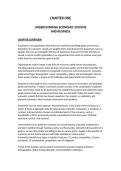
CHAPTER ONE
UNDERSTANDING ECONOMIC SYSTEMS
AND BUSINESS
CHAPTER OVERVIEW
A business is an organization that strives for a profit by providing goods and services
desired by its customers. Goods are tangible items manufactured by businesses, such as
laptops. Services are intangible offerings of businesses that can’t be held, touched, or
stored. A not-for-profit organization is an organization that exists to achieve some goal
other than the usual business goal of profit.
Organizations require inputs in the form of resources called factors of production;
including natural resources, labor (human resources),capital, and entrepreneurship. The
external business environment is composed of seven key sub-environments: economic,
political and legal, demographic, social, competitive, global, and technological. Each of
these sectors creates a unique set of challenges and opportunities for businesses.
Economics is the study of how a society uses scarce resources to produce and distribute
goods and services. A nation’s economic system consists of the combination of policies,
laws, and choices made by its government to establish the systems that determine what
goods and services are produced and how they are allocated. Today the world’s major
economic systems fall into two broad categories: free market, or capitalism; and
planned economies, which include communism and socialism.
Economics has two main subareas. Macroeconomics is the study of the economy as a
whole. It looks at aggregate data for large groups of people, companies, or products. In
contrast, microeconomics focuses on individual parts of the economy, such as
households or firms. Economists classify unemployment into four types: frictional,
structural, cyclical, and seasonal.
Government tries to guide the economy to a sound balance of growth, employment,
and price stability through monetary policy and fiscal policy. Demand is the quantity of a
good or service that people are willing to buy at various prices. Supply is the quantity of
a good or service that businesses will make available at various prices.
Economists identify four types of market structures: (1) perfect competition, (2) pure
monopoly, (3) monopolistic competition, and (4) oligopoly.
Trends in the business and economic environment include changing workforce
demographics, global energy demands, and competitive challenges.
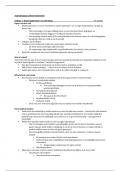
,LEARNING OUTCOMES
1. How do businesses and not-for-profit organizations help create our standard of
living?
Businesses attempt to earn a profit by providing goods and services desired by
their customers. Not-for-profit organizations, though not striving for a profit,
still deliver many needed services for our society. Our standard of living is
measured by the output of goods and services. Thus, businesses and not-for-
profit organizations help create our standard of living.
Businesses require the factors of production—natural resources, labor (human
resources), capital, and entrepreneurship, and knowledge—to produce foods
and services and manage the business. The companies that will succeed in this
new era will be those that learn fast, use knowledge effectively, and develop
new insights.
2. What are the sectors of the business environment, and how do changes in
them influence business decisions?
The external business environment consists of economic, political and legal,
demographic, social, competitive, global, and technological sectors. Managers
must understand how the environmental changes the impact of those changes
on the business. When economic activity is strong, unemployment rates are low
and income levels rise. The political environment is shaped by the amount of
government intervention in business affairs, the types of laws it passes to
regulate both domestic and foreign businesses, and the general political stability
of a government.
Demography is the study of people’s vital statistics; such as their age, gender,
race and ethnicity, and location. Demographics help companies define the
markets for their products and determine the size and composition of the
workforce, so they are very important to consider when making business
decisions. Businesses today must develop different marketing approaches,
goods, and services to meet the unique preferences of Generations X and Y,
Millennials, and the Baby Boomers.
The population is becoming increasingly diverse. Minorities’ buying power has
increased significantly as well, and companies are developing products and
marketing campaigns that target different ethnic groups. Minorities now
represent more than 38 percent of the total population, with immigration
bringing millions of new residents to the country over the past several decades.
September 4, 2018 2
, By 2060 the U.S. Census Bureau projects the minority population to increase to
56 percent of the total U.S. population.
Social factors—our attitudes, values, and lifestyles—influence what, how, where,
and when people purchase products. They are difficult to predict, define, and
measure because they can be very subjective. They also change as people move
through different life stages.
Global competition is basically an uncontrollable element in the external
environment, but firms can influence external events through its strategies. For
example, firms often spent money lobbying activities in the nation’s capital to
help policy makers understand their industry.
Technology is the application of science and engineering skills and knowledge to
solve production and organizational problems. New equipment and software
that improve productivity and reduce costs can be among a company’s most
valuable assets.
3. What are the primary features of the world’s economic systems, and how are
the three sectors of the economy linked?
Economics is the study of how individuals, businesses, and governments use
scarce resources to produce and distribute goods and services. A business’s
success depends in part on the economic systems of the countries where it is
located and where its sells its products. A nation’s economic system is the
combination of policies, laws, and choices made by its government to establish
the systems that determine what goods and services are produced and how they
are allocated.
In recent years, more countries have shifted toward free-market economic
systems and away from planned economies.
Capitalism, also known as the private enterprise system, is based on competition
in the marketplace and private ownership of the factors of production
(resources). A capitalist system guarantees certain economic rights: the right to
own property, the right to make a profit, the right to make free choices, and the
right to compete. The right to own property is central to capitalism.
In a communist economy, the government owns virtually all resources, and
economic decision-making is done by central government planning.
Governments have generally moved away from communism because it is
inefficient and delivers a low standard of living. Socialism is another centralized
economic system in which the basic industries are owned by the government or
by the private sector under strong government control. Other industries may be
September 4, 2018 3
must be attributed to OpenStax, Rice University and any changes must be noted.
CHAPTER ONE
UNDERSTANDING ECONOMIC SYSTEMS
AND BUSINESS
CHAPTER OVERVIEW
A business is an organization that strives for a profit by providing goods and services
desired by its customers. Goods are tangible items manufactured by businesses, such as
laptops. Services are intangible offerings of businesses that can’t be held, touched, or
stored. A not-for-profit organization is an organization that exists to achieve some goal
other than the usual business goal of profit.
Organizations require inputs in the form of resources called factors of production;
including natural resources, labor (human resources),capital, and entrepreneurship. The
external business environment is composed of seven key sub-environments: economic,
political and legal, demographic, social, competitive, global, and technological. Each of
these sectors creates a unique set of challenges and opportunities for businesses.
Economics is the study of how a society uses scarce resources to produce and distribute
goods and services. A nation’s economic system consists of the combination of policies,
laws, and choices made by its government to establish the systems that determine what
goods and services are produced and how they are allocated. Today the world’s major
economic systems fall into two broad categories: free market, or capitalism; and
planned economies, which include communism and socialism.
Economics has two main subareas. Macroeconomics is the study of the economy as a
whole. It looks at aggregate data for large groups of people, companies, or products. In
contrast, microeconomics focuses on individual parts of the economy, such as
households or firms. Economists classify unemployment into four types: frictional,
structural, cyclical, and seasonal.
Government tries to guide the economy to a sound balance of growth, employment,
and price stability through monetary policy and fiscal policy. Demand is the quantity of a
good or service that people are willing to buy at various prices. Supply is the quantity of
a good or service that businesses will make available at various prices.
Economists identify four types of market structures: (1) perfect competition, (2) pure
monopoly, (3) monopolistic competition, and (4) oligopoly.
Trends in the business and economic environment include changing workforce
demographics, global energy demands, and competitive challenges.
,LEARNING OUTCOMES
1. How do businesses and not-for-profit organizations help create our standard of
living?
Businesses attempt to earn a profit by providing goods and services desired by
their customers. Not-for-profit organizations, though not striving for a profit,
still deliver many needed services for our society. Our standard of living is
measured by the output of goods and services. Thus, businesses and not-for-
profit organizations help create our standard of living.
Businesses require the factors of production—natural resources, labor (human
resources), capital, and entrepreneurship, and knowledge—to produce foods
and services and manage the business. The companies that will succeed in this
new era will be those that learn fast, use knowledge effectively, and develop
new insights.
2. What are the sectors of the business environment, and how do changes in
them influence business decisions?
The external business environment consists of economic, political and legal,
demographic, social, competitive, global, and technological sectors. Managers
must understand how the environmental changes the impact of those changes
on the business. When economic activity is strong, unemployment rates are low
and income levels rise. The political environment is shaped by the amount of
government intervention in business affairs, the types of laws it passes to
regulate both domestic and foreign businesses, and the general political stability
of a government.
Demography is the study of people’s vital statistics; such as their age, gender,
race and ethnicity, and location. Demographics help companies define the
markets for their products and determine the size and composition of the
workforce, so they are very important to consider when making business
decisions. Businesses today must develop different marketing approaches,
goods, and services to meet the unique preferences of Generations X and Y,
Millennials, and the Baby Boomers.
The population is becoming increasingly diverse. Minorities’ buying power has
increased significantly as well, and companies are developing products and
marketing campaigns that target different ethnic groups. Minorities now
represent more than 38 percent of the total population, with immigration
bringing millions of new residents to the country over the past several decades.
September 4, 2018 2
, By 2060 the U.S. Census Bureau projects the minority population to increase to
56 percent of the total U.S. population.
Social factors—our attitudes, values, and lifestyles—influence what, how, where,
and when people purchase products. They are difficult to predict, define, and
measure because they can be very subjective. They also change as people move
through different life stages.
Global competition is basically an uncontrollable element in the external
environment, but firms can influence external events through its strategies. For
example, firms often spent money lobbying activities in the nation’s capital to
help policy makers understand their industry.
Technology is the application of science and engineering skills and knowledge to
solve production and organizational problems. New equipment and software
that improve productivity and reduce costs can be among a company’s most
valuable assets.
3. What are the primary features of the world’s economic systems, and how are
the three sectors of the economy linked?
Economics is the study of how individuals, businesses, and governments use
scarce resources to produce and distribute goods and services. A business’s
success depends in part on the economic systems of the countries where it is
located and where its sells its products. A nation’s economic system is the
combination of policies, laws, and choices made by its government to establish
the systems that determine what goods and services are produced and how they
are allocated.
In recent years, more countries have shifted toward free-market economic
systems and away from planned economies.
Capitalism, also known as the private enterprise system, is based on competition
in the marketplace and private ownership of the factors of production
(resources). A capitalist system guarantees certain economic rights: the right to
own property, the right to make a profit, the right to make free choices, and the
right to compete. The right to own property is central to capitalism.
In a communist economy, the government owns virtually all resources, and
economic decision-making is done by central government planning.
Governments have generally moved away from communism because it is
inefficient and delivers a low standard of living. Socialism is another centralized
economic system in which the basic industries are owned by the government or
by the private sector under strong government control. Other industries may be
September 4, 2018 3