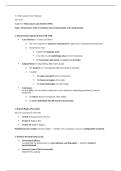
S v Makwanyane Case Summary
Para 9-29
Case: S v Makwanyane and Another (1995)
Topic: Interpretation of the Constitution and constitutionality of the death penalty
1. Interpretation Approach (Paras [9]–[10])
Case relied on: S v Zuma and Others
o The Court endorsed a “generous and purposive” approach to constitutional interpretation.
o Interpretation must:
Respect the language used;
Give effect to the underlying values of the Constitution;
Be broad and value-based, not narrow or textualist.
Adopted from: R v Big M Drug Mart Ltd (Canada)
o The purpose of a constitutional right must guide its meaning.
o Consider:
The object and spirit of the Constitution;
The historical origins of the right;
The interrelationship with other rights.
Conclusion:
Section 11(2) (“No one shall be subjected to cruel, inhuman or degrading punishment”) must be
interpreted:
o In context (history, background, other rights);
o To secure individuals the full measure of protection.
2. Related Rights (Para [10])
Section 11(2) must be read with:
Section 8: Equality before the law;
Section 9: Right to life;
Section 10: Right to dignity.
Punishment must comply with these rights — whether seen as shaping s 11(2) or as independent standards.
3. Positions Presented (Para [11])
Government (Bizos):
Accepted that the death penalty is cruel, inhuman, and degrading → should be declared
unconstitutional.
Attorney-General (Witwatersrand):
Opposed this, arguing:
, o Death penalty is necessary and acceptable;
o Constitution did not expressly prohibit it;
o Decision should rest with Parliament.
4. Legislative & Historical Context (Paras [12]–[25])
4.1 Use of Background in Interpretation
Courts may consider the purpose and background of the Constitution.
A Constitution is not an ordinary statute — it must be interpreted broadly and in light of its origins.
International practice (US, Canada, Germany, India) allows looking at travaux préparatoires (drafting
history).
4.2 South African Background
Before 1994: Death penalty was debated but not resolved.
1990: President De Klerk — reform proposals to retain death penalty only for extreme cases; new law
(Criminal Law Amendment Act 107 of 1990).
1991: Law Commission — described death penalty as highly controversial; proposed “Solomonic
solution” (let the Constitutional Court decide).
1992: Minister of Justice suspended executions pending Bill of Rights negotiations (moratorium).
4.3 Constitutional Negotiations
The Interim Constitution did not explicitly ban or permit the death penalty.
It was left for the Constitutional Court to decide whether it violated Chapter 3 rights.
5. Nature of the Death Penalty (Paras [26]–[27])
Death = most extreme punishment
o Final and irreversible — ends all rights.
o Prisoners face mental torment on death row.
o Cruel: Involves suffering and uncertainty.
o Inhuman: Denies person’s humanity.
o Degrading: Strips dignity and treats person as an object.
Question: Is it cruel/inhuman/degrading within the meaning of s 11(2)?
→ The accused bear the onus to prove it is.
6. Parties’ Main Arguments (Para [27])
Accused (against death penalty) Attorney-General (for death penalty)
Violates dignity and right to life Recognised globally as legitimate
Cannot be reversed if wrong Acts as a deterrent
Arbitrary and inconsistent enforcement Meets society’s retributive needs
Destroys the essence of human rights Accepted by South African society
Para 9-29
Case: S v Makwanyane and Another (1995)
Topic: Interpretation of the Constitution and constitutionality of the death penalty
1. Interpretation Approach (Paras [9]–[10])
Case relied on: S v Zuma and Others
o The Court endorsed a “generous and purposive” approach to constitutional interpretation.
o Interpretation must:
Respect the language used;
Give effect to the underlying values of the Constitution;
Be broad and value-based, not narrow or textualist.
Adopted from: R v Big M Drug Mart Ltd (Canada)
o The purpose of a constitutional right must guide its meaning.
o Consider:
The object and spirit of the Constitution;
The historical origins of the right;
The interrelationship with other rights.
Conclusion:
Section 11(2) (“No one shall be subjected to cruel, inhuman or degrading punishment”) must be
interpreted:
o In context (history, background, other rights);
o To secure individuals the full measure of protection.
2. Related Rights (Para [10])
Section 11(2) must be read with:
Section 8: Equality before the law;
Section 9: Right to life;
Section 10: Right to dignity.
Punishment must comply with these rights — whether seen as shaping s 11(2) or as independent standards.
3. Positions Presented (Para [11])
Government (Bizos):
Accepted that the death penalty is cruel, inhuman, and degrading → should be declared
unconstitutional.
Attorney-General (Witwatersrand):
Opposed this, arguing:
, o Death penalty is necessary and acceptable;
o Constitution did not expressly prohibit it;
o Decision should rest with Parliament.
4. Legislative & Historical Context (Paras [12]–[25])
4.1 Use of Background in Interpretation
Courts may consider the purpose and background of the Constitution.
A Constitution is not an ordinary statute — it must be interpreted broadly and in light of its origins.
International practice (US, Canada, Germany, India) allows looking at travaux préparatoires (drafting
history).
4.2 South African Background
Before 1994: Death penalty was debated but not resolved.
1990: President De Klerk — reform proposals to retain death penalty only for extreme cases; new law
(Criminal Law Amendment Act 107 of 1990).
1991: Law Commission — described death penalty as highly controversial; proposed “Solomonic
solution” (let the Constitutional Court decide).
1992: Minister of Justice suspended executions pending Bill of Rights negotiations (moratorium).
4.3 Constitutional Negotiations
The Interim Constitution did not explicitly ban or permit the death penalty.
It was left for the Constitutional Court to decide whether it violated Chapter 3 rights.
5. Nature of the Death Penalty (Paras [26]–[27])
Death = most extreme punishment
o Final and irreversible — ends all rights.
o Prisoners face mental torment on death row.
o Cruel: Involves suffering and uncertainty.
o Inhuman: Denies person’s humanity.
o Degrading: Strips dignity and treats person as an object.
Question: Is it cruel/inhuman/degrading within the meaning of s 11(2)?
→ The accused bear the onus to prove it is.
6. Parties’ Main Arguments (Para [27])
Accused (against death penalty) Attorney-General (for death penalty)
Violates dignity and right to life Recognised globally as legitimate
Cannot be reversed if wrong Acts as a deterrent
Arbitrary and inconsistent enforcement Meets society’s retributive needs
Destroys the essence of human rights Accepted by South African society