Behaviour modification in custody
Behaviourist principles
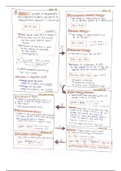
Behaviour modification programmes aim to reinforce obedient behaviour in offenders. In prison this is done through
token economy systems which apply the principles of learning a behaviour.
Token economy
- Based on operant conditioning
- Reinforce desired behaviour with a token that can be exchanged for a reward.
- Desirable behaviour in prison usually involves avoiding conflict, following rules, keeping an orderly cell etc.
- Tokens are secondary reinforces because they derive their value from their association with a reward.
- Rewards may include phone calls, gym time or extra outdoor time, cigarettes or food.
- Behaviours and rewards are made clear to the prisoners before the programme is implemented and that
non-compliance/disobedience may mean tokens and privileges are withheld (punishment).
Changing behaviour
The desirable behaviour is identified and broken down into increments, and a baseline measure is established. The
behaviours to be reinforced are decided upon. The whole programme is overseen by prison officials who can see the
programme’s effectiveness as a whole and individuals offender’s behaviour.
Research
Hobbs and Holt (1976) introduced a token economy programme with groups of young delinquents across three
behavioural units, with a fourth unit acting as a control. They observed a significant different in positive behaviour
compared to the control non-token economy group. Allyon et al. (1979) found a similar effect with adults in prison.
Behaviourist principles
Behaviour modification programmes aim to reinforce obedient behaviour in offenders. In prison this is done through
token economy systems which apply the principles of learning a behaviour.
Token economy
- Based on operant conditioning
- Reinforce desired behaviour with a token that can be exchanged for a reward.
- Desirable behaviour in prison usually involves avoiding conflict, following rules, keeping an orderly cell etc.
- Tokens are secondary reinforces because they derive their value from their association with a reward.
- Rewards may include phone calls, gym time or extra outdoor time, cigarettes or food.
- Behaviours and rewards are made clear to the prisoners before the programme is implemented and that
non-compliance/disobedience may mean tokens and privileges are withheld (punishment).
Changing behaviour
The desirable behaviour is identified and broken down into increments, and a baseline measure is established. The
behaviours to be reinforced are decided upon. The whole programme is overseen by prison officials who can see the
programme’s effectiveness as a whole and individuals offender’s behaviour.
Research
Hobbs and Holt (1976) introduced a token economy programme with groups of young delinquents across three
behavioural units, with a fourth unit acting as a control. They observed a significant different in positive behaviour
compared to the control non-token economy group. Allyon et al. (1979) found a similar effect with adults in prison.