How have the rights of migrants changed over time?
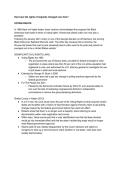
VOTING RIGHTS
In 1988 black civil rights leader Jesse Jackson acknowledged the progress that Black
Americans had made in terms of voting rights: ‘Hands that picked cotton can now pick a
president’
Following his January 2021 victory in one of the Georgia Senate run-off elections, the winning
Black Democrat, Raphael Warnock, said: ‘The other day, because this is America, the
82-year-old hands that used to pick somebody else’s cotton went to the polls and picked her
youngest son to be a United States senator’
SIGNIFICANT CIVIL RIGHTS LAWS:
● Voting Rights Act 1965
○ The act banned the use of literacy tests, provided for federal oversight of voter
registration in areas where less than 50 per cent of the non-white population had
registered to vote, and authorised the U.S. attorney general to investigate the use
of poll taxes in state and local elections.
● Extended by George W. Bush in 2006
○ States now also had to get any change to polling practices approved by the
federal government
● For The People Act 2021
○ Passed by the Democrat-controlled House by 220-210, and required states to
turn over the task of redrawing congressional districts to independent
commissions to remove the gerrymandering distortions.
Shelby County v Holder (2013)
● In a 5-4 vote, the court struck down the part of the Voting Rights Act that required certain
states and localities with a history of discrimination against minority voters to get polling
changes cleared by the federal government before they went into effect.
● Roberts wrote that there ‘is no longer such a disparity’ when referring to racial
discrimination within voter registration and turnout
● Within days, Texas announced that a voter identification law that had been blocked
would go into immediate effect and that the state’s redistricting maps would no longer
need federal government approval.
● Obama said he was ‘deeply disappointed’ by the Court’s decision and called on
Congress to draw up a new formula to check whether or not states’ voter laws were
racially discriminatory.
VOTING RIGHTS
In 1988 black civil rights leader Jesse Jackson acknowledged the progress that Black
Americans had made in terms of voting rights: ‘Hands that picked cotton can now pick a
president’
Following his January 2021 victory in one of the Georgia Senate run-off elections, the winning
Black Democrat, Raphael Warnock, said: ‘The other day, because this is America, the
82-year-old hands that used to pick somebody else’s cotton went to the polls and picked her
youngest son to be a United States senator’
SIGNIFICANT CIVIL RIGHTS LAWS:
● Voting Rights Act 1965
○ The act banned the use of literacy tests, provided for federal oversight of voter
registration in areas where less than 50 per cent of the non-white population had
registered to vote, and authorised the U.S. attorney general to investigate the use
of poll taxes in state and local elections.
● Extended by George W. Bush in 2006
○ States now also had to get any change to polling practices approved by the
federal government
● For The People Act 2021
○ Passed by the Democrat-controlled House by 220-210, and required states to
turn over the task of redrawing congressional districts to independent
commissions to remove the gerrymandering distortions.
Shelby County v Holder (2013)
● In a 5-4 vote, the court struck down the part of the Voting Rights Act that required certain
states and localities with a history of discrimination against minority voters to get polling
changes cleared by the federal government before they went into effect.
● Roberts wrote that there ‘is no longer such a disparity’ when referring to racial
discrimination within voter registration and turnout
● Within days, Texas announced that a voter identification law that had been blocked
would go into immediate effect and that the state’s redistricting maps would no longer
need federal government approval.
● Obama said he was ‘deeply disappointed’ by the Court’s decision and called on
Congress to draw up a new formula to check whether or not states’ voter laws were
racially discriminatory.