IGCSE
Accounting Notes
isabelle
,Vocab
1. Debtor = trade receivables (one who owes)
Creditor = trade payables (one who lends)
2. Return inwards = sales returns
Return outwards = purchases returns
3. List price = the price at which the trader usually sells the product
= the price before the trade discount
4. Trade discount: not included in any records
Cash discount: recorded as discount allowed / discount received
5. Cash float = difference between the cash balances reported in your business accounting
and the amount of cash you actually hold in your bank accounts
6. Miscast = incorrectly totalled
7. cash takings = cash sales
isabelle
8. net realisable value = valuation method of inventory
= estimated selling price - total sale/ disposal costs {cost of completing the goods, selling
expenses}
9. disposal & sales
disposal: getting rid of an asset/item (via sales/ transfer/ exchange)
sales: a form of disposal
10. loan repayment ≠ expense (should be put in SOFP, deducted from bank loan)
11. Other receivables = expenses prepaid, income accrued, interest receivables, salary
receivables, tax refunds, loans made to employees/ other companies
12. Other payables = income prepaid, expenses accrued
13. Capital employed = capital + NCL // total assets - CL
14. Working capital = CA - CL
15. Net assets = book value = shareholders’ equity
16. Liquid assets = CA - inventory - prepaid expenses (other receivables)
, The role of accounting
Bookkeeping = the process of recording business transactions
Accounting = the preparation of financial summaries and statements from book-keeping
records at regular intervals
-> to measure the profit / loss of a business
Income Statement = summary of business’s financial performance
Statement of Financial Position = summary of business’s financial position
Accounting Year = 12 month period
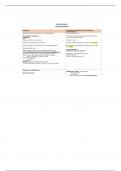
Accounting cycle:
Source documents
l
Books of prime entry
l
Ledger
l
Trial balance
isabelle
(double entry system)
l
Balance day adjustment
(adjusting entries)
l
Closing entries
(IS)
l
Financial reports
(SOFP)
Basic accounting equation (SOFP equation)
● Assets = Liabilities + Owner’s Equity
Assets:
- Non current - premises, motor vehicles, fixture and fittings, office equipment…
- Current - inventory (stocks), cash in hand, cash at bank, trade receivables
IN decreasing order of liquidity:
cash, bank, trade receivables, inventory
Liabilities:
- Non current - long term loan, mortgage loan
- Current - trade payables, bank overdraft, short term loan
Accounting Notes
isabelle
,Vocab
1. Debtor = trade receivables (one who owes)
Creditor = trade payables (one who lends)
2. Return inwards = sales returns
Return outwards = purchases returns
3. List price = the price at which the trader usually sells the product
= the price before the trade discount
4. Trade discount: not included in any records
Cash discount: recorded as discount allowed / discount received
5. Cash float = difference between the cash balances reported in your business accounting
and the amount of cash you actually hold in your bank accounts
6. Miscast = incorrectly totalled
7. cash takings = cash sales
isabelle
8. net realisable value = valuation method of inventory
= estimated selling price - total sale/ disposal costs {cost of completing the goods, selling
expenses}
9. disposal & sales
disposal: getting rid of an asset/item (via sales/ transfer/ exchange)
sales: a form of disposal
10. loan repayment ≠ expense (should be put in SOFP, deducted from bank loan)
11. Other receivables = expenses prepaid, income accrued, interest receivables, salary
receivables, tax refunds, loans made to employees/ other companies
12. Other payables = income prepaid, expenses accrued
13. Capital employed = capital + NCL // total assets - CL
14. Working capital = CA - CL
15. Net assets = book value = shareholders’ equity
16. Liquid assets = CA - inventory - prepaid expenses (other receivables)
, The role of accounting
Bookkeeping = the process of recording business transactions
Accounting = the preparation of financial summaries and statements from book-keeping
records at regular intervals
-> to measure the profit / loss of a business
Income Statement = summary of business’s financial performance
Statement of Financial Position = summary of business’s financial position
Accounting Year = 12 month period
Accounting cycle:
Source documents
l
Books of prime entry
l
Ledger
l
Trial balance
isabelle
(double entry system)
l
Balance day adjustment
(adjusting entries)
l
Closing entries
(IS)
l
Financial reports
(SOFP)
Basic accounting equation (SOFP equation)
● Assets = Liabilities + Owner’s Equity
Assets:
- Non current - premises, motor vehicles, fixture and fittings, office equipment…
- Current - inventory (stocks), cash in hand, cash at bank, trade receivables
IN decreasing order of liquidity:
cash, bank, trade receivables, inventory
Liabilities:
- Non current - long term loan, mortgage loan
- Current - trade payables, bank overdraft, short term loan