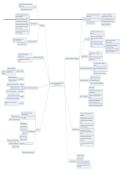
Ensure comparable, reliable, accessible sustainability
information across EU
Purpose
Integrate double materiality (financial + impact)
2024 (reports 2025): Large public-interest entities Cross-cutting: ESRS 1 General requirements; ESRS 2 Environmental (E1–E5): Climate, pollution,
(>500 employees) under NFRD General disclosures water/marine, biodiversity, circular economy
Structure
2025 (reports 2026): All large companies meeting 2 of Topical standards Social (S1–S4): Own workforce; workers in value
3: 250 employees; €50m turnover; €25m assets chain; affected communities; consumers/end-users
Sector-specific standards (future)
Scope & Phasing-in (Art. 5)
2026 (reports 2027): Listed SMEs, small/non-complex Governance (G1): Business conduct
CSRD Overview
credit institutions, captive insurers (opt-out possible
until 2028) — under review
2028: Non-EU companies with EU turnover > €150m Impact (inside-out): company’s impacts (e.g., GHG,
and an EU subsidiary/branch deforestation)
Financial (outside-in): risks/opportunities affecting
performance (e.g., reputational risk, energy cost
Large EU entities (both thresholds): >1,000 Double materiality
savings)
employees + > €50 million revenue Stakeholder engagement: consultation,
Omnibus (proposed scope changes) representativeness, inputs
Disclose topics identified from either perspective
Non-EU = >> €450 million revenue
Due diligence: use to identify matters; align with
Practices
frameworks (OECD Guidelines)
Double Materiality Analysis: process, value chain role,
topics; short & long term relationships
Disclose relevant value chain impacts, risks,
EU net turnover > €150m and at least one opportunities
subsidiary/branch in EU Value chain (Section 5)
Non-EU company requirements (Art. 40a) Transitional provision: may omit unavailable value
European Sustainability Reporting Standards (ESRS)
Publish sustainability report per CSRD/ESRS or chain data temporarily
equivalent
Direct connectivity: figures directly in financial
statements
Resilience to sustainability risks Connectivity with financial statements (Section 9) Indirect connectivity: aggregated or linked to FS line
items
Business model & strategy
Compatibility with Paris Agreement & climate
transition plans Explain consistency, assumptions, methodologies
Quantitative and qualitative targets Certain disclosures phased-in over time
Sustainability targets
Progress toward achieving them Transitional provisions (Section 10) <750 employees: simplified first years
Corporate Sustainability Reporting Directive (CSRD) Appendix C: list of phased-in disclosure requirements
Board/management role in sustainability matters Governance & Related Frameworks
Due diligence on sustainability impacts Policies Content of Sustainability Reporting (Art. 19a & 29a) Basis for preparation
Identification and management processes Risks & opportunities Governance: roles & responsibilities; integration into
organisational structure
Financial materiality: impact on company value Strategy: business model resilience; impacts on
Materiality ESRS 2 – General disclosures
strategy
Impact materiality: company’s effect on people/planet
Impact, Risk & Opportunity (IRO) management:
Environmental (e.g., GHG), social, governance identification and assessment; actions taken
Metrics & KPIs
indicators
Metrics & targets: KPIs for impacts, risks, opportunities
Purpose: classify environmentally sustainable
CSRD must be transposed into local law; not yet in
activities; guide investment
Identify eligible vs aligned activities the Netherlands
Reporting obligations
Companies apply NFRD in NL; scope: PIE – Large
Disclose KPIs: % of turnover, CapEx, OpEx
(>500 employees); requirements broadly aligned to
CSRD
Climate change mitigation
Requirements and criteria will change with CSRD and
Climate change adaptation the Omnibus (scope changes)
Water & marine resources EU Taxonomy Class notes (NL & related)
European Green Deal: EU strategy to be
6 environmental objectives climate-neutral by 2050; sustainable growth; protect
Circular economy resources
Pollution prevention & control SFDR: requires financial market participants to
disclose ESG integration; reduce greenwashing;
Biodiversity & ecosystems inform investors
Substantial contribution to at least one objective
Do No Significant Harm (DNSH) to others Alignment criteria To assess if a company is green: apply CSRD and EU
Taxonomy
Minimum social safeguards
Phased application: gradual extension over years
What is the goal of CSRD?
What is EU Taxonomy?
Exam questions (examples)
What do you understand under double materiality?
Intro suggestion: discuss scope NFRD → CSRD →
CSRD Omnibus
, IAS 19 – Employee Benefits
1. Standards
DAS 271.3 – Pensioenen
Distinction: pension fund vs pension provider (insurer) Available premium → usually DC
4. Dutch Pension System
Wages, salaries, social security Types of schemes Mid-salary → usually DB
Paid leave (annual, sick) End-salary → usually DB
Short-term (≤12 months)
Profit-sharing & bonuses (not IFRS 2)
Key question: does employer bear risk?
Non-monetary benefits
Yes → DBP (actuarial calc, PUC method)
Post-employment → pensions 5. IFRS Pension Accounting No → DCP (contributions only)
Both contractual & constructive obligations apply
Long-service leave, sabbatical 2. Categories of Benefits Location (fund vs insurer) irrelevant
Long-term disability Other long-term
Deferred remuneration
Pensions & Employee Benefits
Termination benefits (IAS 19 / DAS 271.3)
Obligation limited to agreed contributions
Actuarial/investment risk → employee
5a. Defined Contribution Plans (DCP) Balance sheet: prepaid premiums, payable premiums,
provision for above-contractual obligations
Recognize undiscounted expected payments
Expense = contribution
Accumulating → recognize when service adds entitlement
Compensated absences
Non-accumulating → when absence occurs
Measurement = additional expected cost 3. Recognition – Short-term Employer obligation = agreed benefits
Risk borne by employer
Legal/constructive obligation exists Default = DB if not clearly DC
Reliable estimate possible Profit-sharing / bonus recognition Actuarial calculations required (PUC method)
No realistic alternative but to pay 5b. Defined Benefit Plans (DBP) DBO = PV of expected future benefits
Inputs: mortality, demographics, discounting Plan assets (FV)
Balance sheet Defined Benefit Obligation (DBO)
Asset ceiling: surplus not recognized if not Net DB liability/asset = DBO – Plan assets
accessible/controllable
information across EU
Purpose
Integrate double materiality (financial + impact)
2024 (reports 2025): Large public-interest entities Cross-cutting: ESRS 1 General requirements; ESRS 2 Environmental (E1–E5): Climate, pollution,
(>500 employees) under NFRD General disclosures water/marine, biodiversity, circular economy
Structure
2025 (reports 2026): All large companies meeting 2 of Topical standards Social (S1–S4): Own workforce; workers in value
3: 250 employees; €50m turnover; €25m assets chain; affected communities; consumers/end-users
Sector-specific standards (future)
Scope & Phasing-in (Art. 5)
2026 (reports 2027): Listed SMEs, small/non-complex Governance (G1): Business conduct
CSRD Overview
credit institutions, captive insurers (opt-out possible
until 2028) — under review
2028: Non-EU companies with EU turnover > €150m Impact (inside-out): company’s impacts (e.g., GHG,
and an EU subsidiary/branch deforestation)
Financial (outside-in): risks/opportunities affecting
performance (e.g., reputational risk, energy cost
Large EU entities (both thresholds): >1,000 Double materiality
savings)
employees + > €50 million revenue Stakeholder engagement: consultation,
Omnibus (proposed scope changes) representativeness, inputs
Disclose topics identified from either perspective
Non-EU = >> €450 million revenue
Due diligence: use to identify matters; align with
Practices
frameworks (OECD Guidelines)
Double Materiality Analysis: process, value chain role,
topics; short & long term relationships
Disclose relevant value chain impacts, risks,
EU net turnover > €150m and at least one opportunities
subsidiary/branch in EU Value chain (Section 5)
Non-EU company requirements (Art. 40a) Transitional provision: may omit unavailable value
European Sustainability Reporting Standards (ESRS)
Publish sustainability report per CSRD/ESRS or chain data temporarily
equivalent
Direct connectivity: figures directly in financial
statements
Resilience to sustainability risks Connectivity with financial statements (Section 9) Indirect connectivity: aggregated or linked to FS line
items
Business model & strategy
Compatibility with Paris Agreement & climate
transition plans Explain consistency, assumptions, methodologies
Quantitative and qualitative targets Certain disclosures phased-in over time
Sustainability targets
Progress toward achieving them Transitional provisions (Section 10) <750 employees: simplified first years
Corporate Sustainability Reporting Directive (CSRD) Appendix C: list of phased-in disclosure requirements
Board/management role in sustainability matters Governance & Related Frameworks
Due diligence on sustainability impacts Policies Content of Sustainability Reporting (Art. 19a & 29a) Basis for preparation
Identification and management processes Risks & opportunities Governance: roles & responsibilities; integration into
organisational structure
Financial materiality: impact on company value Strategy: business model resilience; impacts on
Materiality ESRS 2 – General disclosures
strategy
Impact materiality: company’s effect on people/planet
Impact, Risk & Opportunity (IRO) management:
Environmental (e.g., GHG), social, governance identification and assessment; actions taken
Metrics & KPIs
indicators
Metrics & targets: KPIs for impacts, risks, opportunities
Purpose: classify environmentally sustainable
CSRD must be transposed into local law; not yet in
activities; guide investment
Identify eligible vs aligned activities the Netherlands
Reporting obligations
Companies apply NFRD in NL; scope: PIE – Large
Disclose KPIs: % of turnover, CapEx, OpEx
(>500 employees); requirements broadly aligned to
CSRD
Climate change mitigation
Requirements and criteria will change with CSRD and
Climate change adaptation the Omnibus (scope changes)
Water & marine resources EU Taxonomy Class notes (NL & related)
European Green Deal: EU strategy to be
6 environmental objectives climate-neutral by 2050; sustainable growth; protect
Circular economy resources
Pollution prevention & control SFDR: requires financial market participants to
disclose ESG integration; reduce greenwashing;
Biodiversity & ecosystems inform investors
Substantial contribution to at least one objective
Do No Significant Harm (DNSH) to others Alignment criteria To assess if a company is green: apply CSRD and EU
Taxonomy
Minimum social safeguards
Phased application: gradual extension over years
What is the goal of CSRD?
What is EU Taxonomy?
Exam questions (examples)
What do you understand under double materiality?
Intro suggestion: discuss scope NFRD → CSRD →
CSRD Omnibus
, IAS 19 – Employee Benefits
1. Standards
DAS 271.3 – Pensioenen
Distinction: pension fund vs pension provider (insurer) Available premium → usually DC
4. Dutch Pension System
Wages, salaries, social security Types of schemes Mid-salary → usually DB
Paid leave (annual, sick) End-salary → usually DB
Short-term (≤12 months)
Profit-sharing & bonuses (not IFRS 2)
Key question: does employer bear risk?
Non-monetary benefits
Yes → DBP (actuarial calc, PUC method)
Post-employment → pensions 5. IFRS Pension Accounting No → DCP (contributions only)
Both contractual & constructive obligations apply
Long-service leave, sabbatical 2. Categories of Benefits Location (fund vs insurer) irrelevant
Long-term disability Other long-term
Deferred remuneration
Pensions & Employee Benefits
Termination benefits (IAS 19 / DAS 271.3)
Obligation limited to agreed contributions
Actuarial/investment risk → employee
5a. Defined Contribution Plans (DCP) Balance sheet: prepaid premiums, payable premiums,
provision for above-contractual obligations
Recognize undiscounted expected payments
Expense = contribution
Accumulating → recognize when service adds entitlement
Compensated absences
Non-accumulating → when absence occurs
Measurement = additional expected cost 3. Recognition – Short-term Employer obligation = agreed benefits
Risk borne by employer
Legal/constructive obligation exists Default = DB if not clearly DC
Reliable estimate possible Profit-sharing / bonus recognition Actuarial calculations required (PUC method)
No realistic alternative but to pay 5b. Defined Benefit Plans (DBP) DBO = PV of expected future benefits
Inputs: mortality, demographics, discounting Plan assets (FV)
Balance sheet Defined Benefit Obligation (DBO)
Asset ceiling: surplus not recognized if not Net DB liability/asset = DBO – Plan assets
accessible/controllable