N4410 Peds Exam 3 Study Guide-2
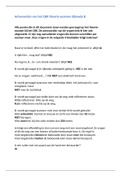
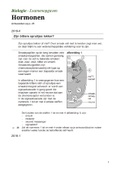
Peds Exam 3 study guide NEUROLOGICAL DISORDERS (ch11 p.399-415, ch37, ch40 p.691-1703, ch38 p.1577-78) Neurological assessment: primarily objective with infants & young children. ID high risk children, necessary to consider the age of infant/child, things can change significantly. Closely watch for any abnormalities in the child’s walk, talk, & play. Gain trust first (play) then perform the physical exam. Especially monitor for abnormal posturing (scissoring), reflexes, and muscle strength. Consider GCS (eye, verbal, motor), anything less than 8 is a problem! Pediatric coma scale is geared toward infants & children- verbal & motor responses r/t age & development, ranges from 3-15 *less than 8 is coma. Consider history of genetic abnormalities, possible injury/poisoning, and previous hospitalizations/reasons. • Assess head: low ears, lined up eyes, symmetry of head/face, eye movements, suck/swallow, resp effort, coordinated muscle movement, fine & gross motor ability- KNOW THE MILESTONES. Know when you should worry. Use play as an evaluation- have them walk to get a toy, ask questions. LOC earliest indicator of changes • Check pupils, grasping, facial expression, speech, extremity strength, LOC (consider whether they’re about to take a nap or not) Diagnostic tests: LP spinal tap (can administer meds this way too), EEG to identify brain activity, XRay to observe widening cranial sutures, US ventricles, CT scan- kids usually need sedation. SIADH (Syndrome of Inappropriate Antidiuretic Hormone): OVERsecretion of posterior pituitary hormone, ADH. complication of other neuro disorders d/t tumors, CNS trauma, meningitis, brain surgery. • Patho: manifestations are directly related to fluid retention and hypotonicity. Excess ADH causes most of the filtered water to be reabsorbed from the kidneys back into central circulation. • S/S: decreased urine output (may misinterpret as dehydration, giving more fluids will worsen problem), Serum osmolarity is low, and urine osmolarity is increased. Hyponatremia- Na levels less than 120. When sodium levels are diminished to 120, affected children display anorexia, N/V, stomach cramps, irritability, and personality change, and stupor/convulsions. • Treat: Immediate management is restricting fluids. Fluids continue to be restricted to 1/4 or ½ maintenance depending on severity. STRICT I&O’s, daily weights, assess LOC, treat the cause, time will resolve. • Nursing care: at risk for brain swelling d/t extra fluid- too much water and not enough sodium. Seizure precautions, 3% NaCl. Diabetes Insipidus: not related to DM, opposite of SIADH. Hyposecretion of ADH from posterior pituitary. Leads to uncontrolled diuresis. Primary cases are familial or idiopathic, can be secondary to trauma, tumors, infections (meningitis), brain surgery, or certain drugs (phenytoin). • S/S: Cardinal signs are polyuria & polydipsia. weight loss, irritability/crying, First sign is enuresis- infant initial symptom is irritability that is relieved with feedings of water but not milk, infant is prone to dehydration, lyte imbalance, hyperthermia, and potential circulatory collapse. Child will be have insatiable thirst & be drinking like crazy. Labs: HYPERnatremia, decreased urine specific gravity, hyperosmolarity, decreased BUN/Hct. • Diagnosis: water deprivation test- restrict oral fluids & observe changes in urine volume. Normally, reducing fluids results in concentrated urine & diminished volume. In DI, fluid restriction has little/no effect on urine formation but causes wt loss from dehydration. CT/MRI • Treat: strict I&O’s, daily weights. Hormone replacement- vasopressin in peanut oil or nasal spray. Injectable form has the advantage of lasting for 48-72h, allowing the child to get a full night’s sleep. To be effective, vasopressin must be thoroughly mixed in the oil by being held under warm running water for 10-15m & vigorously shaken before drawn- if not, the oil may be injected minus the ADH. Nasal spray- advantage of being a simple route of administration, repeated q8-12h to prevent recurrence of symptoms. To provide longer relief during night a cotton moistened with the spray can be inserted into the nostril, but mucus membrane irritation caused by a cold or allergy may render route. DDAVP: long acting vasopressin with fewer SEs, administered intranasally 2x/a day, some “breakthrough” urination is allowed during the evening hours as a precaution against over medication. Increased ICP: Cranium contains brain, blood, and CSF- and levels of each must remain approximate at all times. A change in the proportional volume of one of these components requires compensatory change in another. Increased ICP can be caused by obstruction of CSF flow, accumulation of fluid in ventricles, bleeding/edema in tissues, increased cerebral blood volume, tumors, infection, closed head injury. Normal ICP (CSF pressure): 0-15 (mod. increase= 20-40, severe 40+) • S/S infants: Early- full bulging fontanel (anterior closed by 18mo), personality changes, irritability, fatigue, poor feeding, projectile vomiting. Late- VS changes, increased head circumference or 95th percentile/spiked percentile, widened sutures & skull expansion, high pitched cry, “setting sun eyes”- whites above iris begin to show because eyes are being forced down, retention of infantile reflexes. (normal to have +Babinski for up to 2 years, others should be gone by 4mo) • S/S children: Early- HA, N/V, double/blurred vision, personality changes, change in school performance. Late- VS changes, incontinence, ataxia- unsteady on feet, pupil changes, restlessness, seizures, coma, LOC changes. • Treat: treat the cause. Mannitol, seizure meds, diuretics. Most need surgical tx- ventriculostomy drainage (EVD) for a temporary fix. 3% hypertonic saline- draws water from brain into blood, increase fluid eliminated through urine. Phenobarbial coma- stops brain function, hyperventilation- decreases C02 & pressure, Hypothermia. HOB 30 degrees, maintain midline position, decrease environmental stimuli. o EVD care: must be kept in neutral position (10-20 degrees) while ventric is open to drainage, keep bag at ear. If they need to be moved, clamp drain. Assess for temp (keep at 36.5-36.8) and amount/color/consistency of drainage. Hydrocephalus: Caused by unequal production & absorption of CSF in ventricles or obstruction of CSF flow through the ventricles d/t inflammation, tumor, clot, etc. Can be congenital or acquired. Main treatment is shunt placement. Ventricles dilate d/t the increased pressure from the additional CSF, brain pressed against skull, increased ICP. In children under 12, previously closed suture lines may become diastatic or opened, cranial sutures don’t close until 12y of age or later. Best diagnosed with CT. • S/S: In infancy, before closure of cranial sutures, head enlargement is the predominant sign, wheras in older infants/children it produces other neurologic through pressure on adjacent structures. o Infant- Head grows at abnormal rate, alghouth the first signs may be bulging fontanels. Scalp veins are dilated, sutures are palpably separated. Setting-sun eyes- sclera may be visible above iris. Sluggish pupils, irritable/lethargy/poor feeding, developmental delays. If hydrocephalus is rapidly progressive, infant may display emesis, somnolence, seizures, and cardiopulmonary arrest. o Child- signs are caused by increased ICP. Can be HA, ataxia, blurred/double vision, confused/incoherent/irritated,. • Treat: goal is to decrease pressure, treat cause, & maintain brain function. Treat temporarily with mannitol/diuretics. Ventric/EVD is treatment of choice- drains CSF from a tube placed I the ventricle that flows by gravity into collection device. o VP shunt (ventriculoperitoneal) - standard procedure. Drainage of CSF from ventricles into peritoneum. Minimizes number of revisions needed as the child grows. o VA shunt (ventriculoatrial)- drains into the R atrium (if VP shunt is impossible/ineffective). – contraindicated in child with cardio disease o Shunt insertion care: neuro checks, s/s of increased ICP, abdomen surgical site (observe for leaking CSF, test for glucose), pain relief (low dose IV morphine- don’t want too much sedation when you’re assessing LOC). Nonnutritive sucking, place on nonoperative side. Most serious complication is infection- monitor for redness, temp, LOC (It’s a big deal because CNS infection is a significant predictor of subnormal intellectual outcomes). Monitor growth & development, no contact sports. Most return for follow up!- requires repeated lengthening, revisions. Shunts can malfunction- kinck, plug, separate, or migrate. Measure head daily, position on non-operative side, try & remain flat to avoid rapid reduction of fluid, observe for abdominal distention (CSF in abdomen- peritonitis/ileus) Closed Head Injury (CHI): most caused by MVAs, falls, recreation, abuse, shaken baby. May have acceleration-deceleration injury, poor head & neck control. May have coup/counter coup injury, intracranial bleed. 29% mortality rate, secondary injuries is a major factor in prognosis. • Minor CHI: could be compared to a concussion. May have normal mental status, normal neuro check, no evidence of skull fracture, no loss of consciousness or only brief loss, may have had a seizure, vomiting, lethargy, or headache but then returned to normal o Treat: thorough H&P, complete neuro eval, observation, education, exclusion from school/sports until recovered. XRay, CT, MRI- not usually recommended. • Moderate-severe CHI: altered consciousness or loss of consciousness, GCS between 9-12 depending on severity, memory loss, slurred speech, agitation, confusion, weakness, vomiting, HA, seizures, abnormal pupils, fluid draining from ears. o Treat: maintain airway, stabilize spine, VS, meds- diuretics/anti-seizure, coma-inducing. Potential for surgery, need for rehab. Neural Tube Defects: congenital – neural tube fails to close (should close 3-4wG). Failure of neural tube closure produces defects of varying degrees based on severity. Can be d/t drugs, radiation, maternal malnutrition, chemicals & genetic mutation in folate pathways. Also pre-pregnancy maternal obesity, previous NTD pregnancy & use of antiepileptics (valpoic acid). Daily folate intake should be 0.4mg, because the greatest risk factor is a previous pregnancy affected by NTDs, women in this category should increase daily folic acid dose to 4mg. Encourage mom to eat iron fortified cereals (kellogg’s, multigrain cheerios), bread, rice, grits, pasta, green leafy veggies, citrus fruits. ………………………………………..CONTINUED……………………………………………

Geschreven voor
- Instelling
- Madonna University
- Vak
- NUR 4410 (N4410PEDSEXAM3STUDYGUIDE2)
Documentinformatie
- Geüpload op
- 7 maart 2021
- Aantal pagina's
- 8
- Geschreven in
- 2020/2021
- Type
- OVERIG
- Persoon
- Onbekend
Onderwerpen
-
peds exam 3 study guide
-
neurological disorders
-
orthopedic disorders
-
siadh syndrome of inappropriate antidiuretic hormone
-
health promotion rt preschoolers age 3 5