Organising for entrepreneurship
Lesson 1
INTRODUCTION
1. Hybrid organisations:
Hybrids are companies (profit/non-profit, di:erent types of organisational forms) that have at a
strategic level dual objective. For example: social enterprises, companies that want to address
social needs in the market but want to develop a business model which has the potential to be
viable in the long term. How these companies juggle these two di:erent types of objectives?
2. Strategic entrepreneurship
Has two components: how board of directors’ function in small start-up companies (=governance)
and how these companies develop business models.
Entrepreneurs as heroes?
- Failure rates are relatively high, most start-ups fail within few years from founding.
- VC Backed companies (venture capital); these are businesses that receive funding from
venture capital firms (VCs).
• Venture Capital: is money invested by private investors or firms into early-stage or high-
growth companies that have strong potential to scale.
• VC-backed companies are typically startups or young businesses in industries like
technology, biotech, fintech, AI, or other innovative fields.
• In exchange for their investment, venture capitalists usually get equity (ownership shares)
in the company.
• The goal of VC investors is to help the company grow quickly and later sell their shares for a
significant profit (often through acquisition or IPO).
• Examples of companies that were once VC-backed: Uber Technologies, Airbnb
Venture capitalists are professional investors that try to identify very high-potential start-ups they
want to make an investment in to have a high financial return. They go through a due diligence
(very tough process). It is a thorough investigation or review of a company, before making a major
business decision. Typically, 6-10 weeks to have a very good understanding of the company. What
thinks would we analyse and look at?
- Team (technical skills), performance-to-date, margin you want to realise, cornerstone of any
business (unique selling point): the business model!!
- Crucial point: can we scale the business model? The scalability of the model!
1
, Where do business opportunities come from?
1)Market pull à start from the market (outcomes)
2)Technology push à start from tech, then look at market
Starting point for entrepreneurial ventures: the
business opportunity
You start from a problem in need you identify in the marketplace. So, you see for example that
people are struggling with doing a certain take, companies are not happy with existing solutions
on the market. So, this can be a business opportunity or a value proposition, when the problem
and the solution meet each other. So, the first roots that lead to venture creation or the possibility
to start a new venture is market pull. You start from the market and challenge for your team is to
see how to develop solution to address that problem that is identified.
Alternative route to market:
Happens at University, you work on new technology and there could potentially be a paying
customer for this (di:erent philosophy). Starting point is not customer or user identified in the
market but a technology that you’re working on. The challenges are to see how we can go from a
technology to a solution in the marketplace. So, look for customers downstream in your market
(more challenging compared to market pull).
Different business opportunities, different
profiles
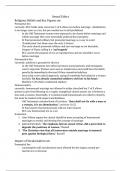
Cashflow evolution of three di:erent profiles:
Market-pull firm
Technology-push firm
+ Consulting firm
Bank balance £
0 Time
-
What do we learn from this?
Technology-push firm is risky
- You must make a lot of investments (millions), the gap represents the total of money you need
to avoid bankruptcy.
- Companies go bankrupt because of cashflow reasons, not because of profitability reasons.
You can be successful even without selling or profits (if people are willing to finance in you
company).
Type of investors: venture capital companies!
- What will they ask in return?
2
,1) % of the equity in the company (valuation of the company). How much the company is worth,
because not listed on the stock exchange. You want a realistic level from both parties. You
want equity!
How do VCs make money? How long do we plan to stay in the company (we make an investment
today), because we typically want to stay in the business 5-7 years. Return expectation in 5-7
years? (If we invest 5 million day 1).
- Typically (depending on stage of your venture); somewhere from 30-65% per year. So in 7 years
this translates into multiples between 4-6-7-10 (that’s a lot). What’s the mechanism, how will
these companies make those 50 million?
Try to scale the business, try to drive-up firm valuation of the company as fast of possible
(scalability is best way).
- 5 million with 20% of the shares, what is the valuation of that company at that point in time? 25
million!
- What is the valuation 5-7 years later? 250 million (anticipated firm valuation that investors
expect from you in 5-7 years from now).
- How will they be able to recover their 50 million return expectation? How will they get access
to 50 million? –> sell the shares
1. Go to stock market (listed NASDAQ)
2. Private transactions in merge acquisitions, they try to sell assets to competent player in the
market (more likely)
2) You will have to be to share equity with your investors. Next to equity the investors will
ask/demand results. They want to be able to track the process of the company. As investors
you will have to install a board of directors (= a formal decision-making group within the
business that is responsible for all the strategic decisions in the company, so they set strategic
direction of the firm, and it is top management team that will execute the strategy). Board can
intervene if things go o:-plan, even can let step down the CEO.
Market-pull curve
- The amount of investment is di:erent scale (compared to technology-push curve), smaller gap
so less relying on investment and yet able to scale the company. They attract venture capital
for two specific reasons:
1. To start new product development
2. To scale up the company internationally
Consulting businesses
- Very di:erent from other two; almost no lead for investment. You sell skills, time as a
consultant. In a weak 168 hours, for a consulting firm that wants to grow you must hire more
sta:. So, expand your pool of consultants if you want to grow. Fundamental di:erence
between this and the other two: the di:erence in the extend in which you can scale the
business without the need to make a reinvestment of capital again. Once platform is there,
you’re all set and then attract companies. Try to raise capital will never happen, because these
people know that being able to get a hockey stick where firm valuation can increase with a
factor 10 in less than 5 years, not going to happen in consulting, because the level of
scalability is almost absent in these types of companies.
- Interesting for entrepreneurs: exposed to very broad variety of problems (they call you with
that). You are hired by companies that face problems and that can be the starting point for
developing a venture idea!
3
, 3 main activities:
• Work for clients
• Look for clients
• All kinds of paperworks
How to Turn a (Promising) Business opportunity into a (Great) Company
Two key concepts that are the two core building blocks of the class:
1. Business model
2. Lean start-up
Lean start-up method:
- There are two di:erent views on how you can think as an entrepreneur in your business: 1)
planning perspective (think about everything very carefully) 2) storm the castle and learn
(while failing). But not every failure translates into learning
- Lean start-up resonates with failing into learning approach
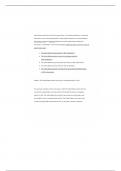
STARTUP DEVELOPMENT PHASES
Mission > Vision > Strategy Lean Startup Scale Up
● Co-founder team formation Minimum Viable Validate / Iterate
Grow / Expand
● What, to whom? & Why and how? Product (or pivot)
-2 -1 0 1 2 3
Problem / Solution Fit Vision / Founders Fit Product / Market Fit Business Model / Market Fit
Ideation Concepting Commitment Validation Scaling Establishing
Entrepreneurial Defining mission and Committed and balanced co- Iterating, validating Focus on growth, showing Achieved great growth,
ambition and/or vision with initial strategy founding team with shared assumptions until have KPI’s based measurable, that can be expected to
potential scalable and key milestones vision and attitude. Able to validated solution to growth in user, customer continue. Easily attracts
You need to confront your own assumptions based as fast as possible with the market, you want
product or service idea
for a big enough target
market. Initial business
defined for at least next 3
years on how to get there,
-> 3, 6, 12, 24, 36 months.
develop the product or
service (Minimum Viable
Product) without dependency
demonstrate initial user
growth and/or revenue. Key
Performance Indicators
revenue growth and/or
market traction in a big or
fast growing target market.
financial and people
resources. Depending on
vision, mission and
to develop a product based on what your user wants (not your own assumptions).
idea on why and how it
would create value.
One person or a vague
Two or three
entrepreneurial core co-
founders with
of uncommitted external
resources, or already have
initial product or service in
(KPI’s) identified. Can start
to attract additional
investment based resources
Can and want to grow fast.
May, will or have attracted
significant funding or would
commitments, will continue
to grow and often tries to
culturally continue “like a
team; no confirmed complementary skills and place. Shareholder (money or sweat equity) for be able to do so if wanted. startup". Founders and/or
commitment or no right balanced ownership plan. agreement signed between equity, revenue share or Hiring, improving in quality investors make exit(s) or
balance of skills in the Maybe have extended co-founders, including future revenue. and implementing continue with the
What is a business model & why is it so important?
team structure yet. team members for
additional roles &
milestones, committed time
and money use, for minimum
processes company.
ownership. 3 years with vesting terms.
This work is licensed under the Creative Commons Attribution-ShareAlike 4.0 International License.
Version 2.5 To view a copy of this license, visit http://creativecommons.org/licenses/by-sa/4.0/ or send a letter to
Creative Commons, 171 Second Street, Suite 300, San Francisco, California, 94105, USA.
www.startupcommons.org
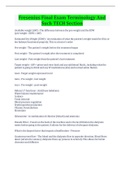
Definition: at the heart of the company about creating firm value at the organisational level. You
want to bring your company as fast as possible in terms of firm value creation.
VALUE (3 di:erent components that are interrelated):
- Value creation: what is the problem solution fit (= value
proposition)
- Value delivery: di:erent activities, di:erent resources, di:erent
processes you must put in place to be able to bring that
solution to that specific customer in such a way that they can
experience the value you intend to create for them. So, about
resources, activities and processes.
- Value capturing revenues vs costs (how all that translates in
revenues vs costs)
Business model is the architecture of the firm's value creation, delivery and capturing
mechanisms (Teece, 2010)
4
Lesson 1
INTRODUCTION
1. Hybrid organisations:
Hybrids are companies (profit/non-profit, di:erent types of organisational forms) that have at a
strategic level dual objective. For example: social enterprises, companies that want to address
social needs in the market but want to develop a business model which has the potential to be
viable in the long term. How these companies juggle these two di:erent types of objectives?
2. Strategic entrepreneurship
Has two components: how board of directors’ function in small start-up companies (=governance)
and how these companies develop business models.
Entrepreneurs as heroes?
- Failure rates are relatively high, most start-ups fail within few years from founding.
- VC Backed companies (venture capital); these are businesses that receive funding from
venture capital firms (VCs).
• Venture Capital: is money invested by private investors or firms into early-stage or high-
growth companies that have strong potential to scale.
• VC-backed companies are typically startups or young businesses in industries like
technology, biotech, fintech, AI, or other innovative fields.
• In exchange for their investment, venture capitalists usually get equity (ownership shares)
in the company.
• The goal of VC investors is to help the company grow quickly and later sell their shares for a
significant profit (often through acquisition or IPO).
• Examples of companies that were once VC-backed: Uber Technologies, Airbnb
Venture capitalists are professional investors that try to identify very high-potential start-ups they
want to make an investment in to have a high financial return. They go through a due diligence
(very tough process). It is a thorough investigation or review of a company, before making a major
business decision. Typically, 6-10 weeks to have a very good understanding of the company. What
thinks would we analyse and look at?
- Team (technical skills), performance-to-date, margin you want to realise, cornerstone of any
business (unique selling point): the business model!!
- Crucial point: can we scale the business model? The scalability of the model!
1
, Where do business opportunities come from?
1)Market pull à start from the market (outcomes)
2)Technology push à start from tech, then look at market
Starting point for entrepreneurial ventures: the
business opportunity
You start from a problem in need you identify in the marketplace. So, you see for example that
people are struggling with doing a certain take, companies are not happy with existing solutions
on the market. So, this can be a business opportunity or a value proposition, when the problem
and the solution meet each other. So, the first roots that lead to venture creation or the possibility
to start a new venture is market pull. You start from the market and challenge for your team is to
see how to develop solution to address that problem that is identified.
Alternative route to market:
Happens at University, you work on new technology and there could potentially be a paying
customer for this (di:erent philosophy). Starting point is not customer or user identified in the
market but a technology that you’re working on. The challenges are to see how we can go from a
technology to a solution in the marketplace. So, look for customers downstream in your market
(more challenging compared to market pull).
Different business opportunities, different
profiles
Cashflow evolution of three di:erent profiles:
Market-pull firm
Technology-push firm
+ Consulting firm
Bank balance £
0 Time
-
What do we learn from this?
Technology-push firm is risky
- You must make a lot of investments (millions), the gap represents the total of money you need
to avoid bankruptcy.
- Companies go bankrupt because of cashflow reasons, not because of profitability reasons.
You can be successful even without selling or profits (if people are willing to finance in you
company).
Type of investors: venture capital companies!
- What will they ask in return?
2
,1) % of the equity in the company (valuation of the company). How much the company is worth,
because not listed on the stock exchange. You want a realistic level from both parties. You
want equity!
How do VCs make money? How long do we plan to stay in the company (we make an investment
today), because we typically want to stay in the business 5-7 years. Return expectation in 5-7
years? (If we invest 5 million day 1).
- Typically (depending on stage of your venture); somewhere from 30-65% per year. So in 7 years
this translates into multiples between 4-6-7-10 (that’s a lot). What’s the mechanism, how will
these companies make those 50 million?
Try to scale the business, try to drive-up firm valuation of the company as fast of possible
(scalability is best way).
- 5 million with 20% of the shares, what is the valuation of that company at that point in time? 25
million!
- What is the valuation 5-7 years later? 250 million (anticipated firm valuation that investors
expect from you in 5-7 years from now).
- How will they be able to recover their 50 million return expectation? How will they get access
to 50 million? –> sell the shares
1. Go to stock market (listed NASDAQ)
2. Private transactions in merge acquisitions, they try to sell assets to competent player in the
market (more likely)
2) You will have to be to share equity with your investors. Next to equity the investors will
ask/demand results. They want to be able to track the process of the company. As investors
you will have to install a board of directors (= a formal decision-making group within the
business that is responsible for all the strategic decisions in the company, so they set strategic
direction of the firm, and it is top management team that will execute the strategy). Board can
intervene if things go o:-plan, even can let step down the CEO.
Market-pull curve
- The amount of investment is di:erent scale (compared to technology-push curve), smaller gap
so less relying on investment and yet able to scale the company. They attract venture capital
for two specific reasons:
1. To start new product development
2. To scale up the company internationally
Consulting businesses
- Very di:erent from other two; almost no lead for investment. You sell skills, time as a
consultant. In a weak 168 hours, for a consulting firm that wants to grow you must hire more
sta:. So, expand your pool of consultants if you want to grow. Fundamental di:erence
between this and the other two: the di:erence in the extend in which you can scale the
business without the need to make a reinvestment of capital again. Once platform is there,
you’re all set and then attract companies. Try to raise capital will never happen, because these
people know that being able to get a hockey stick where firm valuation can increase with a
factor 10 in less than 5 years, not going to happen in consulting, because the level of
scalability is almost absent in these types of companies.
- Interesting for entrepreneurs: exposed to very broad variety of problems (they call you with
that). You are hired by companies that face problems and that can be the starting point for
developing a venture idea!
3
, 3 main activities:
• Work for clients
• Look for clients
• All kinds of paperworks
How to Turn a (Promising) Business opportunity into a (Great) Company
Two key concepts that are the two core building blocks of the class:
1. Business model
2. Lean start-up
Lean start-up method:
- There are two di:erent views on how you can think as an entrepreneur in your business: 1)
planning perspective (think about everything very carefully) 2) storm the castle and learn
(while failing). But not every failure translates into learning
- Lean start-up resonates with failing into learning approach
STARTUP DEVELOPMENT PHASES
Mission > Vision > Strategy Lean Startup Scale Up
● Co-founder team formation Minimum Viable Validate / Iterate
Grow / Expand
● What, to whom? & Why and how? Product (or pivot)
-2 -1 0 1 2 3
Problem / Solution Fit Vision / Founders Fit Product / Market Fit Business Model / Market Fit
Ideation Concepting Commitment Validation Scaling Establishing
Entrepreneurial Defining mission and Committed and balanced co- Iterating, validating Focus on growth, showing Achieved great growth,
ambition and/or vision with initial strategy founding team with shared assumptions until have KPI’s based measurable, that can be expected to
potential scalable and key milestones vision and attitude. Able to validated solution to growth in user, customer continue. Easily attracts
You need to confront your own assumptions based as fast as possible with the market, you want
product or service idea
for a big enough target
market. Initial business
defined for at least next 3
years on how to get there,
-> 3, 6, 12, 24, 36 months.
develop the product or
service (Minimum Viable
Product) without dependency
demonstrate initial user
growth and/or revenue. Key
Performance Indicators
revenue growth and/or
market traction in a big or
fast growing target market.
financial and people
resources. Depending on
vision, mission and
to develop a product based on what your user wants (not your own assumptions).
idea on why and how it
would create value.
One person or a vague
Two or three
entrepreneurial core co-
founders with
of uncommitted external
resources, or already have
initial product or service in
(KPI’s) identified. Can start
to attract additional
investment based resources
Can and want to grow fast.
May, will or have attracted
significant funding or would
commitments, will continue
to grow and often tries to
culturally continue “like a
team; no confirmed complementary skills and place. Shareholder (money or sweat equity) for be able to do so if wanted. startup". Founders and/or
commitment or no right balanced ownership plan. agreement signed between equity, revenue share or Hiring, improving in quality investors make exit(s) or
balance of skills in the Maybe have extended co-founders, including future revenue. and implementing continue with the
What is a business model & why is it so important?
team structure yet. team members for
additional roles &
milestones, committed time
and money use, for minimum
processes company.
ownership. 3 years with vesting terms.
This work is licensed under the Creative Commons Attribution-ShareAlike 4.0 International License.
Version 2.5 To view a copy of this license, visit http://creativecommons.org/licenses/by-sa/4.0/ or send a letter to
Creative Commons, 171 Second Street, Suite 300, San Francisco, California, 94105, USA.
www.startupcommons.org
Definition: at the heart of the company about creating firm value at the organisational level. You
want to bring your company as fast as possible in terms of firm value creation.
VALUE (3 di:erent components that are interrelated):
- Value creation: what is the problem solution fit (= value
proposition)
- Value delivery: di:erent activities, di:erent resources, di:erent
processes you must put in place to be able to bring that
solution to that specific customer in such a way that they can
experience the value you intend to create for them. So, about
resources, activities and processes.
- Value capturing revenues vs costs (how all that translates in
revenues vs costs)
Business model is the architecture of the firm's value creation, delivery and capturing
mechanisms (Teece, 2010)
4