
Case Summaries
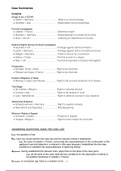
Contents
Scope of art. 6 ECHR
• Öztürk v Germany …………………………. What is a criminal charge
• Venditteli v Italy …………………………….. Reasonable time (proceedings)
Pre-trial Investigation
• Letellier v France .…………………………. Detention length
• Niemietz v. Germany ………………………. Broad approach to private life & home
• Khan v the UK ……………………………… Justifying an interference of privacy
Defence Rights During Criminal Investigation
• Saunders v UK …………………………….. Privilege against self-incrimination
• Jalloh v Germany ………………………….. Privilege against self-incrimination & torture
• Gäfgen v Germany ..……………………… Threat to torture for a conviction
• Salduz v Turkey ……………………………. Pre-trial access to a lawyer
• Allan v UK ………………………………….. Functional equivalent of police interrogation
Prosecution
• Salvador Torres v Spain …………………. Right to be informed
• Pélissier and Sassi v France …………….. Right to be informed
Positive Obligation of State
• Rantsey v Cyprus and Russia …………… Right to life and and protection from slavery
Trial Stage
• De Cubber v Belgium …………………….. Right to impartial tribunal
• Colozza v Italy ..…………………………… Right to be present in court
• Lala v Netherlands ………………………… Right to defence counsel in your absence
Testimonial Evidence
• Schatschaschwili v Germany …………….. Right to question witness
• Natsvlishvili and Togonidze ………………. Plea Bargaining
Minimum Rights of Appeal
• Kremzow v Austria ………………………… Presence in Appeal
• Taxquet v Belgium …………………………. Right to know reason for conviction
ANSWERING QUESTIONS USING THE CASE LAW:
Issue: the question of law
Rule: here you would mention the case law and the relevant criteria it established
(eg. the case of Letellier v France, concerning the reasonableness of the continuation of the
applicant’s pre-trial detention, is relevant in this case because it established the two-step
conditions to establish the reasonableness of depriving liberty)
Application: having established the relevant rules, apply them to the facts of the case given
(eg. do the facts of the case meet the two conditions for the deprivation of liberty to
be justified mentioned in Letellier v France)
Conclusion: In conclusion (eg. there is a violation of art. …)
,Scope of art. 6 ECHR
Öztürk v. Germany
APPLICABILITY OF ART. 6(1) ECHR - WHAT IS A CRIMINAL CHARGE
Facts:
> Applicant drove his car into a parked car. Administrative authority imposed a fine (penalty)
> Objected and went to court with interpreter. Objection withdrawn
> Directed to pay for court and interpreter. Entered appeal to pay for interpreter, denied.
Issue: Was the ‘regulatory offence’ committed a criminal one within the meaning of art. 6 Convention
Rule:
Engel v Netherlands : criteria for an act to constitute a criminal offence
KEY FINDING:
> Autonomous interpretation of the notion of a criminal charge
> Criteria for ‘criminal’ offence:
1. Classification of the offence under national law - little weight
2. The nature of the offence
a) applicable to everyone
b) the sanction has retributive goal (aim to punish you)
c) how the majority of member states classify the nature of the act
3. The nature and degree of severity of the penalty that the person concerned risked incurring
- the more severe the punishment the more likely criminal
- look at the maximum sanction in law (not what the accused was given but in general)
Venditteli v. Italy
APPLICABILITY OF ART. 6(1) ECHR - REASONABLE TIME OF PROCEEDINGS
Facts:
> Applicant accused of infringing a town planning regulation
> Applicant’s flat was sealed and criminal proceedings instituted
Issue: The length of proceedings, within the meaning of art. 6(1) ECHR
KEY FINDINGS:
- An autonomous interpretation of reasonable time
• Establish the period to be taken into account; beginning till end
> Four criteria to determine violation of detention length:
1. Complexity of the case
2. Conduct of the applicant (delaying?)
3. Conduct of the State authorities (delaying/measures they laid down?)
4. What is a stake for the applicant
, Pre-Trial Investigation
Letellier v. France
APPLICABILITY OF ART. 5(3) ECHR - DETENTION LENGTH
Facts:
> Applicant charged of being an accessory to the murder of her ex-husband
> Applicant applied for release from detention on remand multiple times
> Deprivation of liberty for a total of 2 years and nine months
> Applicant claimed the state violated her right to liberty by extending the period of her detention on remand
Issue: Was the continuation of the period of pre-trial detention lawful? - Right to release pending trial
Rule: Brogan v UK: “promptly” = done within 4 days
anyone arrested/detained must be brought before legal authority PROMPTLY (art. 5(3) ECHR)
KEY FINDING:
Two step process to determine whether the detention length was reasonable:
1. Determine the period to be taken into account (start to end)
2. Assess the reasonableness of this period
A. The national judicial authority should ensure defendant is kept within reasonable time
B. The defendant can be released
C. Points for and against the defendant’s release must be established
D. Reason to keep defendant detained should be valid, based on public order
E. There should be suspicion of offence (continued risk ~ sine qua non)
F. *Reason for detention must be relevant and sufficient over time*
- (you test the excuses given by the state against these two requirements)
In terms of the 6 sub-criteria’s, the main one is the last, however, if relevant, discuss the other criteria
> this procedure is initiated by the defendant on basis of art. 5(4)
art. 5 ECHR
1 (c): three grounds for pre-trial detention =
> reasonable suspicion of having committed the offence
> Necessary to prevent individual from committing more/other offences
> To prevent individual from fleeing
3: Brought promptly (Brogan v UK) before legal authority and to trial within a reasonable time (Letellier v France)
[promptly ≠ reasonable time]
Contents
Scope of art. 6 ECHR
• Öztürk v Germany …………………………. What is a criminal charge
• Venditteli v Italy …………………………….. Reasonable time (proceedings)
Pre-trial Investigation
• Letellier v France .…………………………. Detention length
• Niemietz v. Germany ………………………. Broad approach to private life & home
• Khan v the UK ……………………………… Justifying an interference of privacy
Defence Rights During Criminal Investigation
• Saunders v UK …………………………….. Privilege against self-incrimination
• Jalloh v Germany ………………………….. Privilege against self-incrimination & torture
• Gäfgen v Germany ..……………………… Threat to torture for a conviction
• Salduz v Turkey ……………………………. Pre-trial access to a lawyer
• Allan v UK ………………………………….. Functional equivalent of police interrogation
Prosecution
• Salvador Torres v Spain …………………. Right to be informed
• Pélissier and Sassi v France …………….. Right to be informed
Positive Obligation of State
• Rantsey v Cyprus and Russia …………… Right to life and and protection from slavery
Trial Stage
• De Cubber v Belgium …………………….. Right to impartial tribunal
• Colozza v Italy ..…………………………… Right to be present in court
• Lala v Netherlands ………………………… Right to defence counsel in your absence
Testimonial Evidence
• Schatschaschwili v Germany …………….. Right to question witness
• Natsvlishvili and Togonidze ………………. Plea Bargaining
Minimum Rights of Appeal
• Kremzow v Austria ………………………… Presence in Appeal
• Taxquet v Belgium …………………………. Right to know reason for conviction
ANSWERING QUESTIONS USING THE CASE LAW:
Issue: the question of law
Rule: here you would mention the case law and the relevant criteria it established
(eg. the case of Letellier v France, concerning the reasonableness of the continuation of the
applicant’s pre-trial detention, is relevant in this case because it established the two-step
conditions to establish the reasonableness of depriving liberty)
Application: having established the relevant rules, apply them to the facts of the case given
(eg. do the facts of the case meet the two conditions for the deprivation of liberty to
be justified mentioned in Letellier v France)
Conclusion: In conclusion (eg. there is a violation of art. …)
,Scope of art. 6 ECHR
Öztürk v. Germany
APPLICABILITY OF ART. 6(1) ECHR - WHAT IS A CRIMINAL CHARGE
Facts:
> Applicant drove his car into a parked car. Administrative authority imposed a fine (penalty)
> Objected and went to court with interpreter. Objection withdrawn
> Directed to pay for court and interpreter. Entered appeal to pay for interpreter, denied.
Issue: Was the ‘regulatory offence’ committed a criminal one within the meaning of art. 6 Convention
Rule:
Engel v Netherlands : criteria for an act to constitute a criminal offence
KEY FINDING:
> Autonomous interpretation of the notion of a criminal charge
> Criteria for ‘criminal’ offence:
1. Classification of the offence under national law - little weight
2. The nature of the offence
a) applicable to everyone
b) the sanction has retributive goal (aim to punish you)
c) how the majority of member states classify the nature of the act
3. The nature and degree of severity of the penalty that the person concerned risked incurring
- the more severe the punishment the more likely criminal
- look at the maximum sanction in law (not what the accused was given but in general)
Venditteli v. Italy
APPLICABILITY OF ART. 6(1) ECHR - REASONABLE TIME OF PROCEEDINGS
Facts:
> Applicant accused of infringing a town planning regulation
> Applicant’s flat was sealed and criminal proceedings instituted
Issue: The length of proceedings, within the meaning of art. 6(1) ECHR
KEY FINDINGS:
- An autonomous interpretation of reasonable time
• Establish the period to be taken into account; beginning till end
> Four criteria to determine violation of detention length:
1. Complexity of the case
2. Conduct of the applicant (delaying?)
3. Conduct of the State authorities (delaying/measures they laid down?)
4. What is a stake for the applicant
, Pre-Trial Investigation
Letellier v. France
APPLICABILITY OF ART. 5(3) ECHR - DETENTION LENGTH
Facts:
> Applicant charged of being an accessory to the murder of her ex-husband
> Applicant applied for release from detention on remand multiple times
> Deprivation of liberty for a total of 2 years and nine months
> Applicant claimed the state violated her right to liberty by extending the period of her detention on remand
Issue: Was the continuation of the period of pre-trial detention lawful? - Right to release pending trial
Rule: Brogan v UK: “promptly” = done within 4 days
anyone arrested/detained must be brought before legal authority PROMPTLY (art. 5(3) ECHR)
KEY FINDING:
Two step process to determine whether the detention length was reasonable:
1. Determine the period to be taken into account (start to end)
2. Assess the reasonableness of this period
A. The national judicial authority should ensure defendant is kept within reasonable time
B. The defendant can be released
C. Points for and against the defendant’s release must be established
D. Reason to keep defendant detained should be valid, based on public order
E. There should be suspicion of offence (continued risk ~ sine qua non)
F. *Reason for detention must be relevant and sufficient over time*
- (you test the excuses given by the state against these two requirements)
In terms of the 6 sub-criteria’s, the main one is the last, however, if relevant, discuss the other criteria
> this procedure is initiated by the defendant on basis of art. 5(4)
art. 5 ECHR
1 (c): three grounds for pre-trial detention =
> reasonable suspicion of having committed the offence
> Necessary to prevent individual from committing more/other offences
> To prevent individual from fleeing
3: Brought promptly (Brogan v UK) before legal authority and to trial within a reasonable time (Letellier v France)
[promptly ≠ reasonable time]



